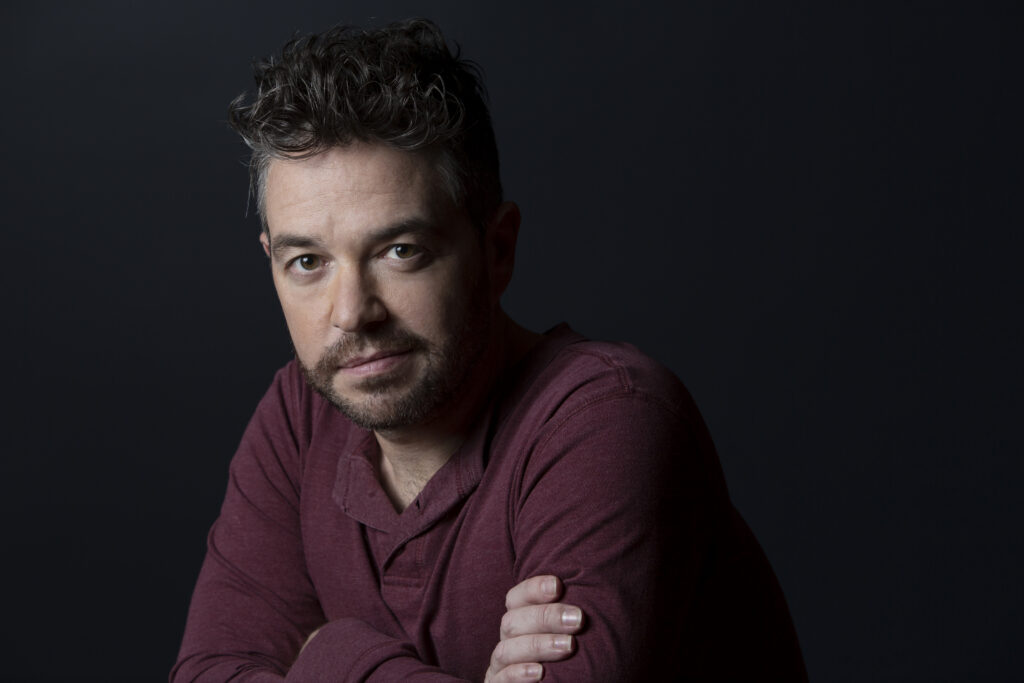
Sir Stephen Hough is a pianist, composer and writer.
Origins: Stephen Hough
Share: 


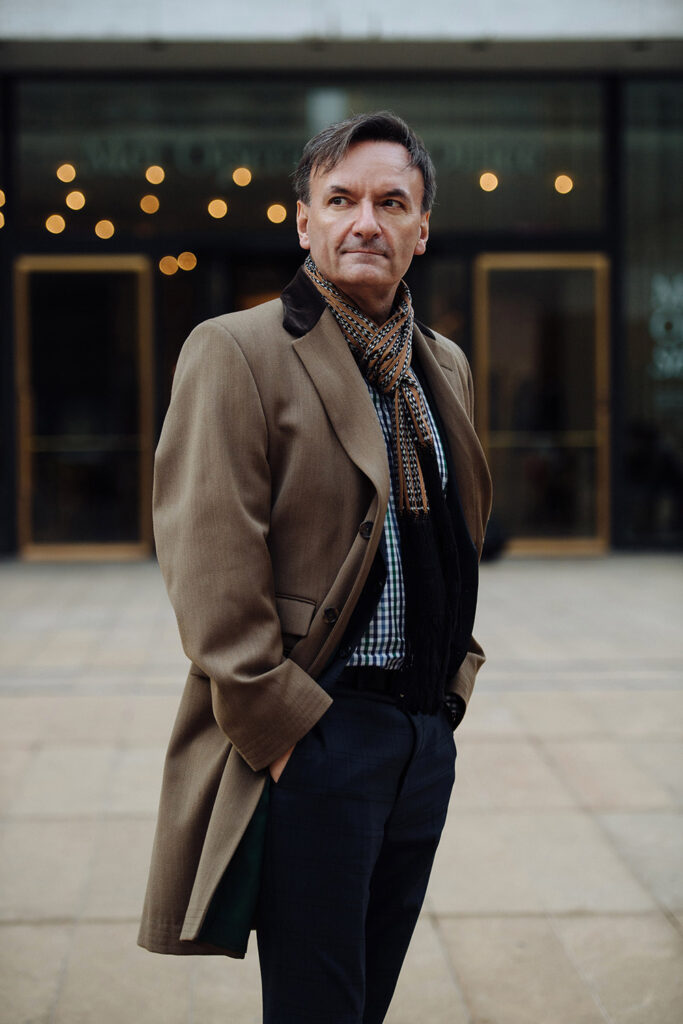
I can’t really remember when I first became aware of music. My father said that I had memorized 70 nursery rhymes by the time I was two or three years old. I don’t remember that; I don’t even know if there are 70! Maybe he was being proudly parental and exaggerating a little.
What I can tell you is that I come from a completely nonmusical background. My father was a technical representative for British Steel, and we had no classical music in my home or musical instruments at all. I say that vehemently as an encouragement to those who’ve never heard any classical music. You don’t have to come from a background where either it’s accessible or you have parents who are telling you about it. It is possible to come from completely outside, which I did. I came to it firstly because an aunt of mine had a piano in her house. We’d go and visit her, and I would tinker around in the corner; I must have been about four at the time.
I begged my parents to buy me a piano, I found the sound of this instrument fascinating. And they said no for a while. But I was very persuasive; eventually they bought me a second-hand piano for £5 and I started piano lessons. My mother just looked in the Yellow Pages under “piano teachers” and found the one that lived closest to us – rather like you might look for a plumber. Miss Riley used to come to us once a week and from then on, my parents were very supportive.
I suppose I was a little unusual because Miss Riley would give me the lesson and then before she’d got back into her car, I’d memorized the pieces she’d left for me, and I wanted her to come back and give me another lesson. So, I think my parents saw that this was more than just a kind of casual interest in music and the piano.
I realize now I am so lucky to have had parents who were very encouraging. My father, in particular, who knew nothing about classical music before I began lessons, really became passionate about it. He would bring records home from the library and he also bought lots of records. He began reading about classical music. And you know, by the time he did an Open University humanities degree at the end of his life he knew a lot more about classical music than I did. He was a total sponge. Yet both of us came to classical music, in a sense, completely from the outside.
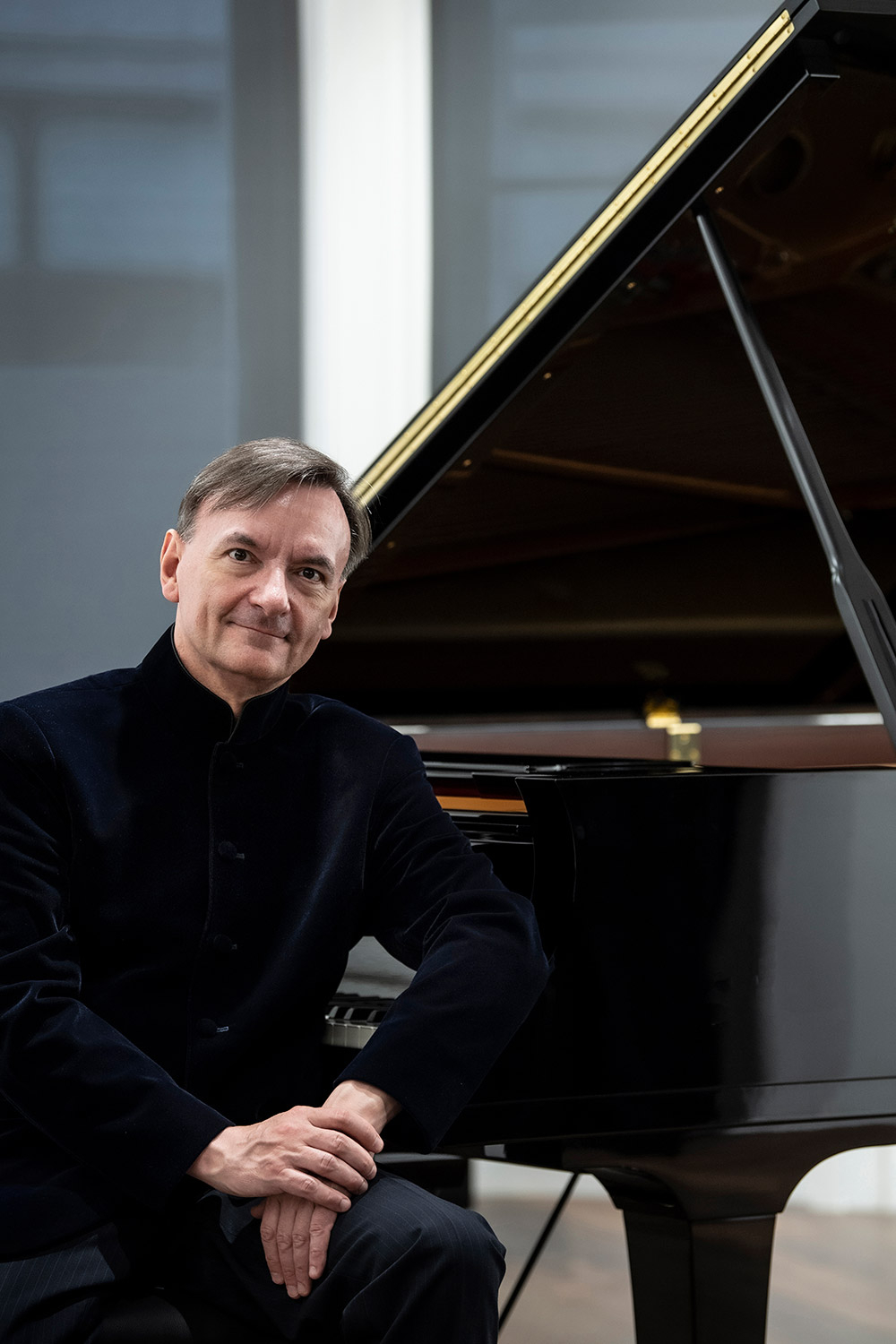
“I realize now I am so lucky to have had parents who were very encouraging. My father, in particular, who knew nothing about classical music before I began lessons, really became passionate about it.”
I never wanted to do anything else. Even to the point where my mother would pull me off the piano stool and say, ‘Go into the garden and get some fresh air.’ Or she’d take me to Chester Zoo and I was just playing the piano on my chest and wanted to go home to my real piano. In those early years you don’t know what is involved in pursuing music seriously, but it seemed to me that the piano and music were the best things in the world.
I did learn the cello, too, when I studied music later on, and it was suggested it would be good to have a second instrument. But I didn’t love to play the cello in the same way. The piano was something that just felt very natural to me. I would play everything; I just devoured everything. I would sight-read things, and I did a lot of composing. From the first day of learning how to read music I was writing music.
Within a year or so of starting to play I was in the finals of the National Junior Piano Playing Competition in London – it was my first trip to London. I grew up in the northwest of England, in Cheshire, so this was a big deal. I’ve got a really lovely little record they made for us of our playing at that competition and of the jury comments at the end. Gerald Moore was the chairman, and he actually talks about me as the youngest competitor at the time; he said although I hadn’t won a prize, I showed a lot of promise. So that was very encouraging, as it was only about a year after my first piano lessons.
I carried on with lessons until my teens, when I hit a bit of a block. I completely lost interest in music and had a very difficult adolescence. I didn’t practice, even though I still played, and I still had lessons. I got by because I had a certain kind of natural talent, but I wasn’t very interested. I listened mainly to rock music. I often skipped school to stay at home watching TV. I think I had a kind of nervous breakdown, and I remember it as a messy time.
When I got to 15 and was studying for the British O-level exams, I was so unhappy at school that my then piano teacher said that he thought I should just come early to the Royal Northern College of Music. I didn’t really have sufficient school passes to be admitted on a degree course but, luckily, they decided to take me on my musical talent. If I’d carried on the way I was going at school, I wouldn’t have even got into a modest university. But the minute I left my school and went to the Royal Northern I began to flourish musically and academically.
The next year, when I was 16, I managed to win the piano section of the BBC’s Young Musician of the Year competition and played the Liszt Sonata in the finals. It’s a challenge – 30 minutes, one of the great solo pieces in the repertory. It turned out that though I’d not really practiced for a while and my teenage heroes were Led Zeppelin and Alice Cooper rather than Liszt, when I rediscovered my love for classical music at the Royal Northern College it all came flooding back – like springtime after a long winter.
You can have a period when a child seems to be doing really badly at school, but it’s not the end of the world. That’s something I really treasure in retrospect because I think in some countries if I’d got to 15 with such a bad academic record, I would not have been given that second chance. But I believe there’s room for late developers everywhere. People develop at different times in different ways. Perhaps in the UK we are more tolerant of that idea than in some countries, so I’m very grateful because I really don’t know what I would have done without that opportunity.
My teacher at the Royal Northern College was Gordon Green, who also taught at the Royal Academy of Music in London. He was an extraordinary man. He taught [British conductor] Simon Rattle and [pianist and composer] John Ogdon, among others. I can’t easily sum up what a genius he was. Still, to this day, I think of things he said and the advice he gave. He was a huge influence on me in so many different ways. One thing I remember him saying was that a good teacher needs to make him or herself dispensable, not indispensable. Sometimes I think teachers approach the job the other way around. But I love this idea. I remember he said to one girl who had been studying with him in Manchester, who was from Asia: ‘Now I want you to go home and forget everything I told you.’ In other words, I don’t want you to be a carbon copy of me. I want you to be your own voice. And this was at the root of everything he did.
Now, I’ve seen teachers who were the opposite of that. Destructive teachers, when everything is about them, about their career, being famous as a teacher, having their students win competitions. Gordon Green couldn’t have cared less about all of that. He saw it all rather holistically. He was a bit of an old-fashioned lefty in a way – I remember he said to me once that he thought people should be paid inversely according to how much they enjoy their work. So, a coal miner should get millions, and artists should be paid virtually nothing at all – because our reward comes from the beauty of what we do! Well, it was a charming kind of idealism from a wonderful, kind man.
“My teacher Gordon Green was an extraordinary man. I remember him saying that a good teacher needs to make him or herself dispensable, not indispensable.”
One of my other heroes and one of the great men I’ve met was my composition teacher, Douglas Steele – an unsung hero by conventional standards. I have met many famous people in my life, but not many great people. I mean monumental human beings, men or women of a luminous inner humanity. They’re not always famous. Douglas Steele had had a brilliant youth but was a casualty of the war, not because he’d seen combat but because he’d been a radio operator, giving direction to aircraft, working with the RAF [Royal Air Force] and he’d made some mistake, which led to a plane crashing, and it just finished him. He never recovered. So many survivors from wars still end up as casualties.
Sadly, Douglas had constant mental health issues and spent time in hospital. He had a rich teaching career nevertheless and is fondly remembered by many former pupils. He was often quite batty and strange, but an extraordinary pianist and musician, and a very gentle, good soul. He had been the assistant organist at Manchester Cathedral when he was younger, and before that had assisted impresario Thomas Beecham and [German pianist] Bruno Walter. He had a promising career just about to blossom, but the war finished all of that for him. When I knew him at school, he’d become a bit of a dogsbody around the place: a bit of accompanying, a bit of teaching. But he, along with Gordon Green, was a very important part of my musical life.
Perhaps I could go to more concerts today than I do, but I think an active musician needs silence too, to listen to nothing in order to bring to life great music. There is a danger that we can hear so much music that we become used to it. When Mahler wrote his symphonies, the opportunity to hear one of them more than once in a lifetime was rare. To experience Mahler’s 8th would be a memory to be cherished for the rest of one’s life. Now, of course, we can listen to everything whenever we like on our phones. We can listen to 20 different interpretations of that same symphony. And that’s wonderful in its way; I wouldn’t lose that resource. But we have to be careful that we don’t become anaesthetized to music’s power by careless access. We should experience great works as a kind of revelation.
After four years at the Royal Northern College I went to New York, to Juilliard, at the age of 19 to do a master’s degree. I had a good time and was not thinking about a career at that point. But I entered the Naumburg International Piano Competition in my third year, when I’d just begun a doctorate. And to my complete surprise, I won!
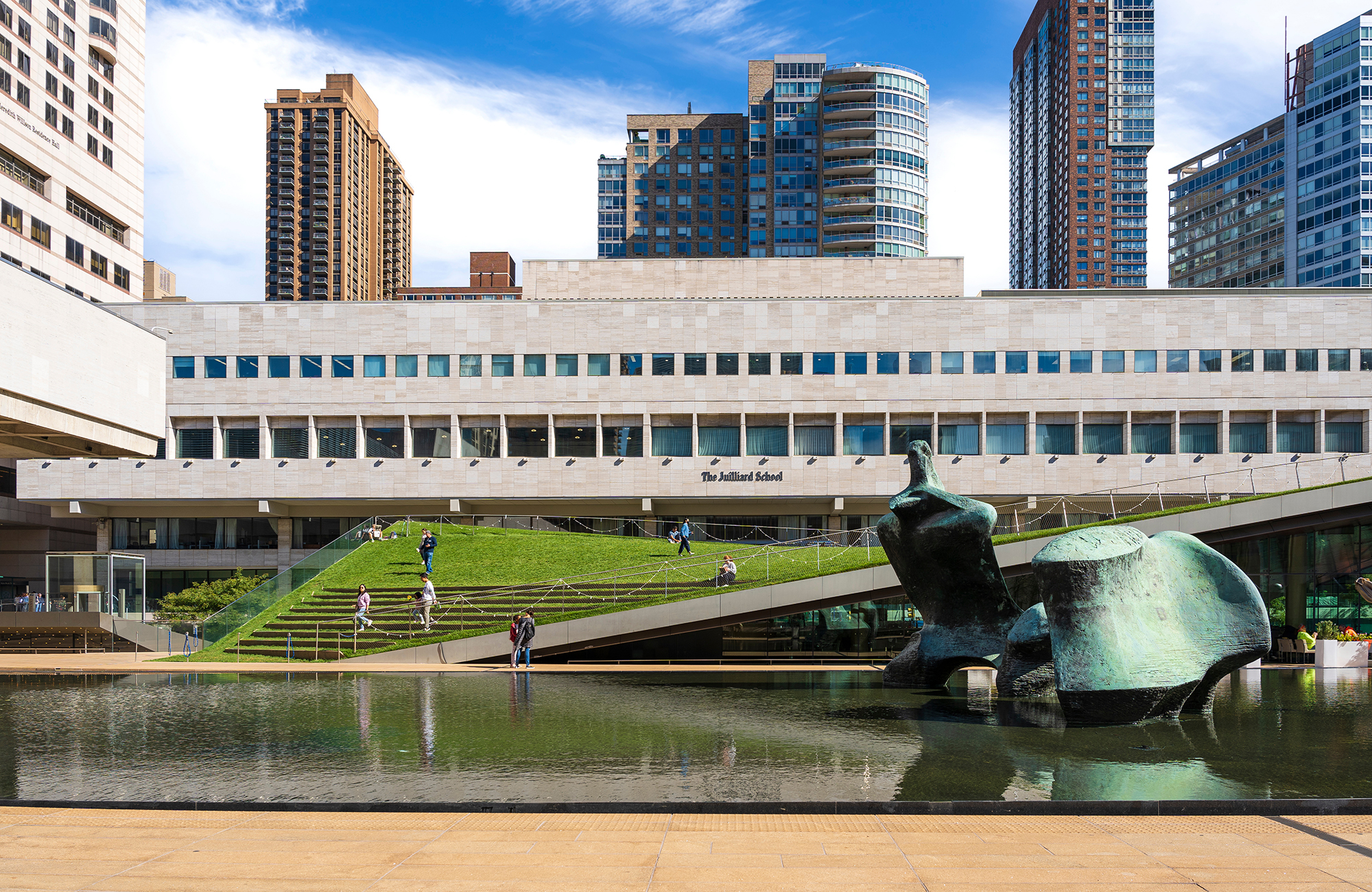 The Juilliard School
  The Juilliard School
 This was on the stage of Carnegie Hall. And so, at the age of 21, suddenly, without any planning, I had a career, dates to play, a recording to make… I was completely flummoxed by it all. I needed an accountant, a manager, a PR, a social security number and all of these things. I’d just been having fun with my friends the day before and my competition success was a real rude awakening.
I actually ended up in hospital with the pressure. I was talking to a colleague the other day, and she said to me, you know, I can’t think of anyone [classical musician] who had a success early on who didn’t break down at some point, because the stress is so intense. When you’ve never played frequent concerts, you’ve just been studying, and suddenly you win a competition and you’re booked for 90 concerts a year… Nobody can do that without some cracks. You have to be as tough as an old boot in some ways to overcome that in the early stages, And lucky, always lucky.
 Carnegie Hall
 Of course, when you’re a child you just enjoy playing. The nerves tend to come later, once you realize the implications of what it means, and certainly, it intensifies once you start doing it professionally. I see this a lot in young people. When they get into their mid-20s they start to become self-conscious and neurotic about playing.
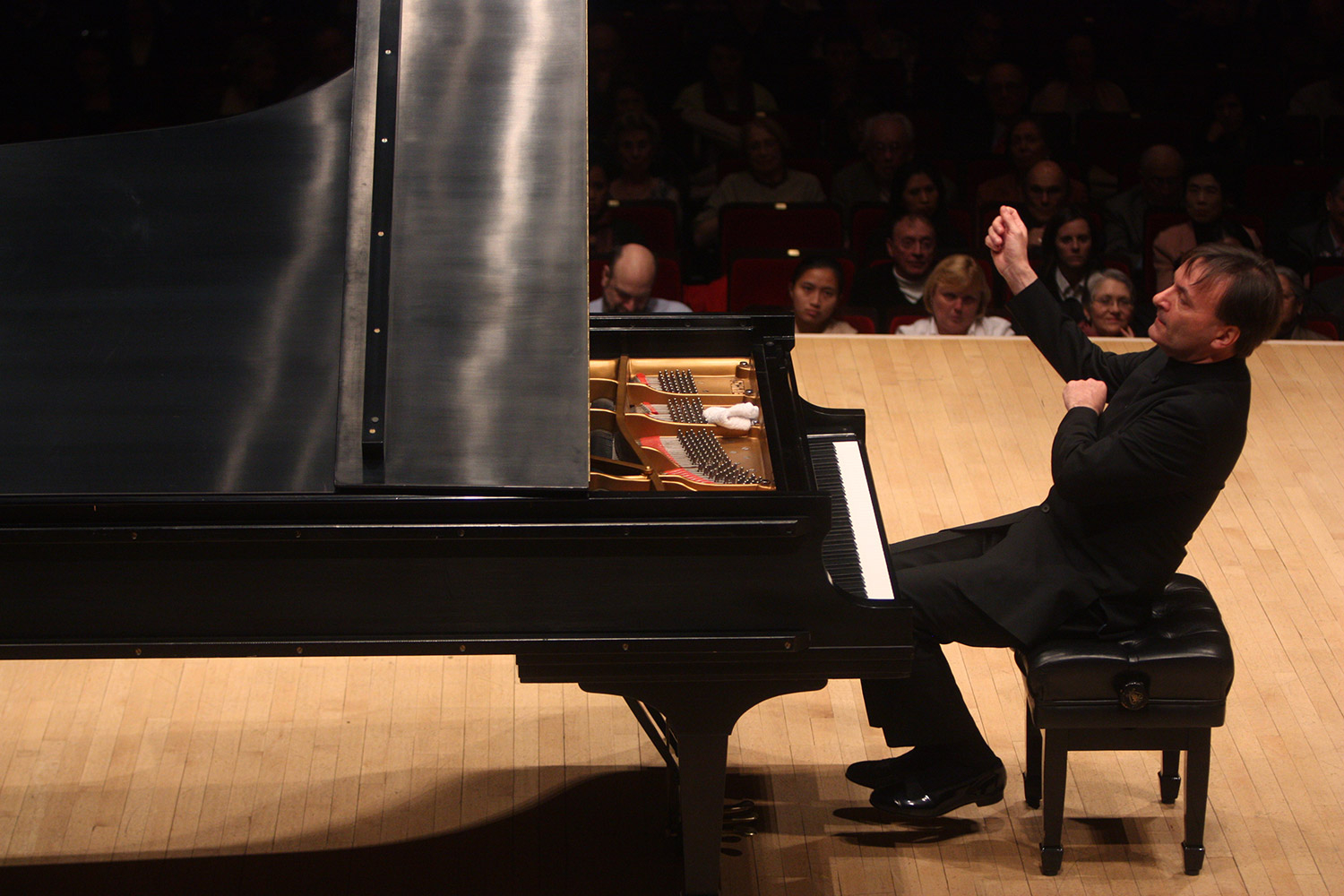
Somehow I managed to get through the early hurdles, emotional and professional, and it all seems so long ago after 70+ recordings and goodness knows how many different concerts – thousands, I suppose, over the years. It’s a very strange life. You know, you need to have maximum toughness offstage (travel, receptions, bad hotels etc.) and then you sit in front of the piano and you have to be ultra-sensitive. And then you leave the stage and you’re back to being tough again. You almost have to divide your brain into two at times.
It isn’t enough just to be talented. You need a certain combination of qualities in order to make a career work. What is it that enables a re-invitation to an orchestra? It’s pretty easy to get a debut almost anywhere, but to be asked back regularly, to build a career over the years, to have something to say… It’s said that everyone has one book in them, but what happens when you’re writing your 12th book? How do you remain fresh and creative? How do you have something different and original to say without being self-conscious about just trying to be different? I was in Düsseldorf a few weeks ago playing Brahms’s First Concerto and there were three performances, each of which felt completely different. While this is still the case, I think I can continue to play.
I remember reading the memoirs of Archbishop Fulton Sheen (a block of 43rd Street in New York is named after him). He spoke about destroying his lecture notes every year because he never wanted to repeat himself or just go over the same material. That’s a bit extreme, perhaps; you might want to hold on to some of it. But the instinct is good, in that every time I go on stage to play a piece, I almost want to feel that I’ve thrown away my score from last week and I’m starting fresh. If I feel fresh about it, then I hope the audience will too. And yet, there’s a sort of patina of experience, which is part of a great interpretation, the feeling that someone has lived with a role, whether it’s in a play or with a piece of music… that sense that you bring to the performance a life lived through many years. Even a pair of shoes is more beautiful when the scratches have been polished into them than when you bought them new.
Stephen’s memoir, Enough: Scenes from Childhood (Faber & Faber) is out now.