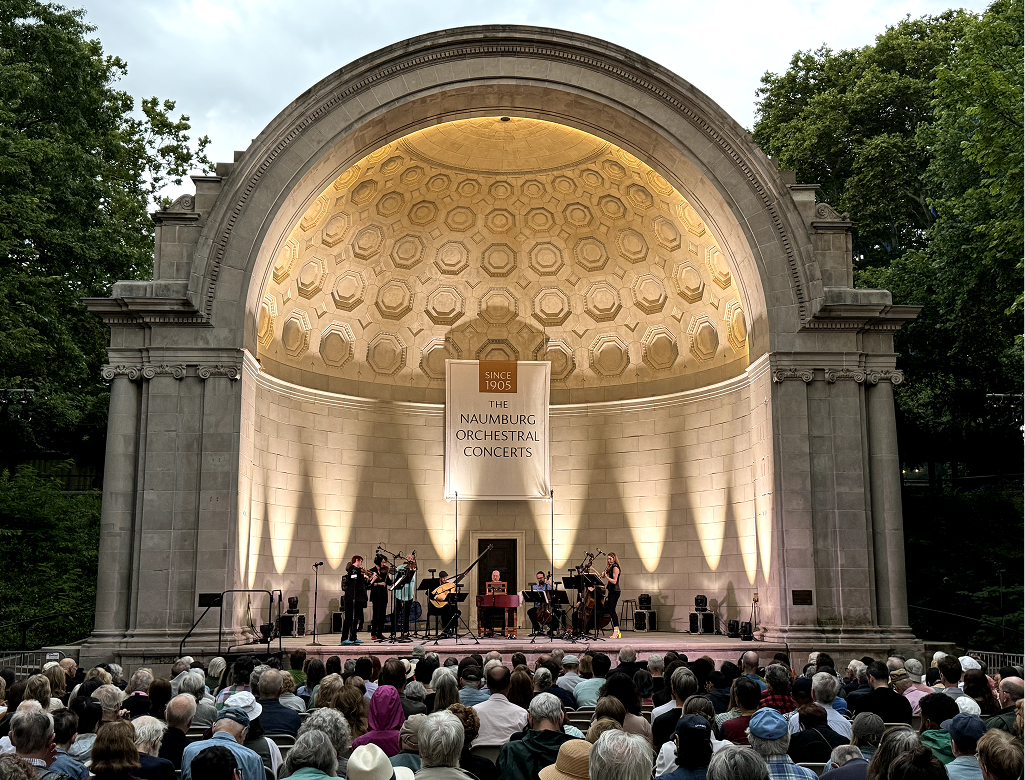
The Naumburg Bandshell in Central Park hosts concerts each summer. Colin Jacobsen of The Knights orchestral group talks to Christopher London, president of Naumburg Orchestral Concerts, which stages live performances at the famous Naumburg Bandshell in Central Park, New York. As the great-grandson of its donor, London reveals its history, and how he came to save it from demolition.
Stories: How we saved New York’s Naumburg Bandshell
Share: 


Colin Jacobsen:
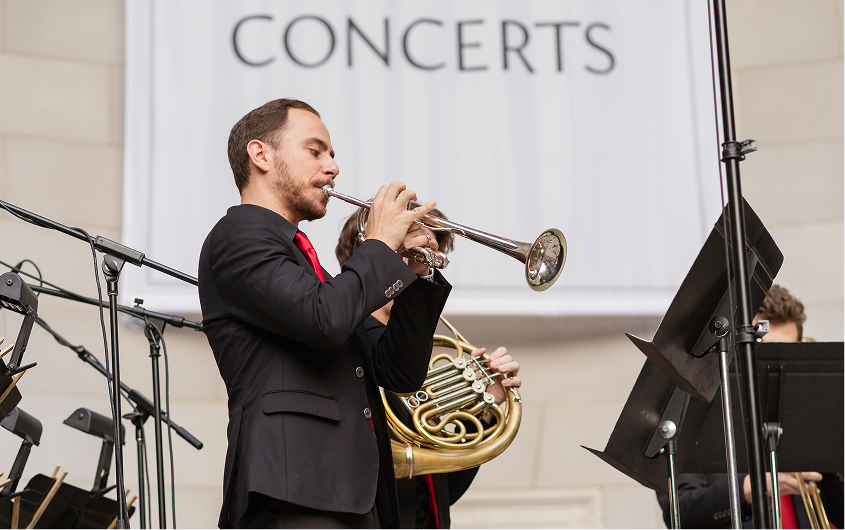
Christopher, The Knights have been playing at the Naumburg Bandshell in Central Park for 15 seasons, since 2009, and we love it as a venue. It’s so casual and really appeals to people who might not normally think classical music is for them.
Christopher London:
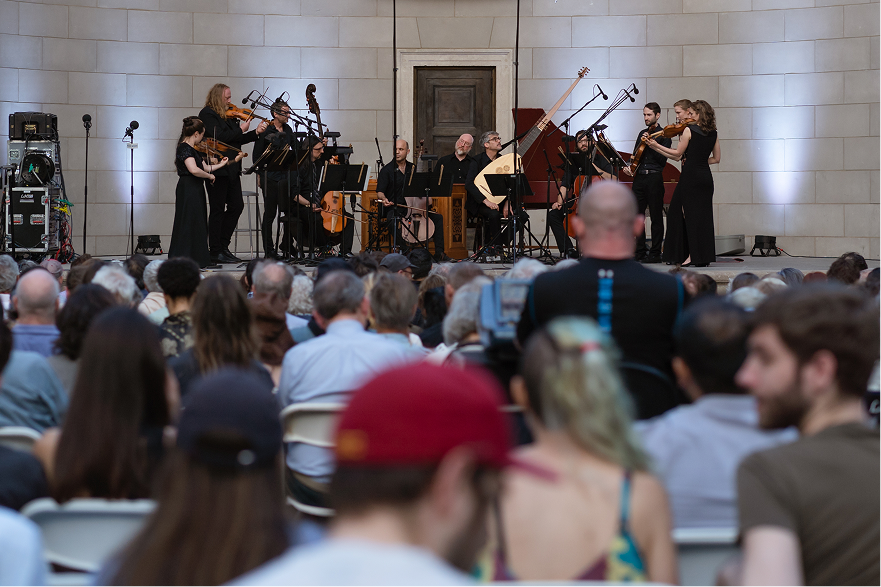
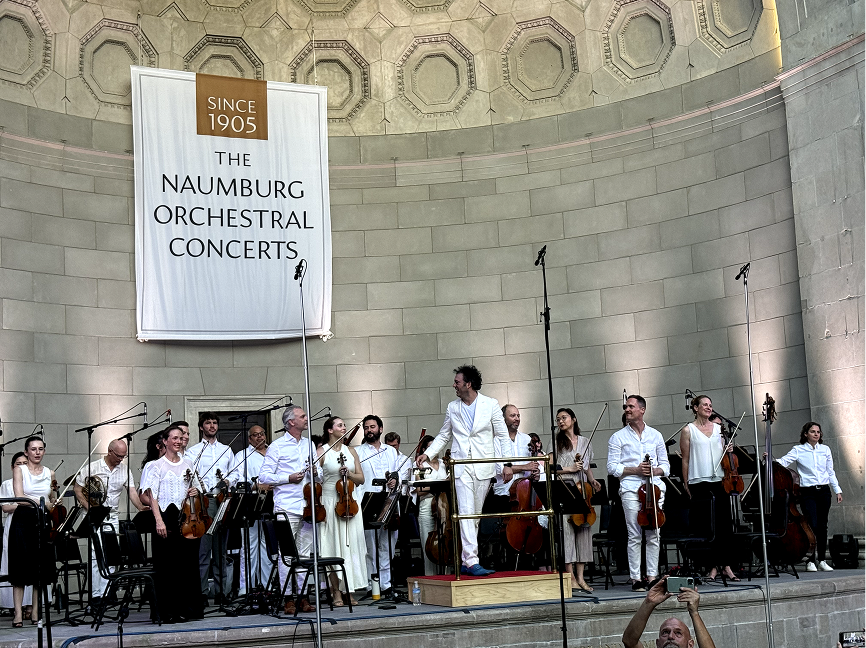
That’s the whole idea. People can just walk up, take a seat and watch and listen for free. Sometimes they are hearing 17th-century music, or sometimes it’s contemporary music, maybe for the first time. In fact, last summer when we celebrated 119 years of the Bandshell Concert Series, and the centenary of the bandshell itself. To do that, we commissioned five new pieces of music, because when it first opened in 1924 a new musical piece was commissioned for the first performance. And you were one of the five composers whose work was showcased in the summer’s 2023 programs.
CJ:
That’s right. And it was great. The thing about the Bandshell is that everyone can come and experience classical music: young families can bring children, and the kids can move around without being told to sit still. It’s open and free and works for people who might find traditional concerts too stuffy. And people love the building, its shell-like shape is really distinctive. So how did it get built?
CL:
My great grandfather, Elkan Naumburg, was very interested in classical music and promoted it in New York starting in the early 1870s. The family later owned a bank called E Naumburg & Company that sold commercial paper. Today, that would be described as floating a new company’s shares and bringing them to the stock market. There were two German-Jewish firms doing that in New York then. One was Goldman Sachs. We were the other, and the larger of the two back then. We closed the bank in 1931.
CJ:
So, Elkan had the means to put on classical music performances.
CL:
He was comfortable. He had a parlor where he’d stage concerts and maintain friendships with the leading musicians of the time. The Oratorio Society was founded in the “family parlor” and Elkan’s wife gave it their name. Elkan partnered with Andrew Carnegie, E Francis Hyde, and James Loeb to bring conductors to the US, including English conductor Sir Henry Joseph Wood CH, who started the Proms in London, who talked about how he was trying to promote access to classical music aimed at a broader audience. Elkan listened and decided to start his free concert series in Central Park as result of the meeting.
“The thing about the Bandshell is that everyone can come and experience classical music.“
CJ:
So, he needed a venue, right?
CL:
There had been a building called the Bandstand there that opened in 1863 and was very popular. But the Parks Department did not take care of it and so it began to decay. So my great-grandfather submitted designs for a more modern musical performance facility.
CJ:
Who got the gig?
CL:
Well, Elkan was approached, partly as he needed a building for his own concerts.
He employed his nephew, William Gabriel Tachau, who had designed armories and synagogues, among other works. He conceived the shell we have today and presented it for successful approval in 1916. But Elkan thought it was inappropriate to build a building devoted to pleasure during the First World War.
CJ:
When did it open?
CL:
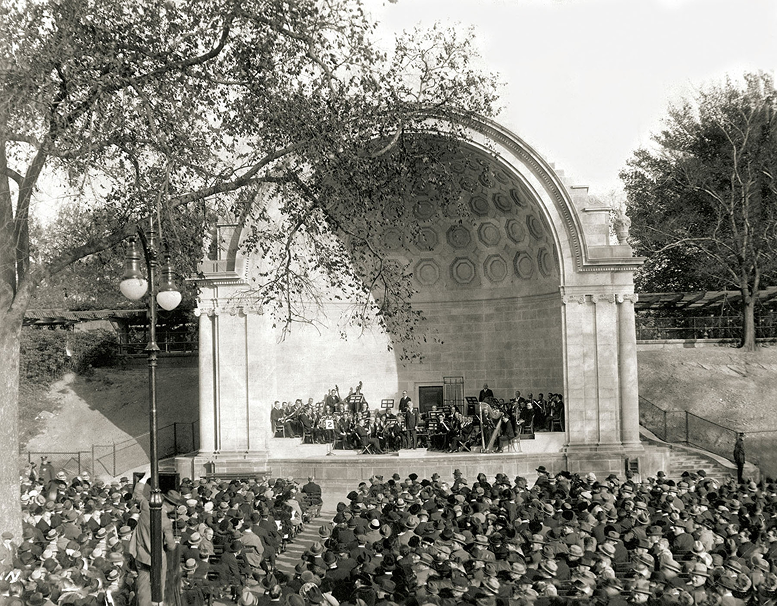
Otto M Eidlitz started building the structure in 1921 and it opened in 1923. The idea was always to provide accessible free concerts to the public. So, once Elkan started his concert series, his two sons Walter and George continued the program. Since it opened my family has supported two building renovations, with large donations. And I have been working for over 31 years to keep the concerts themselves going, with the Naumburg Concerts board and active supporters.
CJ:
And has it been a venue for all that time, since the ’20s?
CL:
There was a hiatus during which some people at the Central Park Conservancy decided that they wanted to replace the Bandshell with a modern structure to host multi-media concerts. I opposed this in the courts. After a lengthy battle, won on the grounds that the Bandshell is a gift to NYC and so much more in keeping with the 19th-century British design of Central Park, we prevailed.
CJ:
Well, I for one am glad you did. The Knights love to perform there.
CL:
The acoustic is great, everybody who performs in it loves the acoustic response, how they can hear the other musicians, see the audience, and interact with them.
CJ:
And you put on five concerts a year now.
CL:
Yes. After I won the lawsuit, I felt I had to revive the Bandshell concerts. The outdoor summer Naumburg Orchestral Concerts actually started before the Bandshell was built, in 1905, and we like to say that, of their type, they are in fact the world’s oldest classical music concert series. They received an endowment from my great uncle Walter, when he died in 1959, leaving money to universities and music organizations on the East Coast.
Walter also founded an international competition and prize for young musicians in 1926. But by 1993, I had to grow the endowment and support for our series. With time we have used the Internet to create a Friends of the Naumburg Orchestral Concerts. And now, we are able to provide five concerts a year every summer. It used to be four. But five is enough for me. We have no staff.
CJ:
As well as being a great venue for performances, it’s also become something of an icon of the park and the city.
CL:
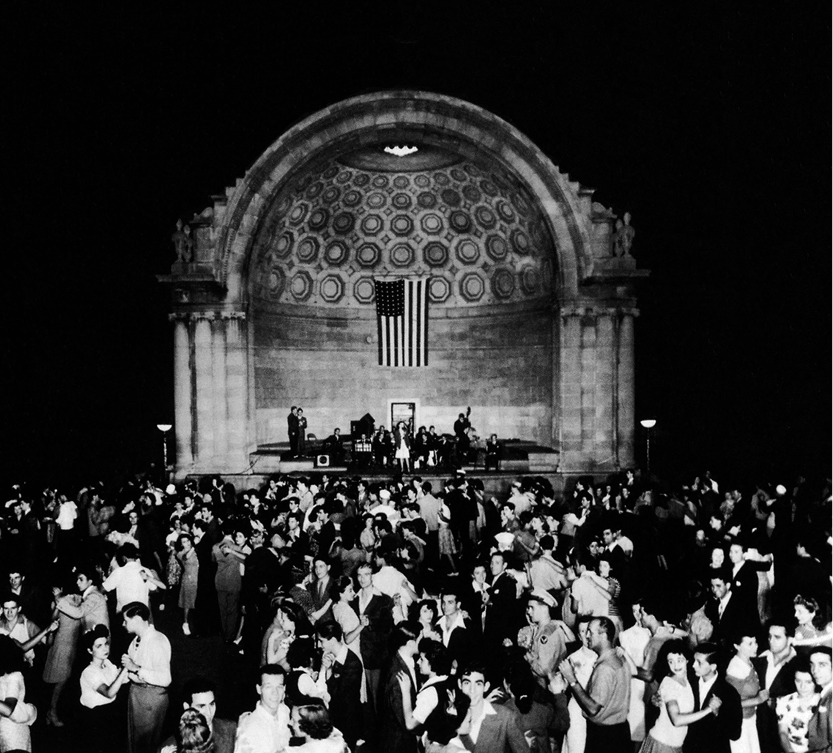
Well, it’s physically very attractive, situated in a magnificent grove of American elm trees. It’s atmospheric, a handsome place to give a concert. But you’re right, it’s become a tourist attraction and featured in many films, like Breakfast at Tiffany’s, Barefoot in the Park, Hair and When Harry Met Sally. And those are just the ones I can remember.
CJ:
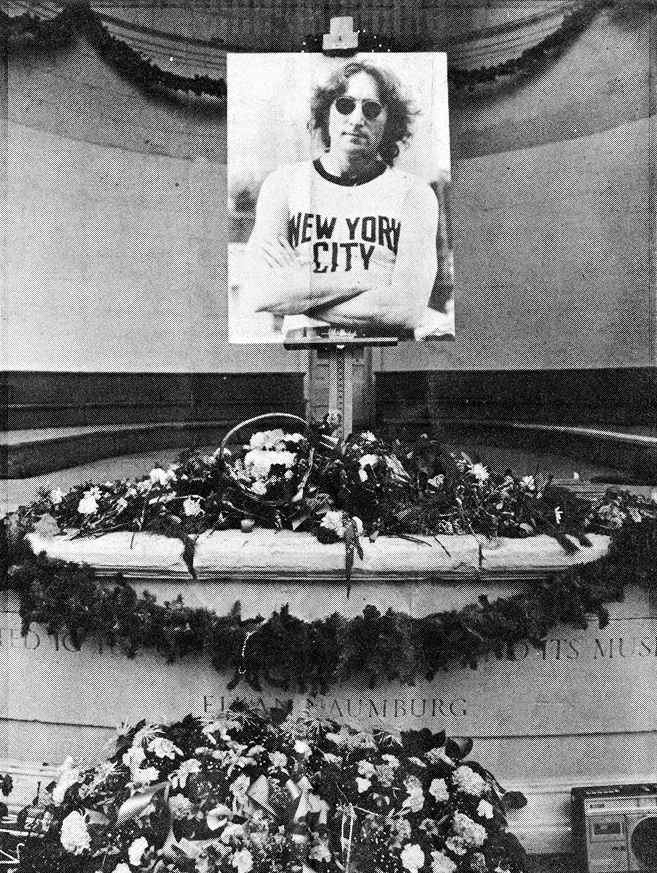
And there’s a connection with John Lennon, too, I believe.
CL:
Yes, John Lennon was particularly attracted to the Bandshell. His memorial service was held there. And then it became the launch site for a Lennon stamp that was issued by the Post Office. But lots of famous people have performed and spoken there. Like Benny Goodman, Irving Berlin, Leonard Bernstein, Joseph Silverstein, Duke Ellington, the Grateful Dead, BB King and Martin Luther King Jr – and even Fidel Castro.
CJ:
The Grateful Dead! So non-classical performers have given concerts there. Would you ever consider including other musical genres in your summer program?
CL:
Not really. My favorite type of music is classical music and it’s what my family has been providing for years – we started WQXR, the only classical radio station in New York, back in 1936. But we do a broad range of classical music at the Bandshell – I’ve been doing mid- to late-17th-century concerts, early 18th century, and had composers performing their own works. We’ve worked with the Handel & Haydn Society, a Boston-based orchestral group, A Far Cry, and ECCO, each chamber orchestras, also from Boston. So we really try to give a broad range so that people will find the concerts appealing and not repetitive. That being said, I do think the Bandshell would do really well for jazz because it’s very lively acoustically.
For further information about the Naumburg Bandshell and the concerts held there visit naumburgconcerts.org