Twenty-five years ago, the Norwegian pianist Leif Ove Andsnes released his highly acclaimed recording of Edvard Grieg’s Lyric Pieces for piano. At the time it cemented his growing reputation as an international soloist. A quarter of a century later, he is shining a light on another Norwegian composer, Geirr Tveitt, with a new recording of his piano works released earlier this year.
Leif Ove Andsnes: Stories
Share: 


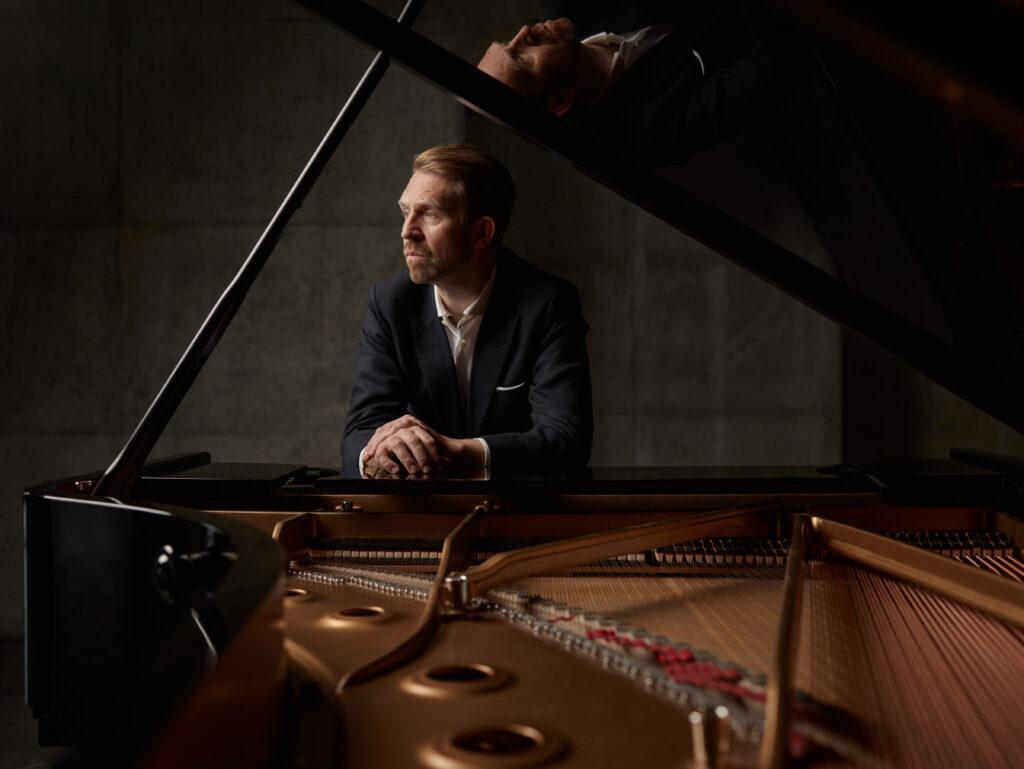
Geirr Tveitt was very knowledgeable about Grieg with whom he shared a love of folk music. He apparently analyzed and wrote about Grieg’s works but I’m not sure how much survived after a devastating fire at Tveitt’s farm in 1970. It’s thought almost 80 percent of his music went up in flames.
Grieg used folk music as a distinct flavor while remaining within classical forms. Geirr Tveitt was much more of a purist who had a really deep belief and respect for Norwegian folk music in its own right. So, for instance, in the score of his 50 Folk-Tunes from Hardanger, which is on my latest recording, he writes the text under the music. Sometimes he admits it’s impossible to remember the exact words that were sung to him when he was collecting these songs. That’s such a shame, but it’s clear his music is deeply rooted in that folk music feeling. You hear this a lot in his piano work Sonata Etere, which is based on two melodies that resemble folk music. It’s much more anarchic than Grieg! It was very telling when I played this sonata in the States a year ago; somebody asked if Tveitt is a kind of Norwegian Charles Ives?
I can see why because his music can suddenly go off in one direction, and there’s a mixture of French sounds and Russian rhythmic ideas and folk influences all working together. I’m fascinated by how his spare, archaic sounding passages with missing harmonies are contrasted with very juicy French sounding bits. There’s something really honest about it, a sound world of its own. He was a character which you get a real sense of if you hear the two recordings of him playing this sonata. He starts in a kind of feverish attitude and off he goes, no holding back. He doesn’t know how to pace this enormous canvas he’s created and it just crashes quite quickly into a wall. It has a kind of animal energy.
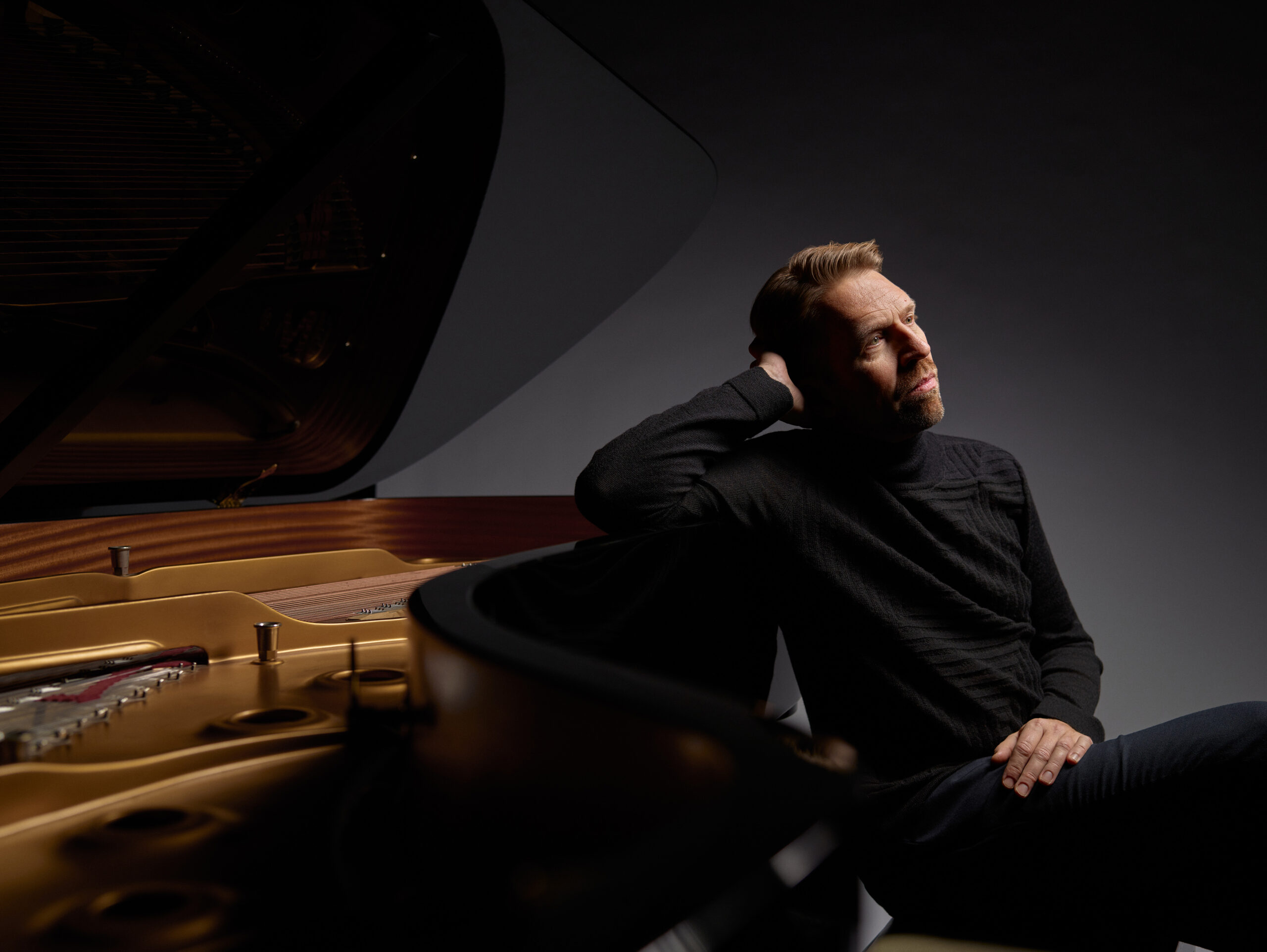 © Helge Hansen, Sony Music Entertainment
Then there are his shorter pieces, some of which he wrote for clubs in Oslo for a singer and guitar, and that’s why I got my sister Solveig to sing on the recording. Often Tveitt’s songs have been performed by classically trained singers but I’m not sure that has to be the maxim or the best way to perform them because they are so text orientated, simple, folky, and jazzy.
Tveitt’s reputation took a bit of a hit after the Second World War. I haven’t really been digging into the 1930s but he wrote things back then that are apparently a bit unfortunate and there were people who avoided him. I think the younger generation of musicians are not looking at that so they feel free to play him and look at the musical qualities that are there. There are some pieces that belong to a different era and are not so relevant anymore, but something like the Sonata Etere is a beautiful and poetic masterpiece. I don’t know whether we’d be playing more of his pieces today if it hadn’t been for the fire but sometimes composers who have a huge output are often overlooked because they produce so much that the gold is never discovered. But, of course, there must have been interesting things there, especially for pianists; it’s believed that 30–40 piano sonatas were lost with only the Etere surviving and that’s a big tragedy, although we do know this was the sonata he favored.
My first wake up call to Tveitt’s music was when I was artistic director at the Risør Chamber Music Festival in south-east Norway. I was there from 1992 for 17 years. After a while I couldn’t imagine life without a festival like that because it gave me the chance to explore my own repertoire and build my own programs. I was also seeing the joy of musicians coming together and forming relationships, some of which lasted several years after the festival. And then there was the enthusiasm of audiences who enjoyed the variety of programs we were able to devise. You know, in the same program you could have a piece of solo piano, some songs, an ensemble piece for 10 people and then finish off with a string quartet. It allowed for so many possibilities, it was exhilarating and it became integral to my life as a musician. It also gave me a feeling of having an anchor especially before I became a family man at 40. Before that, I was playing around 110 concerts a year, so to have that sort of anchor, to have a festival to concentrate on, to have these places I knew and visit every summer, to create something different and bigger was very important. It became a home, and of course, I felt I was doing something for my home country and all the musicians there.
As a performer, I feel a much greater sense of freedom on stage now than when I recorded the Grieg Lyric Pieces back in 2001. I was 30 years old when we did that. I feel surer of what I want from the music and more clear about what my limitations are and what repertoire I want to express, so I feel like a very different musician. Sometimes when I listen to my old recordings, I’m surprised maybe how good it was, or how different it was, or how I don’t like things… it’s a long time ago, but the good thing is that one does change as a musician. You don’t necessarily get better with age; there are famous musicians who were at their best when they were 16 years old. For some, it becomes a problem when you get too conscious about things, you know, you did things perfectly intuitively, and then suddenly you become a grown-up and you start to analyze too much and that becomes a problem.
Hopefully, for most it’s a journey and I certainly feel less controlled on stage now. I know what I want but I also leave an element open for the moment. Also, I’ve found with the years how I’m more touched by the music. I find myself more easily crying and laughing about music than I did and that can be anything from the simplest children’s song to St. Matthew Passion. Once in a while I’ve cried on stage but that’s kind of pathetic! It’s not the best way to perform a piece of music; an actor should never get really touched by his or her own performance. But listening to things, I get very carried away and that’s wonderful to feel. I would find it hard to perform if I didn’t have that emotional connection to the music or a determination to give it the importance it deserves for the people listening. I think that feeling is a bit underrated these days, that absolute will to really want something… I mean, look at Beethoven and how far his determination got him. It wasn’t only pure talent; it was his desire to do something with a few notes and for them to mean something.
Leif Ove Andsnes – Geirr Tveitt is out now; leifoveandsnes.com