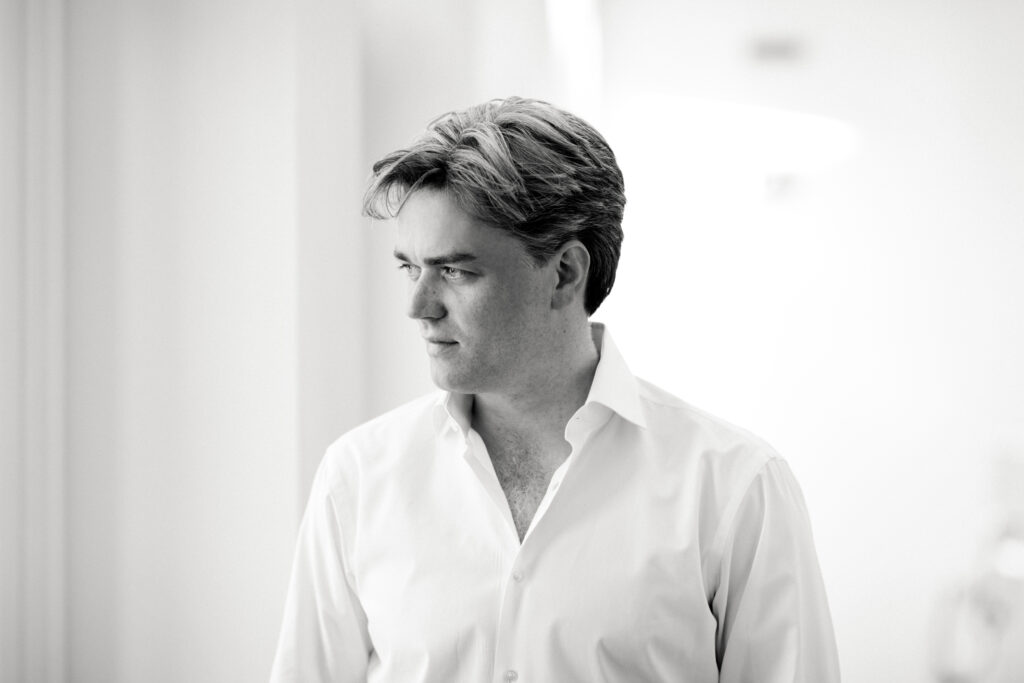
British-Canadian Henry Kennedy is assistant conductor of the Gustav Mahler Jugendorchester in Vienna, Austria, and started with the Sommer Tour 2026. Before, he served a two-year appointment as the inaugural resident conductor of Canada’s National Arts Centre Orchestra (NACO) in Ottawa and served as Resident Conductor for Poland’s Wrocław Opera. He has demonstrated his ability to move seamlessly between the opera house and the concert stage with an impressive array of international credits, and in 2025 was ranked by CBC (Canada’s public broadcaster) among “30 under 30” notable Canadian classical musicians.
Origins: Henry Kennedy
Share: 


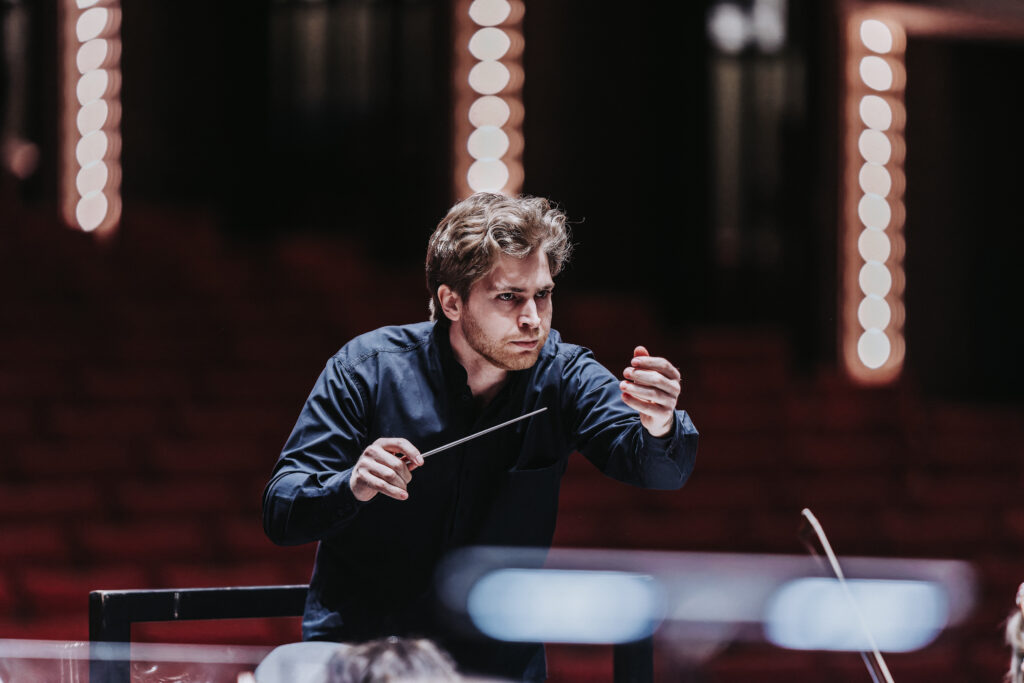
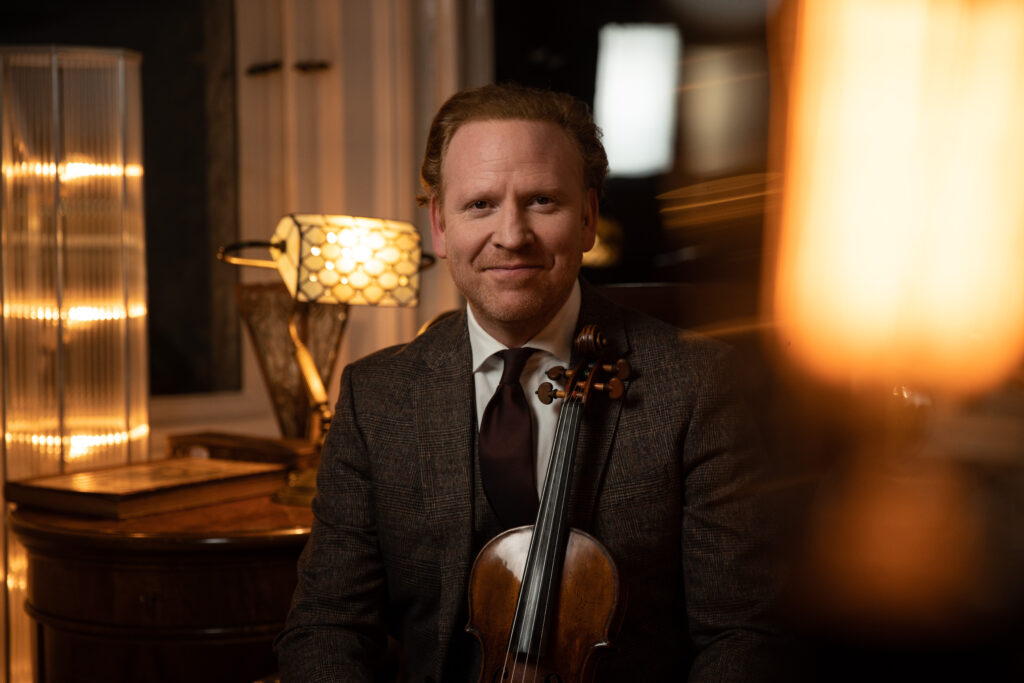
 Photo by Curtis Perry
 I grew up in the English countryside, in an area called Shropshire which is on the Welsh border. It’s a beautiful place, and my local orchestra was the City of Birmingham Symphony Orchestra (CBSO). I was very fortunate that I was able to be in the CBSO Youth Orchestra when I was a teenager. Getting to play music at such a high level from a young age was very informative and very important because I was pretty keen at the age of 13 not to go straight away into a music conservatory.
No one in my family is musical, and I don’t think they really liked classical music until I came around, but I fell in love with playing instruments and I couldn’t stop. Practicing consumed my whole childhood. I was playing in everything you can imagine, from fetes to fairs to dog shows. In England, dog shows are very typical. You have a little village band, and you play different marches and excerpts from film scores and old tunes.
The main catalyst for pursuing music was conducting. When I was 17, my music teacher asked if I would like to conduct. I’d always wanted to do it, I don’t know why. There was a veteran player in the orchestra, in the double basses. He had played in the London Philharmonic Orchestra for many years and seen everyone, played with everyone. He said to me, “Yeah, I think you’ve really got something you need to continue.”
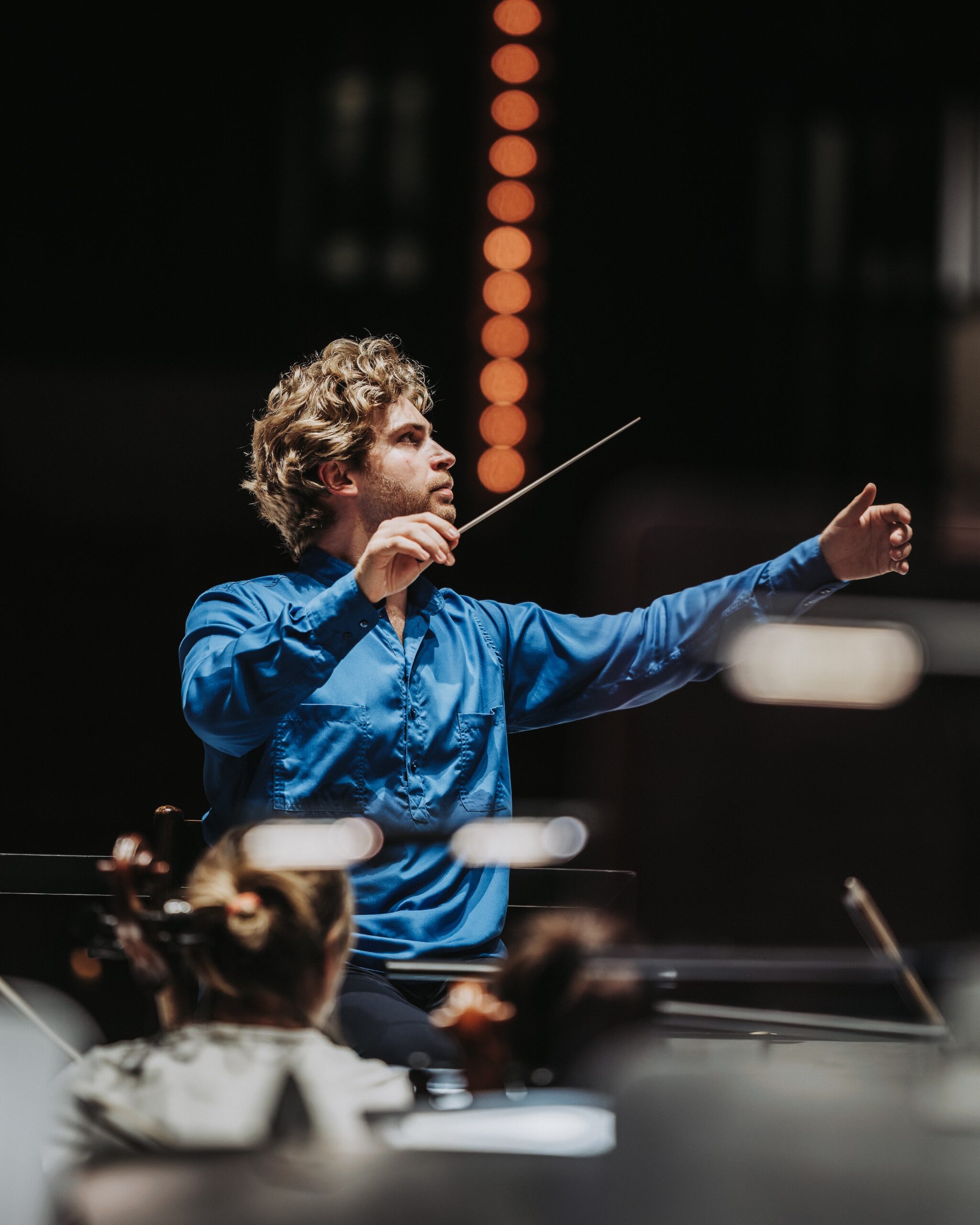 Photo by Curtis Perry
 Still, it was important to me that I wasn’t just a conductor from the beginning and that I was a real musician first. I was a clarinetist at the Royal Academy of Music from age 18 onwards for my undergrad degree. Alongside this, I was doing conducting master classes and sort of slowly getting into it. By my last year, I had set up my own orchestra, which is sort of a typical English conductor thing to do because there are such few opportunities to be able to conduct within conservatoires, sadly. That was a matter of getting friends together and playing through the music that I loved. I started with Bruckner’s Third Symphony, which is a weird choice, but it was an important steppingstone for me.
Now, these last two years with the National Art Center Orchestra in Ottawa have been the most important and formative years of my career to date because they have allowed me to find my own voice. When you have someone important in your life guiding you, you’re trying to make them proud. I’ve always aspired to be somewhat of an amalgamation of all the different conductors I admired and have been fortunate to work with. But it just doesn’t work with orchestras if you’re not yourself. With the orchestra in Canada, they wouldn’t accept anything but my authentic self. That’s a very Canadian thing, and something I’m proud of as a Canadian. That belief, that mindset – that everyone accepts you for who you are – is something that can be shared all around the world.
Recently, I finished the season in Ottawa, and I moved to the UK to begin my new position as assistant conductor to the Gustav Mahler Orchestra. I started slowly looking at Mahler’s 7th, listening to that, and other repertoire within their schedule, Bruckner’s Symphony No. 4. But I found it important early on, before the season even began, to have silence. We all have so much noise in our lives. And when you’re rehearsing every day, six hours a day, having some moments of not listening to music is a special thing and a unique thing. I find it important to just walk along, to be with yourself, and not listen to anything. It’s powerful as a musician to have that skill to be able to switch off because we never do.
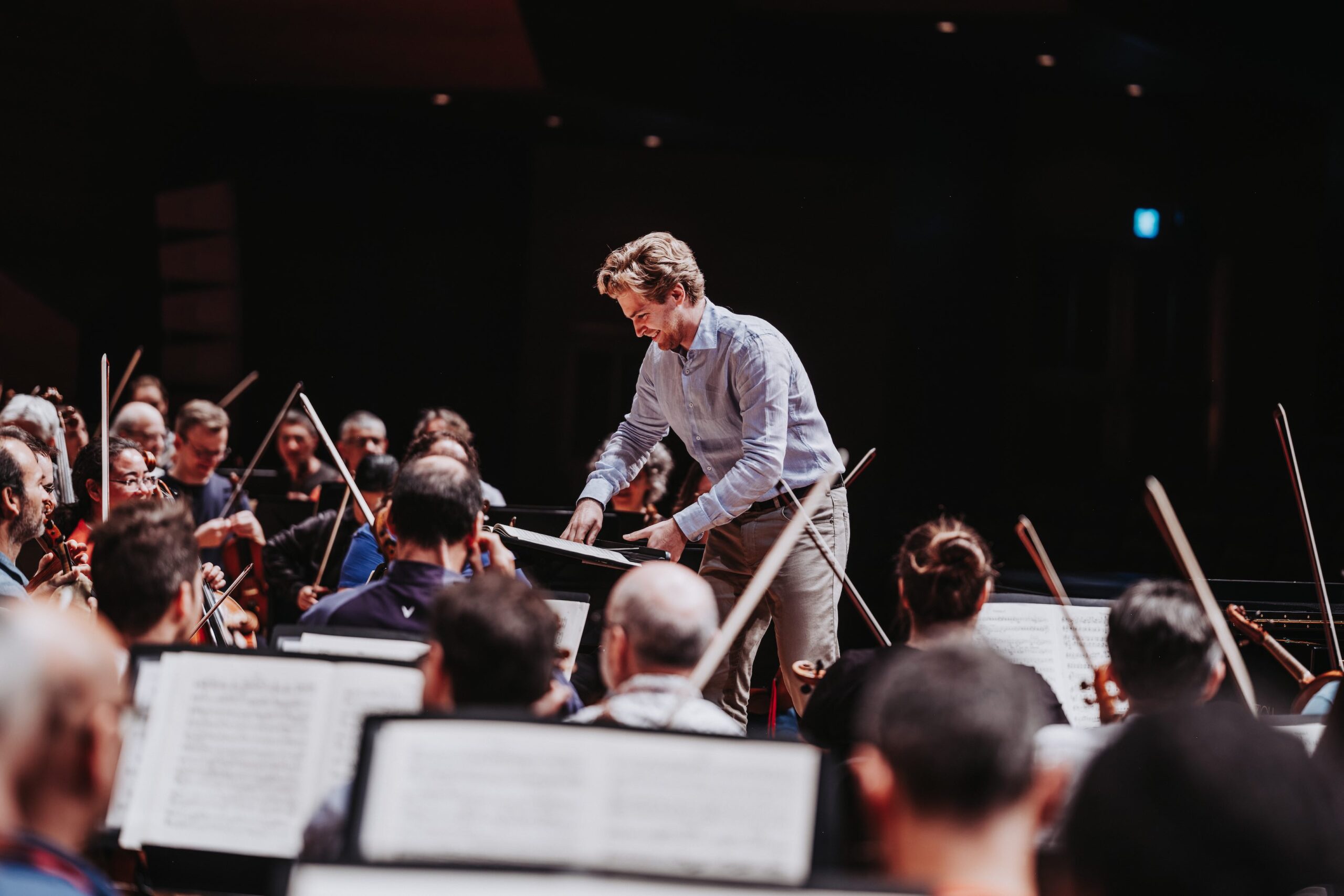 Photo by Curtis Perry
 When I am listening to recordings, I believe that finding the one that speaks to you is important. If, for example, you’ve never heard Mahler’s Symphony No. 7, you can listen to a recording which might not necessarily move you, but then if you have someone’s advice about a recording, you can have such a different experience. It’s the same with different versions of various books, different actors that we like. For me, I never go towards just one conductor, one recording, because I find that can be too influential. I listen to as much as I can. Most importantly, I find the recordings I don’t like can be far more interesting because you discover your own interpretation through that. It’s a crucial part of the process.
Mahler is performed so much now. It’s like Puccini in the last 20 years or so – suddenly Puccini and Mahler are so overplayed. Not in a negative sense, necessarily, but that’s just a fact. I often feel with Mahler we can exaggerate too much – with dynamics, with tempi – it can be too overblown, and it sounds cheesy. Going back to the score and discovering what he wrote and not just going to our favorite Bernstein recording of Mahler but seeing what his intentions were is essential. Mahler was so clear to conductors. We have very little license to overstep the mark, because he will write in the score to the conductor. He knew how to anticipate conductors exaggerating the score, how to stop them from doing that.
Out of any of his symphonies, Mahler’s 5th is the piece that has followed me throughout my career. It was one of the first pieces I ever played in an orchestra as a clarinetist. Mahler’s 9th was the second Mahler symphony that I ever played. It was quite extraordinary to go all the way to the end of his oeuvre; a very formative experience for me because I was performing as a clarinetist, with Semyon Bychkov conducting, and I think it was one of the very first times he had ever performed that piece. Seeing a conductor grapple with a work like that and really do it well was so inspiring.
Mahler has been a huge part of my life, but also within this Mahler Orchestra context, Bruckner has been a pivotal influence, going back to when I had my own orchestra. With Bruckner and Mahler, there’s this idea that they go against each other. You either choose one or the other. There’s a lot of baggage to that, and I certainly subscribed to that feeling growing up. Traditionally there’s the idea that conductors only do one thing or the other, and both are so unique. Even though Mahler did study with Bruckner, they are very different composers, and I don’t think we should ever put them in the same box. There are certainly similarities, but like great actors, great artists, everyone is an individual, and I think that’s important to remember.
I’m conducting my first Nutcracker in December. It’s a special project for me because it’s with Symphony Nova Scotia, which is where I’m from on my Canadian side. To be returning with that orchestra is an important life moment for me. I had the opportunity of working with them for the first time some months ago for a new music workshop, and then they invited me for this. I’ve never done Nutcracker before, and I’ve always wanted to conduct ballet; it’s an art form which fascinates me endlessly, particularly as a conductor because there are many facets that we can be inspired by and influenced by. I think it’s important to say that with ballet conducting, there is a certain perception within the industry that needs to change. Which is that, as soon as you do ballet conducting, you can never do anything else. You can’t do symphonic. You can’t do opera. You’re seen as a ballet conductor.
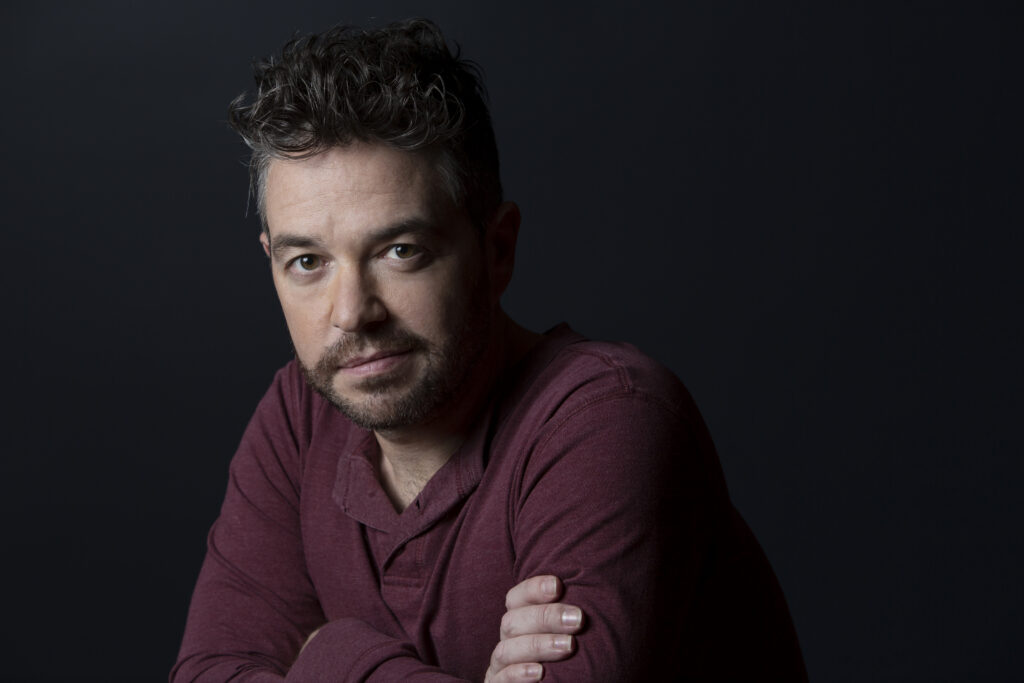
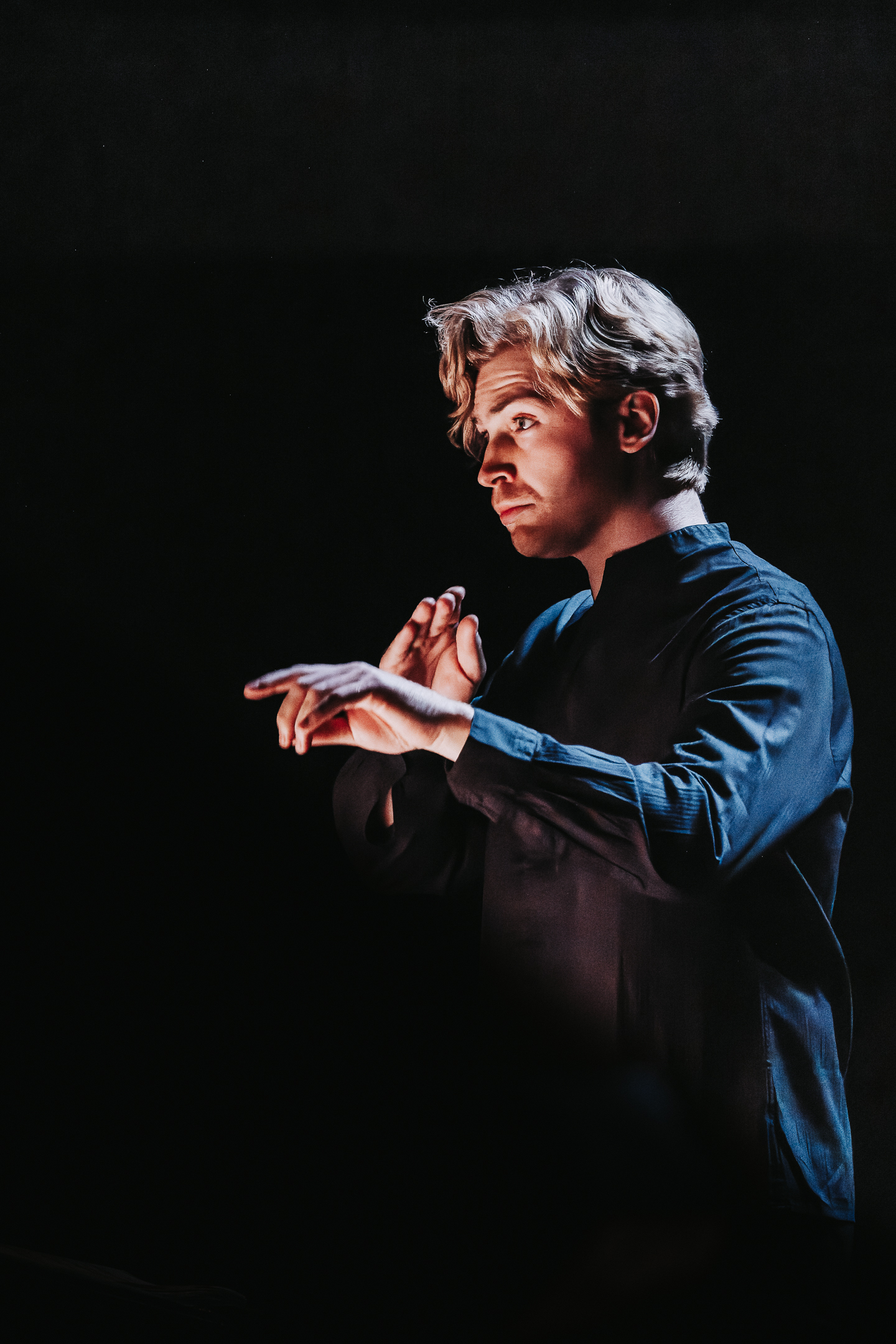 Photo by Greggory Clark
 An important part of why I wanted to conduct is because there are so many different elements to it. If I’m just in a practice room, that’s not going to appeal to me. With conducting, you’re thinking about history, context, literature; every part of it must be within your world when you’re preparing a piece. I remember as a student in London, I was going far more to theater than I was to concerts. I would go to everything I possibly could, whether it be musicals or plays. There are so many connections with theater and conducting. Of course, you know there are some conductors who have even studied acting, but I think that’s missing the point. With the great plays, with great theater, the way one can interpret one line, one stanza… there’s so much small change that can be done with dynamic, with articulation, with diction. All these different considerations. It all transposes to music. They’re completely the same concepts; that we can look at one phrase and find all these different nuances. I believe it is important to be able to go in between these different art forms.
The only free time you have as a musician, as a conductor, is when you’re in new places. The first thing I always do is go to the art gallery. I find you can tell so much from being there about a city, about a culture, about a language. I remember going to Warsaw for the first time and going to their gallery and just being so blown away by the national Polish art, which I had no clue about before. You can discover so much about a city through art, and it’s something I find I can spend hours doing, getting lost in. It’s important to be in that sense of flow. Of course, then it’s about diving deeper into context, whether it’s the Mozartian time of art or other periods; it all comes together. For me, combining all these influences is crucial as a conductor.