Concert pianist Simone Dinnerstein has established herself as one of the world’s most revelatory interpreters of JS Bach. Ahead of her program of music by him and Philip Glass at the Aspen Music Festival, she talks about the musical threads that link both composers, and the unique demands of performing at Aspen.
Stories: Simone Dinnerstein
Share: 


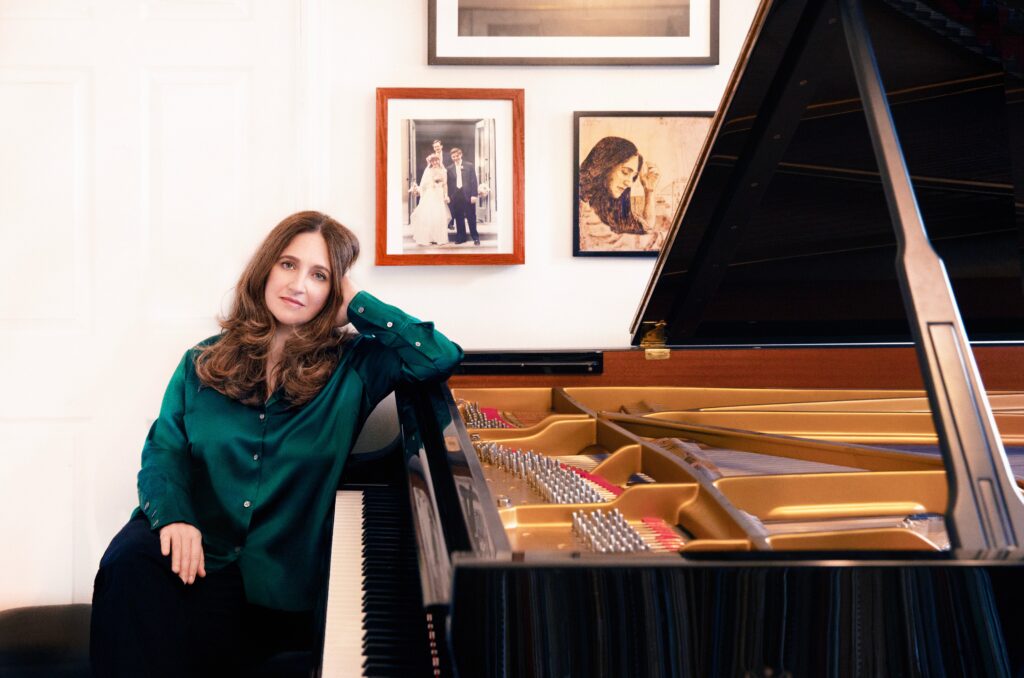
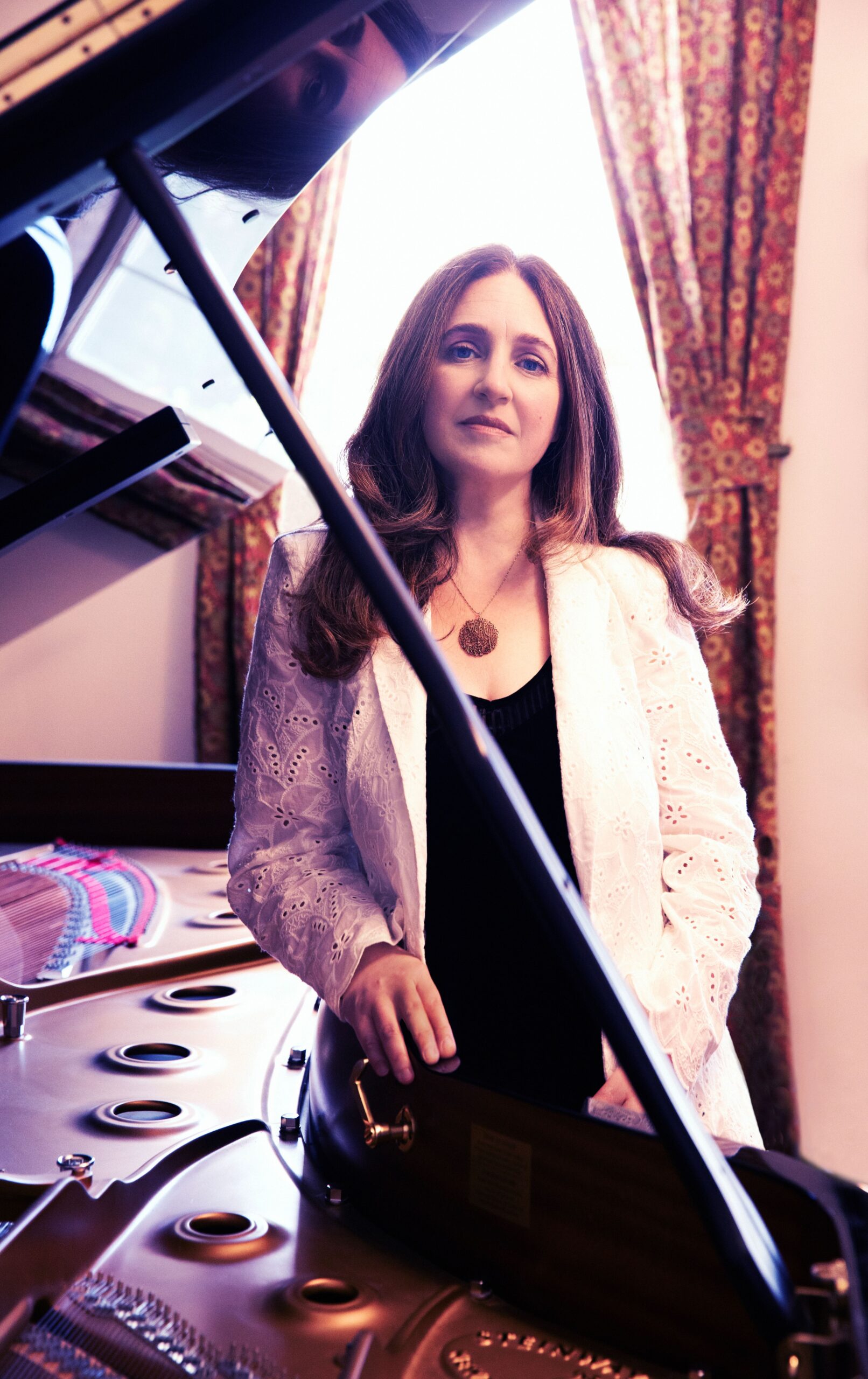 Photo: Lisa-Marie Mazzucco
 What makes Aspen exciting is how students are able to play with guest artists. Not every festival takes that approach. And then of course, you have the most idyllic setting and that makes it very special because you feel like you’re in this magical world in the sky. Being connected to the natural world can give musicians an important breathing space, and the audience too.
Aspen does pose certain challenges for me, in particular its high altitude. I know some musicians I’ve spoken to have had similar problems. Several times I have actually wound up in urgent care because it can make you feel nauseous and headachy. You have to drink a lot of water, and you need a lot of electrolytes, and then also, you can have oxygen. I mean, that’s usually what happens when I go, I just get hooked up to an oxygen machine and that makes me feel a lot better. I don’t do that when I’m playing!
My performance at Aspen this year is a program of JS Bach and Glass, who have quite a lot in common. To start with, they’re both highly polyphonic composers. In Bach, every voice is independent and has a singing quality. Together they form this whole, but you could really sing every voice and it would make sense as a separate line. The same is true with Philip Glass’s music, though I would say that in his music, the polyphony is informed by the rhythm of each voice, which are quite independent, so every element has a different kind of rhythmic subdivision and feeling. When these are combined it creates a kaleidoscopic effect which is similar to Bach in terms of multiple lines forming a whole.
The other thing Bach and Glass have very much in common is that they think about music in a very practical way. It’s not really tied to particular instruments, so you’ll see a Bach keyboard concerto also for violin or for oboe, or in his Keyboard Concerto [No. 2 in E Major, BWV 1053] that I’m playing at Aspen, this originated from two cantatas. So, he was always repurposing the music and because of that, the music isn’t written in a style that is very specifically related to the technique of one instrument. That’s also true of Glass’s music as you might hear one of his concertos turning up in a film score or in a piano etude. He’s constantly rethinking about how the music could work.
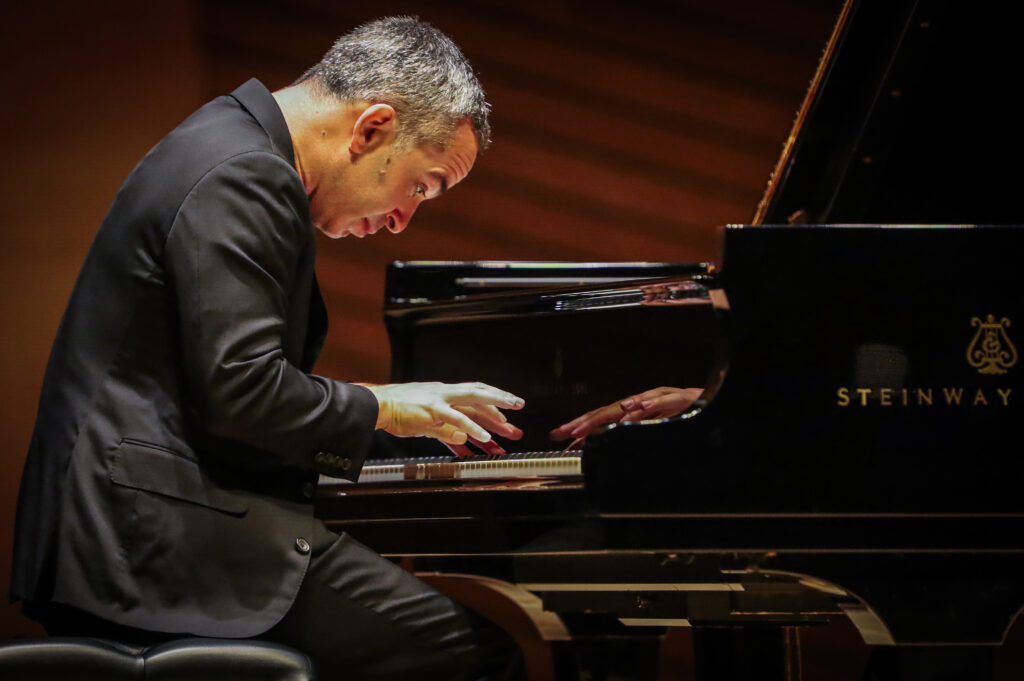
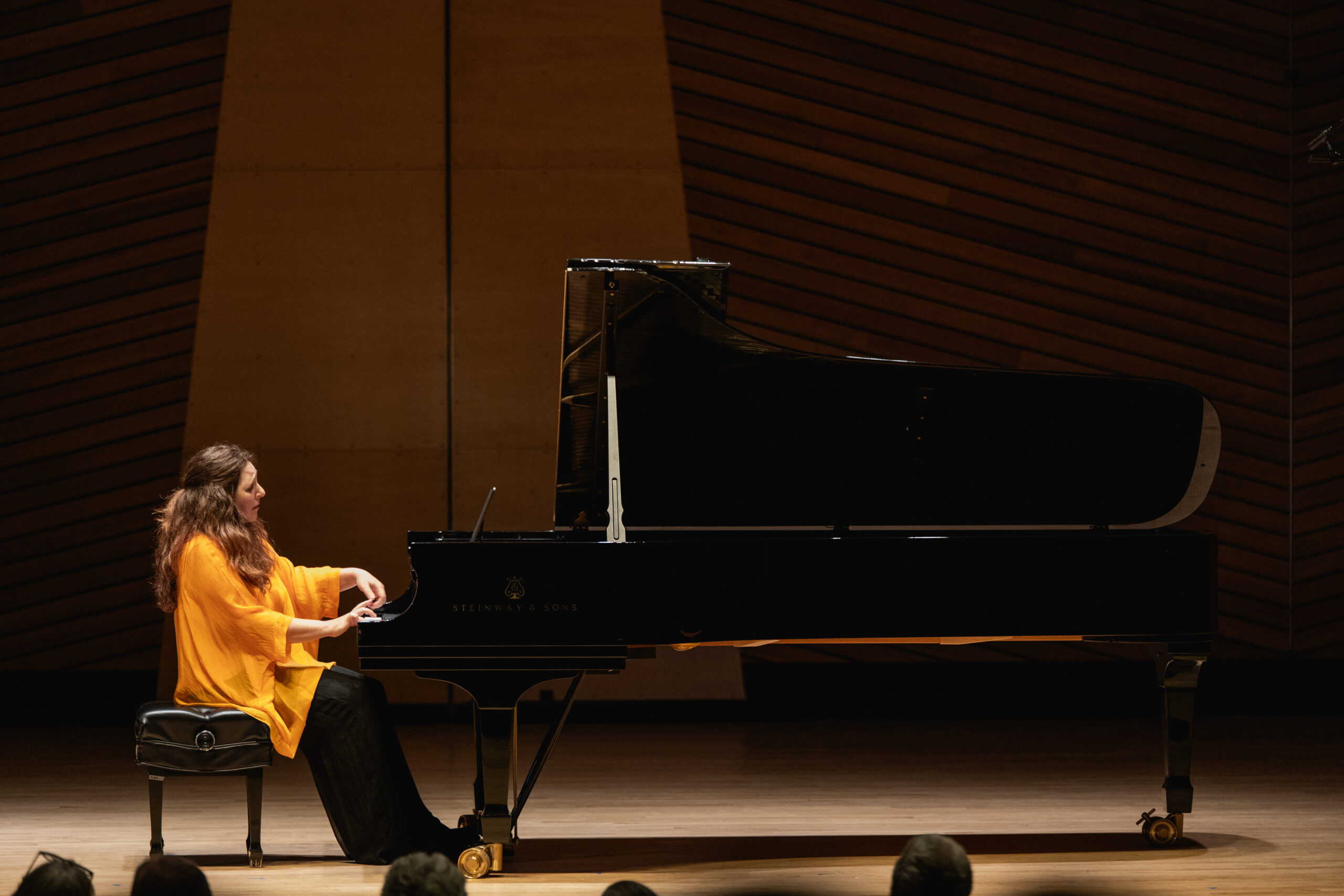 Simone Dinnerstein during her 2024 performance at Aspen; Photo: Blake Nelson
 I’ll be conducting the Bach and the Glass from the piano with Aspen students, 11 string players in total and for Suite from The Hours we add harp and celesta. I want the orchestra to feel musically connected and responsible for their playing and for them to listen intently. I see my role as being almost like a theatre director, where I have a vision for the arc of the play and I know how I want each scene to fit. I need the actors to be completely committed and involved and communicating with each other so they will bring an element of magic that I couldn’t have anticipated.
I’ll be bringing my own set of parts which are very specifically marked from the work I’ve done with my string ensemble, Baroklyn. They not only have the bowings but I also use a lot of word imagery in our rehearsal process, so all of those words are in the parts. For example, I might say I want one part to be ‘warm’ and another part to sound ‘regal’ or ‘removed’. Sometimes the words can be very vivid, you know, such as ‘sunrise’, or sometimes I might just write, ‘like Schumann’, because if you say the word Schumann, everybody has an image right away. People might not naturally think Philip Glass is going to be like Schumann, but when you say, please play this like Schumann, they know exactly what you mean.
As a performer, one of the most important things I have to think about is programming; why are you bringing an audience to a concert, and what are you offering? Of course, you’re offering your own artistic vision, but I think that the nature of the program, the design of the repertoire, the flow of the music has to have a different kind of rationale than it did in the past, which was tied to the late 19th century, mid-20th century. That was the model for a very long time, and yet our society has completely changed, and we don’t have the same interests anymore. Most of the audience coming to hear a piano recital may never have been before, so our repertoire choices have to reflect that with a musical narrative anybody can understand.
I don’t want to talk down to the audience, so you don’t need to play simple music, but when you think about why you are choosing a piece of music, ask how that relates to the music on either side of it in a program. What is the arc of the program going to tell you? It has to be aesthetically clear. To try and get those elements aligned is the challenge but it’s something our program at Aspen will try to achieve. You know, I’m thinking about the music in a certain kind of polyphonic way, which means we’re going to play it in a certain way, and then people are going to hear that if we do it well.
Dinnerstein Plays Bach and Philip Glass takes place at Aspen Festival on Saturday 15 August at 7:30pm; simonedinnerstein.com