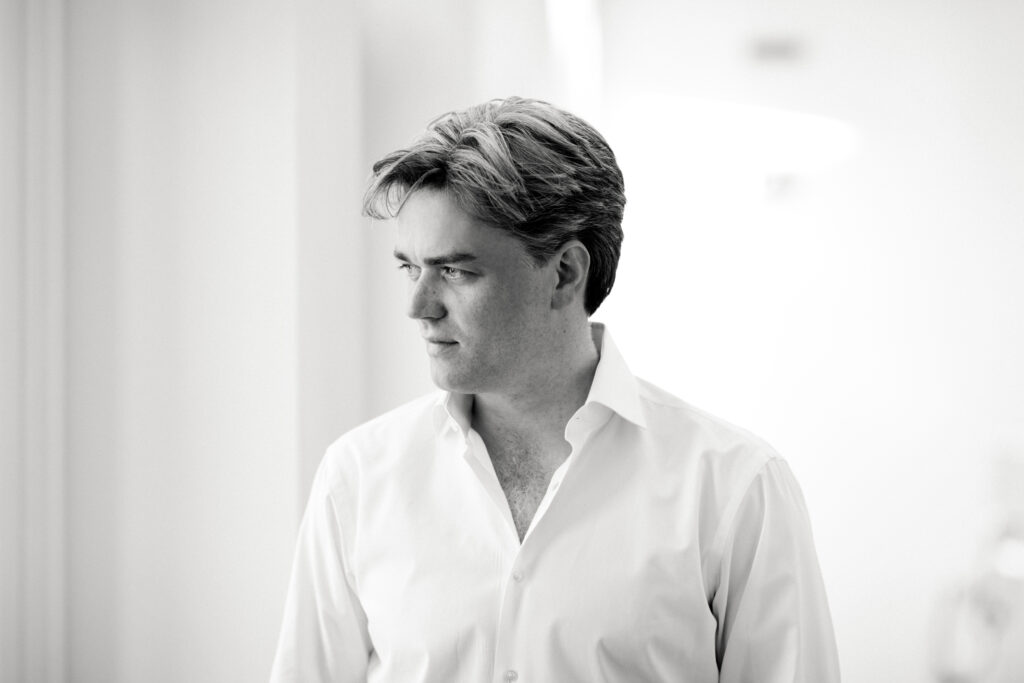
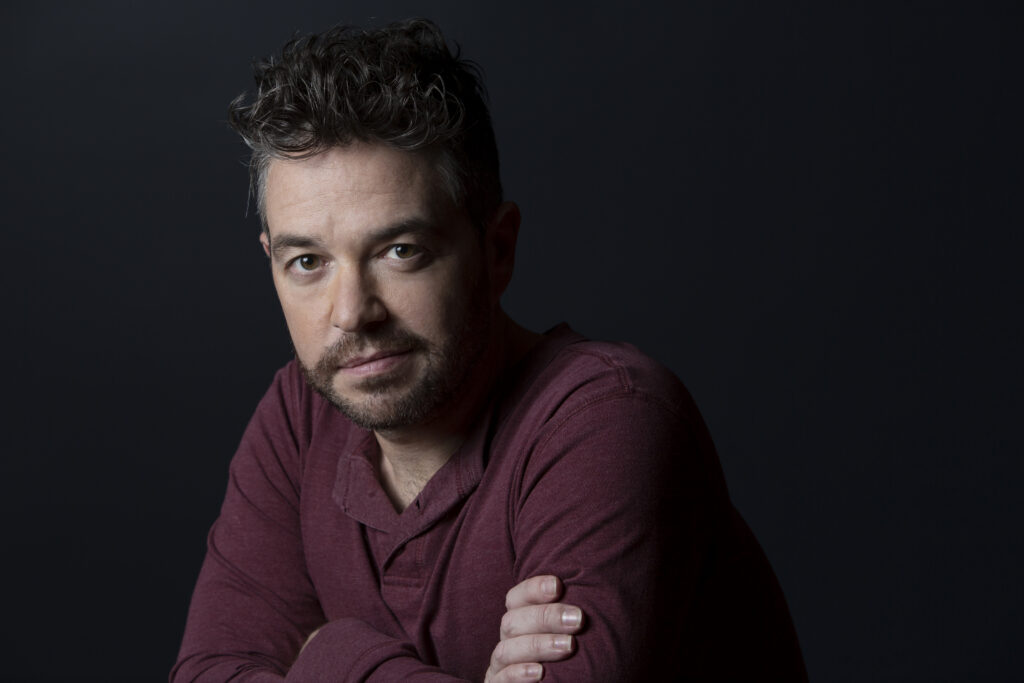
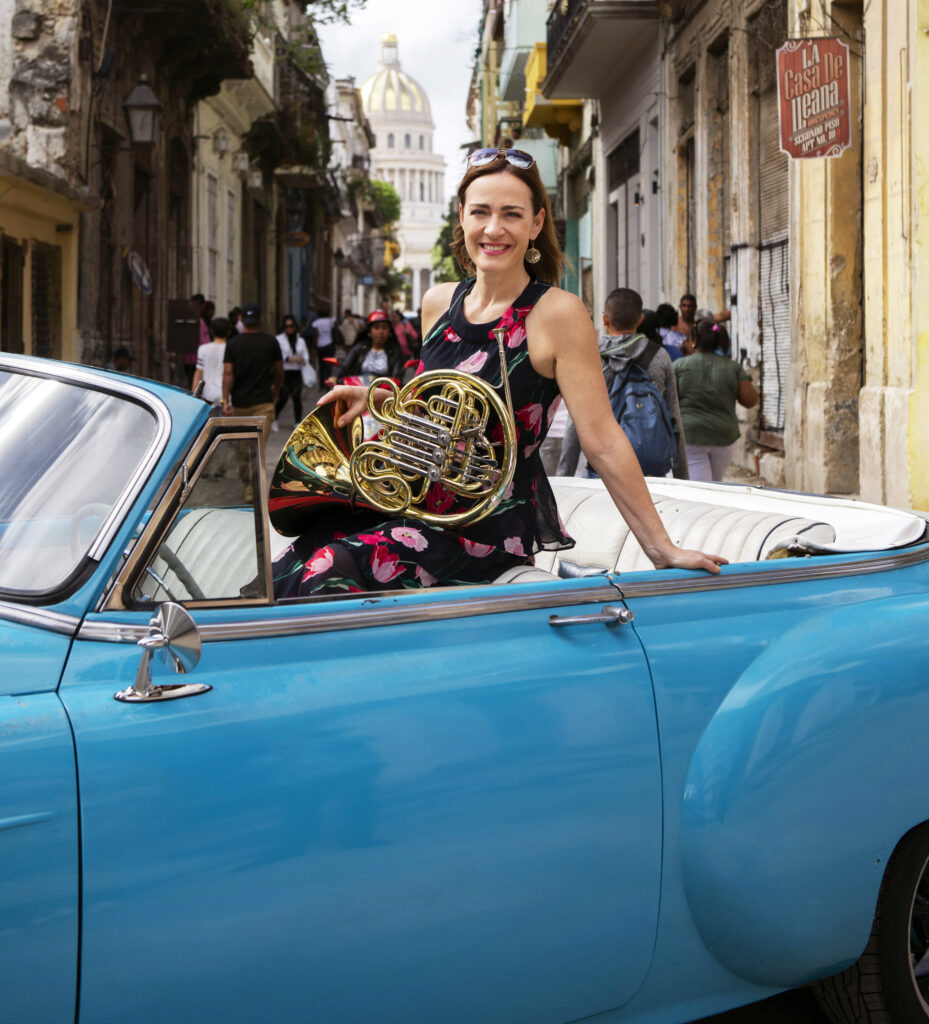
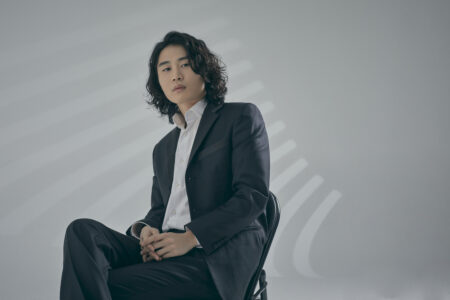
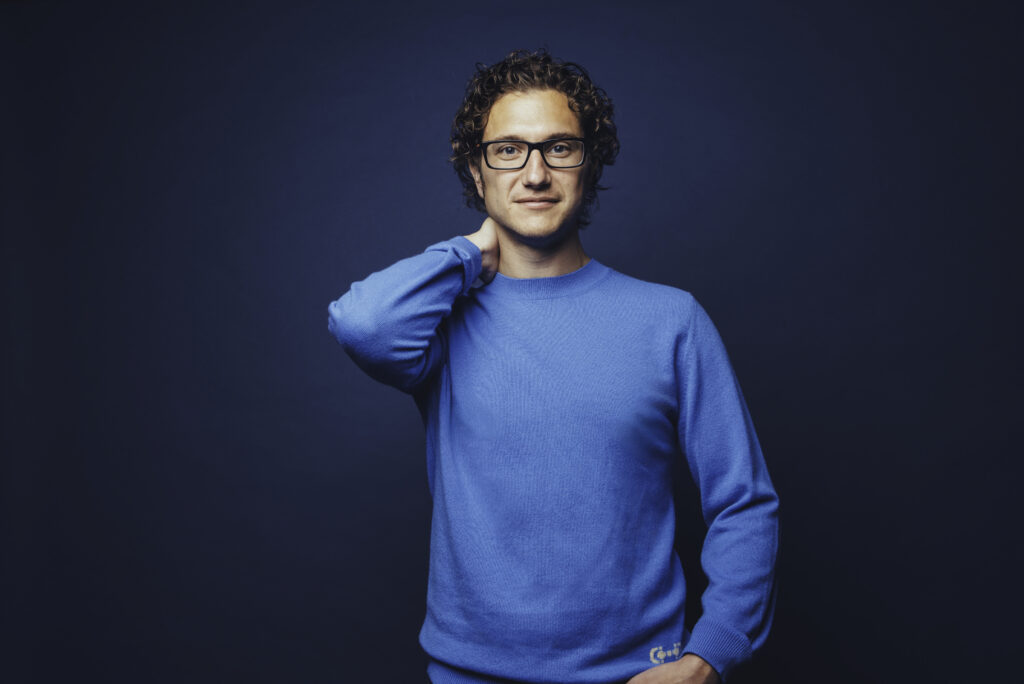
Teddy Abrams is a conductor, composer, and multi-instrumentalist and is Music Director of the Louisville Orchestra.
Origins: Teddy Abrams
Share: 


I don’t have that first musical memory from when you’re three or four years old. I just remember loving the piano that we had in our house, which was intended for my mom, because she wanted to learn to play.
I think that she always imagined that she’d recapture her childhood dream of being a star. If it hadn’t been for that latent wish to be some kind of entertainer, then we probably would not have had a piano in the house, because neither of my parents actually played.
What kicked off my interest in music was just going to the piano and improvising. Both of my parents were attorneys. They were not in creative fields, and I’m not totally sure what level of musical background or education they really had. My dad has really good ears, but it was limited to playing a few chords on the guitar.
Music was not a big part of my experience growing up, except for the music that I wanted to play. I would go over to the piano, unprompted, and just improvise and play for myself. And after my parents noticed that I was playing the piano all the time and probably trying to copy things that I’d heard from whatever audio I was listening to, they thought maybe we should get some structured lessons to help and see what that does. I was maybe four or five years old, and I was not a prodigious genius by any means. I was not one of those people that took off playing Chopin and Rachmaninov concerti. I think I was pretty good, but I was more interested in improvising and composing. I think that was the distinguishing thing.
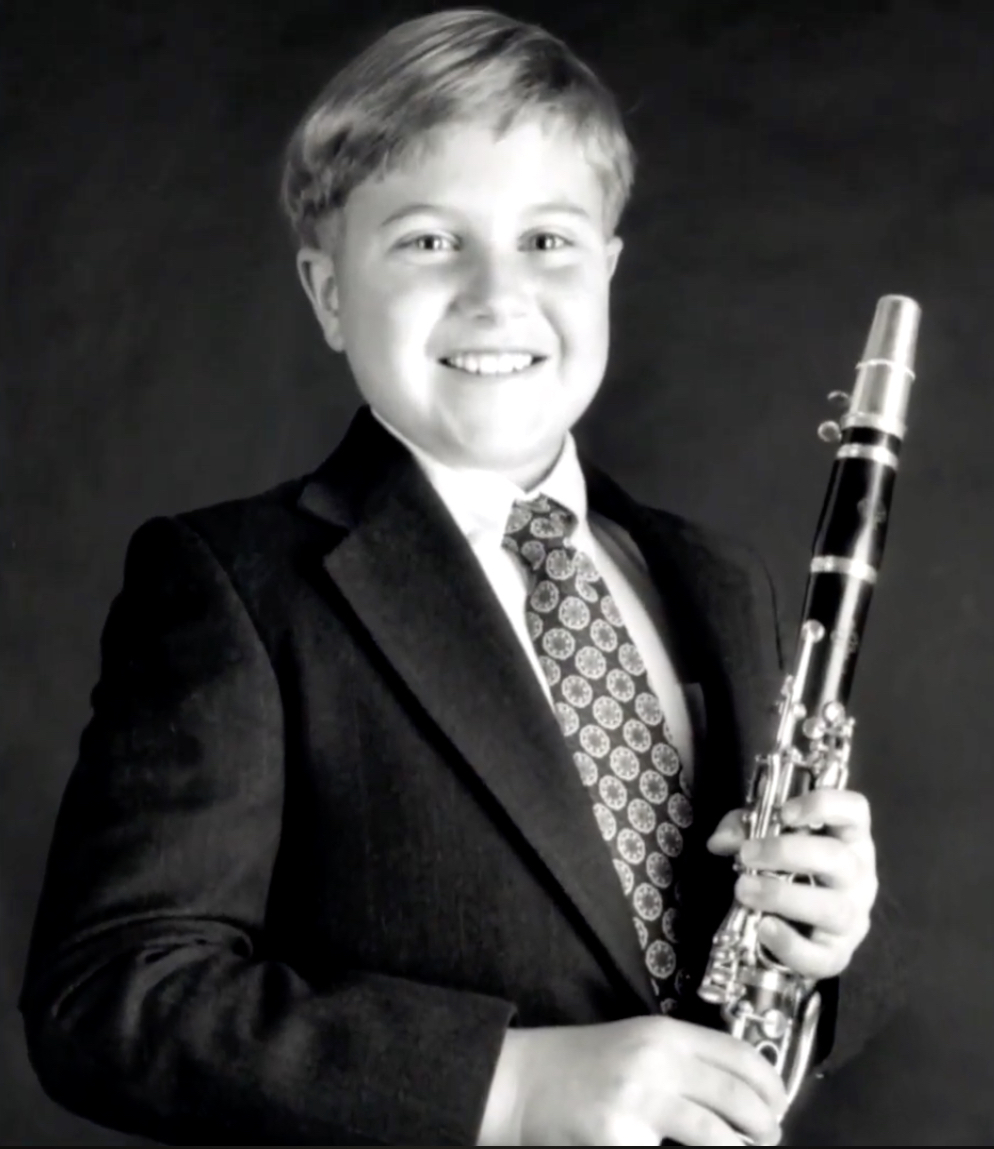 A young Abrams poses with his clarinet. Photo courtesy of the artist.
 The first major musical memory that has stayed with me was when I was in second grade in Oakland, California, where I grew up. The school had decided that they were going to extend the band program to elementary school, and they had never done that before, so they wanted all the third, fourth, and fifth graders to experience what a band was, because most of us probably didn’t know. So they brought in another school’s band to play at an assembly that I remember dreading because I didn’t think it was going to be fun or cool, but I was mesmerized.
I still remember to this day this young Black kid from some other school in Oakland, who sang I Believe I Can Fly. I did not know that song or any of the background at all, but it was the greatest thing. I will never forget how for the entire assembly, the elementary school kids were paying attention to every single second of what was happening on that stage. I mean, we never really were very quiet or respectful, but this was mesmerizing, and the effects were evident because every single kid in second grade signed up for an instrument to play in third grade when the band program would start, including me.
This would have been the early ’90s, and Clinton was president, and the saxophone was all the rage. I had gone to the inauguration and had a little saxophone pin. I thought that was the coolest instrument that you could possibly play, so I signed up for [that].
We went to the instrument store where you could rent a saxophone, and this guy comes out from behind the counter and takes one look at my hands and says, “No way, your hands are too small.” He said I had to choose another instrument, either the flute or clarinet. I’d been playing the piano for three or four years at that point and figured the clarinet was probably the best match, because I wanted to do something cool and jazzy. And I remember my dad said, “Well, the clarinet can do both jazz and classical music.” And that was what did it.
The clarinet was a very different experience for me than the piano. I was like any number of millions of young pianists, but the clarinet just clicked the second I played it, and I can’t explain this. I have no understanding of why, probably some weird mix of genetics and environment. But I put the clarinet in my mouth, and within the first week I’d finished the whole band book. I went home. I practised on my own. I mean, this was rudimentary third-grade band. This is not something that was ever meant to even sound that good. This was just to keep the kids occupied for an extra hour of school, but I would play the clarinet for an hour to two hours a day, and this was just the first week.
By the end of the first week most kids were trying to figure out how to put on the ligature and attach the reeds to the mouthpiece, and were squeaking every note, but I had finished all the music that I was given, and said, “Well, what? What do I do now?” And I still can’t explain that – I just took to the clarinet. I loved playing the clarinet and that’s what inspired the notion of becoming a musician. Because up until that point, I hadn’t thought about a career. Why would a first or second grader think about a career other than, I want to be an astronaut or a firefighter or something like that? But when I started playing the clarinet, I knew that that’s what I wanted to do. I wanted to be a musician.
I think a lot of musicians probably share a similar story where, fortunately, somebody intervenes to help a young musician along the way, because family had no contact with the music world, classical musicians, teachers, or anything like that. And the wonderful band teacher, Marlo Green, helped and suggested what the next steps would be. I got a great clarinet teacher and started really taking the instrument seriously.
It was at the end of that first year of playing the clarinet, the end of third grade, that my parents decided I should probably go and see a professional orchestra. I don’t even think I’d ever been to a classical music show other than piano recitals or the band concert that I saw in second grade. It seems crazy that my school didn’t do the sorts of things that we offer in Louisville now. We never took a field trip to the San Francisco Symphony or anything like that, so thankfully my parents decided to take me.
“Looking back, it kind of shocks me that I didn’t really know anything about classical music, except for having a love for certain composers. I really knew nothing about the industry or what an orchestra was.”
It’s a story I’ve told a lot, but it’s kind of my origin story. Like the second-grade band experience where I saw the kid sing I Believe I Can Fly, when I went to the free San Francisco Symphony concert at Stern Grove, I still remember the exact program: it was all Gershwin, with Garrick Ohlsson playing the Gershwin Piano Concerto and Michael Tilson Thomas conducting. This was very early on in Tilson Thomas’s tenure, so he was new and fresh in San Francisco, and was a big-deal celebrity. Everyone was excited. We were sitting on a blanket somewhere way far away from the stage, which was outdoors. And I’ll never forget, he came out and conducted the national anthem and started on the Gershwin program, and immediately I said, “That’s what I want to do with my life. I want to be a conductor, and I still want to play clarinet.” I was nine years old.
At that point I still wanted to play clarinet, but I knew that conducting was the thing I was going to do. Looking back, it kind of shocks me that I didn’t really know anything about classical music, except for having a love for certain composers. I really knew nothing about the industry or what an orchestra was.
I set about learning everything I possibly could. I went to every possible kid’s concert that I could. There was one conductor named Sara Jobin who had a few different community orchestras, and at the end of their concerts kids could come up and conduct a little bit. And so that was my first time conducting. I must have been 10, and I went up and they let me conduct.
I think the very first thing was some march, and it was everything I expected it to be. Most of the kids got up because their parents pushed them. But when I went to this random kids concert, I wanted to be a conductor, and when the conductor said that the kids could conduct it was as if I was told that they were letting you go to the moon. It was the coolest thing.
As a young musician, I was cast into this ‘party of one’ at the school. There was no band table at lunch or anything like that. It was just me. And I knew already that I was going to have a little bit of a lonely time, and so I’d had this personal relationship with a lot of the composers that I like to play on the piano. With clarinet, you don’t get to play the same kind of amazing composers when you’re starting off as you do on piano. I really felt like I had a personal relationship with Mozart, Beethoven, Brahms, and Bach and it was probably in lieu of having the friends that I should have had at that period.
After I saw that first San Francisco Symphony concert, I wrote a letter to Michael Tilson Thomas saying that I wanted to be a conductor. It was a very long and expansive fan letter. I was using these note cards, and I probably used up 10 or 11. I must have seemed like a crazy person, except that I explained that I was nine years old and I wanted to conduct, so I asked him for conducting lessons.
I decided I was going to shoot my shot with MTT. I told him a lot about my favorite composers, going on and on about how Mozart and Beethoven were like friends of mine. And then I sent the letter and didn’t expect much back, but Tilson Thomas did write a wonderful, life-changing letter back.
Just a couple of weeks later, I got this document where he affirmed that I could be a conductor and outlined the things that I needed to do if I wanted to be one. I had never even thought about this advice before. It was all brand new. The idea of joining a youth orchestra and listening to what the conductor says to all the different instruments instead of just the things that affect you, and the idea of even studying a score. I didn’t fully understand what a score even was. And he also opened my world up to many composers I never even thought of or heard of, like Stravinsky and Bartók and Prokofiev.
It was the invitation and the affirmation to go down this path. A lot of other people would have written off a nine-year-old who wants to learn conducting and said, “Oh, you can do that when you’re much older.” Instead, he gave me the things that I could do right then. It’s a subtle thing, because he could have said, “Join a youth orchestra and just listen and learn, and you can worry about being a conductor when you’ve achieved a certain kind of CV.” Instead, he said, “Here is what you can do right now if you want to be a conductor,” and that changed my life at that moment.
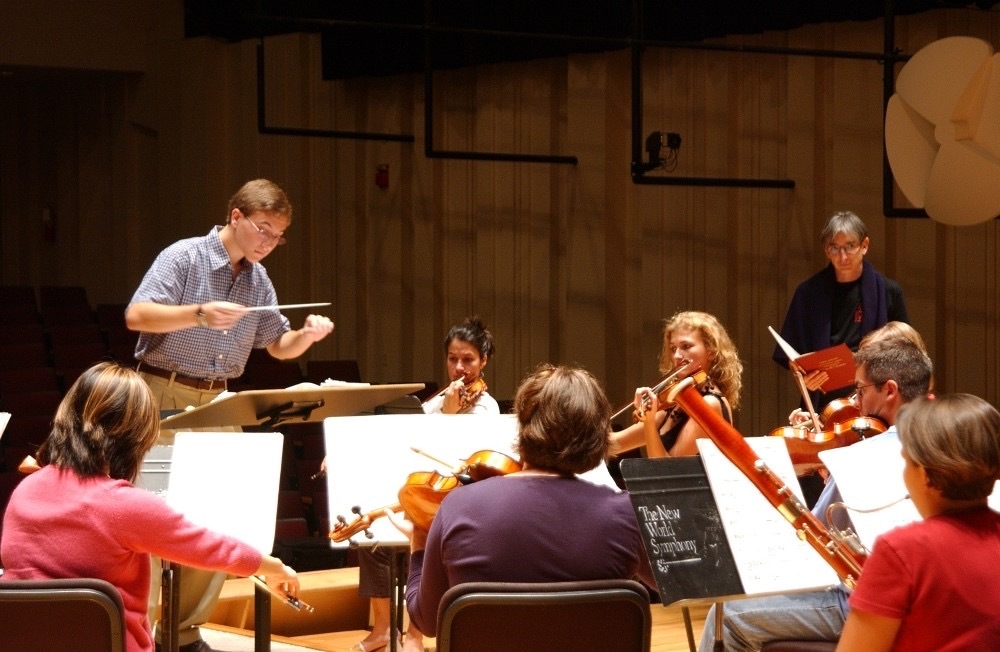 Abrams conducts while mentor Michael Tilson Thomas looks on. Photo courtesy of the artist.
 I joined the Berkeley Youth Orchestra, and again, people just intervened and helped in my journey to conductor. The conductor of that orchestra, George Thomson, would give me conducting lessons on Saturdays. I joined the Oakland Youth Orchestra and that was life changing. We went on tour to Cuba and were the first American cultural group to go. I kept auditioning for the San Francisco Symphony Youth Orchestra, which is the thing I really wanted to do. And at the same time, I was studying the clarinet. I had changed teachers from my wonderful first teacher Fritz Hansen to this guy named Jim Freeman, and he was a great clarinet teacher in San Francisco.
Jim played a very particular kind of clarinet technique called ‘double lip’. I had learned double lip by accident. Most clarinet players curve their lower lip over their teeth and expose their upper teeth to the mouthpiece. I curled both lips, which is called double lip. It turns out that this is an ancient form of playing and is the original way that clarinet was meant to be played. It’s a little like The Da Vinci Code in that there’s this long line of double-lip players who have maintained this kind of religious practice, and they refuse to switch over to single lip.
And this guy, Jim Freeman, saw me at an audition for a summer music camp and said, “You’re playing double lip, and we’ve got to pluck you out and train you in this, because there are some differences.” He had studied with a guy named Kalmen Opperman, who studied with a guy named Ralph McLane, which went all the way back to this French line of players. I know the whole lineage, because Jim Freeman taught me.
I’d never been to New York, but he took me as a kid to study with Opperman, who was a legendary clarinet professor. He was Richard Stoltzman’s teacher. He taught Ricardo Morales and many others, but he was never affiliated with an institution. He taught out of his first-floor apartment on 67th and Central Park West where he’d lived since the ’40s.
Mr. Opperman was like the Yoda of clarinet teachers, except if Yoda was much meaner. He wasn’t that much taller than Yoda, I’d say he was maybe 4’11”. He boxed in the army in World War II, and he was just the greatest character ever. He hated institutions and systems and the industry. He really had no patience for most of the musical world outside of his clarinet workshop and studio that I visited. I can go on and on – there are a lot of stories about studying with Mr. Opperman, and some of them are quite devastating. He had a huge impact on my life.
Eventually, there was a transference where I stopped studying with Jim in San Francisco and studied full-time with Mr. Opperman in New York. I would then fly by myself to New York to live with Mr. Opperman for a few weeks at a time. I slept on this cot in a hallway and would practice the clarinet for eight hours a day and be given two or three hours of lessons. I’m like 10 years old, and Mr. Opperman said that I could only study with him. He had this kind of Svengali power. I played Opperman’s clarinets using Opperman’s reeds and Opperman’s mouthpiece and I was fully committed to whatever the Opperman cult was. But it was sad to not be able to study with Jim, who had become like a second parent to me.
This period of my life was tough. The sad thing about the situation with Opperman is that he didn’t want me doing anything other than clarinet, so I wasn’t playing piano much. As an eight- and nine-year-old, I was writing a lot of music, but none of it very good. I had almost stopped composing at this point, because I was only allowed to play studies and études and not actual pieces. At one point, Opperman let me play the first phrase of the second movement of the Mozart clarinet quintet. I had an hour lesson on that to prove that I wasn’t ready to play great music by composers like Mozart. I had to wait.
Finally, word got to MTT, who I’d stayed in touch with during this whole time, that I was hyper-focused on the clarinet, that Mr. Opperman wouldn’t let me play real music on clarinet yet, that I was in this sort of cult. And I remember MTT just looked at me for a long time and there was no talking, and finally he said, “Music must always feed one’s soul.” And that was it. It was like the prophet had spoken. I was practicing clarinet eight hours a day, but the mind-numbing exercise of going through 50 different études and studies was not feeding my soul.
Eventually there came this boiling point, resulting in a blow up between Mr. Opperman and my parents, who had still been shipping me back and forth to New York to study with this guy. Finally, Opperman yelled at them, and they said, “All right, we’re putting a stop to this craziness.” I went into a big depression because, I was in the cold, and then my parents had taken me out of it. And that’s when this relationship with MTT really flourished, because he stepped in and said, “All right, I’m going to set you up with teachers that are going to help you along this path.”
I had just turned 12 at this point, so I was still a little kid, but MTT found me incredible teachers. I began studying piano with Julie Steinberg; Peter Grünberg became my teacher for theory and orchestration; and for clarinet, MTT set me up with David Breeden, the principal clarinetist of the San Francisco Symphony. MTT also arranged for me to meet with him every couple of months when he was in town to go over scores and talk about conducting.
I began playing in the San Francisco Symphony Youth Orchestra, which is a part of the San Francisco Symphony, and I was going to every San Francisco Symphony concert. I would come backstage and MTT asked me to have a response to the concerts. My assignment was to come up with something that I experienced in these concerts and tell MTT what I thought, not of his performance, but of how I understood the music. So, I began to start to think like a conductor or like a composer. MTT was trying to cultivate that even in a 12-year-old. Working with MTT gave me this incredible musical background as a young kid.
“As a 10-year-old, knowing what it takes to be great at something is a very, very valuable lesson, even though it came at a pretty high cost.”
All of this aligned because people intervened at just the right time. Looking back on the situation with Mr. Opperman, it was both hugely formative and very traumatic. I visited Mr. Opperman a few years after I stopped studying with him. I came back into that weird clarinet nook, and there was still the little bed surrounded by clarinets. During the visit, we had a tense conversation. And finally, he said, “Do you know why I trained you the way that I did?” And I said, “I really, actually don’t know.” And he said, “It was because you needed to learn discipline.”
Even though that didn’t necessarily make all the trauma and the tough experiences that probably weren’t terribly healthy for a 10-, 11-, 12-year-old kid go away, at least I did finally understand why. And that’s why I wouldn’t trade that experience for anything; because being that age, and especially growing up with the privileges that I had, and growing up as a white kid in San Francisco, you don’t go through situations that enforce that level of discipline. And that’s what Mr. Opperman wanted for me and that has stuck with me my entire life. Because as a 10-year-old, knowing what it takes to be great at something is a very, very valuable lesson, even though it came at a pretty high cost.
My parents were basically lost when it came to the music industry. Again, my parents were attorneys, and my dad was practicing this whole time, and he also taught at Stanford. He obviously is a brilliant person, but I think a lot of this world seemed insane to him.
To be fair, the classical music world is objectively bizarre. I mean, it feels like the last vestige of the medieval system of training people for some kind of labor, right? The whole apprenticeship notion where you find the local blacksmith, and you train with that person, and you observe and don’t say anything, and sweep the floors – that’s basically what we’re still doing in classical music. And every single other skillset has been modified and made efficient and developed to suit modern standards, but basically, we still say, “Okay, we’re going to put you in a room, and you’re going to do this task, and then you’re going to go see the master, and you’re going to sit quietly and listen to whatever the master says.” It’s bizarre, the whole thing is pretty weird, and all for a reward of being successful in an industry that very few people understand or care about.
All this to say, my parents really did not know what to do. They knew that I was obsessed with music and that it was the only thing I wanted to do with my life. And it’s amazing that they didn’t go the typical route they would have had they known the industry. Instead, they said, “Well, we’ll just go to the top. We’ll ask the music director of the San Francisco Symphony for advice.”
If my parents had been musicians, they would not have done that. I think my dad saw the whole thing as kind of small potatoes and figured that they might as well get an expert, with the expert in conducting being Michael Tilson Thomas. The fact that MTT ended up being so generous with me is a miracle and it was such a gift.
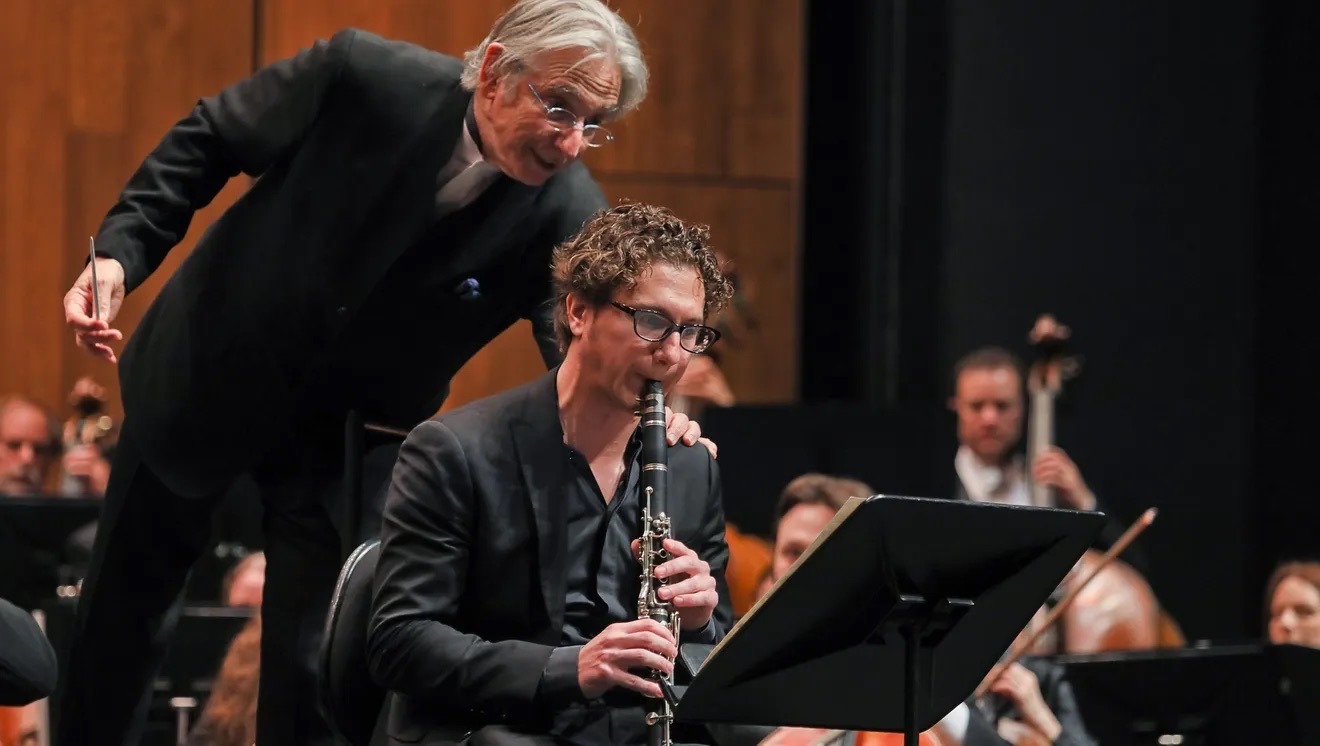 Michael Tilson Thomas with Abrams in Kentucky. Photographer: Frankie Steel and LO
 MTT really did have me over to his house. Usually, my mom would drive me over and then she’d sit on the couch in his music studio while I would work with him. And to get piano and score lessons from MTT when I was not even yet a teenager was totally life changing. I remember the kind of things we would talk about were on the highest level of musicianship. He did not treat me like a 12- or 13-year-old. He did not try and teach me technique that I sorely needed, especially on the piano. He did not try and infantilize me or think that he should teach to my level. We would talk about music on whatever level he was at.
So that was my insight into how music work was. We would talk about the subtext of the music. He’d expect that I would have studied and analyzed the score and understood how it worked on the page. So even as a kid, we’d be asking, “What’s the motivation here? What’s the music supposed to accomplish? How is it supposed to change somebody from the time they hear it to the time they leave the concert hall?” The deeper questions of what the music is communicating, what it is about, and how it works.
And most people don’t even know that that’s a possibility in music until much later. Most teachers won’t talk about that, if ever, until you’re in college or perhaps beyond. Many teachers never go there because they never went there themselves, which is very sad. They never asked, what is the music truly about? What is the music trying to do, and I don’t mean on a superficial level: here’s the story of some tone poem. I mean on a deep, motivational level, for how music works. What is this music doing for people? And that was my world with MTT very early on.
Even studying the first little bit of a Bach French Suite with him was revelatory. It was not mundane. It was not, “Oh, maybe try this fingering.” It was, “What does music do overall? How are we translating it through the specific notes that Bach has set out for us?” And I remember he wanted to show me just how many possibilities there are in music and that music is not just about doing things right. It’s about following the thing that you just did with the right thing based on all the decisions that led you to that point.
We did the third movement of the Mozart Clarinet Concerto once, and unlike Mr. Opperman, who had made me feel like I couldn’t play a single note, instead it was about opening up every musical possibility. It was like, “Well, if you elongated that note, should the next one be a little bit shorter? If you made a crescendo there instead of a decrescendo, then how does the phrase continue? But if you did a decrescendo, would that offer some additional possibilities?” I never even thought about that. I only thought that what you saw on the page was what you did, and you still needed to be musical.
“I think so many people live in fear of the composers, of messing it up, doing it wrong. That’s no way to live. You don’t want to live in fear of your heroes, whose works you’re interpreting; that’s a miserable way to make music.”
I didn’t realize that the music was something that you mold and shape and you feel and express, and that’s actually the role of the interpreter and the performer. There isn’t a right way to do it, and the musical notation is merely the starting place. To get that lesson as a 12-year-old is a very big deal, and it also leads you to both respect the composers that gave us this music, but also not to fear them.
I think so many people live in fear of the composers, of messing it up, doing it wrong. That’s no way to live. You don’t want to live in fear of your heroes, whose works you’re interpreting; that’s a miserable way to make music. You’re not going to find a person that respects these composers more than Michael Tilson Thomas. But on the other hand, he’s not bound or constrained by them, and that’s the methodology and the relational approach that I was able to absorb way back then. Although it took me decades to identify it and to realize what that actually was.
As I said, my parents were not musicians or artists, but my dad had a very strong sense of service. That was a very big thing in our family. And even though I’m sure we were plenty spoiled, it was drummed into us that you take your talents, any of the assets that you’re lucky enough to have in life, and you share them.
My dad spent a lot of his practice as an attorney representing people who needed representation but could not afford it. It was usually people on death row who were clearly innocent but had inadequate legal representation, and kids in the foster care system in California, which was woefully inadequate, who needed to bring lawsuits against, in many cases, the State of California to force them to fund and properly administer their foster care program. So service was something that I understood. I say this because even as a kid, I was told that whatever I had with my music had to be shared and given back.
My third-grade band teacher taught at a lot of schools, including some in Oakland that were far less privileged than the one that I was lucky enough to attend. I asked him if I could help. So as an 11-year-old, I started volunteering to go into the schools where they didn’t have the resources that I’d had – like access to private teachers, and a great instrument, and a great setup on the clarinet – and I would go in and teach. It was completely bonkers for me, at age 11, to be teaching nine- and 10-year olds, but I did. I remember very clearly going into neighborhoods I did not necessarily feel comfortable in.
I began working with these kids, which was hugely influential in my life, because as an 11-year-old, I had to figure out how to make clarinet-playing fun for kids who did not want to be playing the clarinet. I would take the clarinet players into these sectionals and try and teach them and make the music exciting and interesting, and I’m so lucky for that experience.
I mean, it’s probably one of those cliché movie things to say that they taught me way more than I taught them, but it’s true. Trying to get eight- and nine-year-olds to be excited about anything, especially when you’re only a few years older than them, is a serious education in engagement. It’s the reason why my entire life I have thought that education work, engagement work, and community work are equally important to everything else.
That experience helped me understand that the work that I was doing in those schools was more important and valuable than any performing I was doing as an 11-year-old. I’ve never wavered from that. It’s meant that I’ve never created a ranking system for the importance of music making.
I think we’re all susceptible to it because the industry is trying to tell us what’s important and what’s more valuable, but I think, in my heart, I’ve never succumbed to this notion that your Carnegie Hall performance or your Berlin Philharmonic performance is more important than something else. I’ve tried to keep sacred this idea that any time you play for a human being, that’s the highest form of art.
Sharing music is not secondary to anything. I would also go and play at senior homes and in all kinds of community centers and things like that. To this day I’ve never felt that that was somehow less than whatever the ‘real’ performances might be. Those were the real performances, and probably the more meaningful.
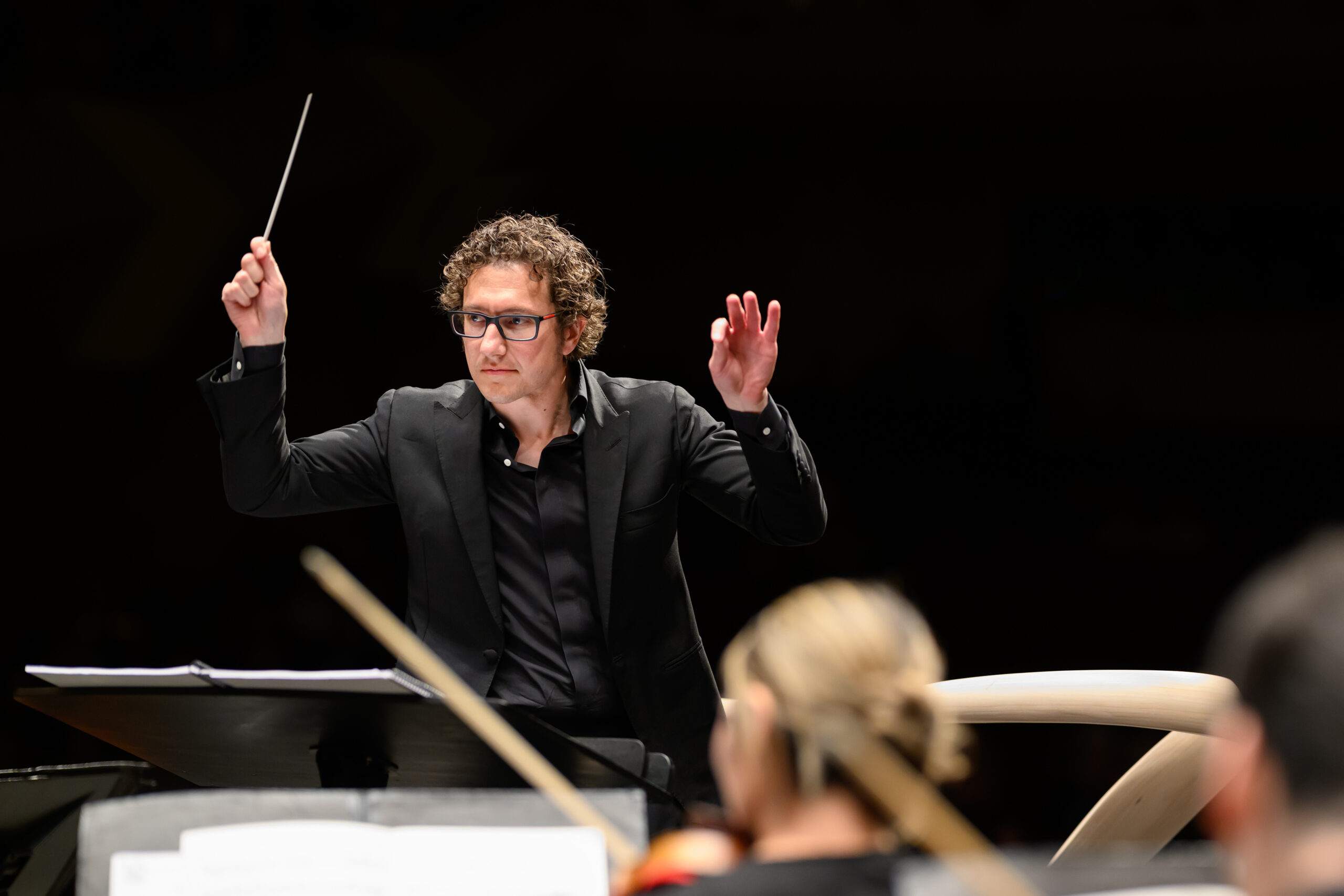 The Louisville Orchestra led by Abrams. Photographer: O’Neil Arnold
 My education was a bit weird around that time, which is kind of a fun story. I won’t name any names, but I’ll just say that when I was 11, I was accepted to this special school for young musicians in the Bay Area, and they had a program where students started lessons and chamber music in the sixth grade.
That sounded amazing for somebody like me. It meant that I’d be around other musicians, and that I’d have a tribe, which I did not have in my elementary school, where I was an outlier. For example, when it came time to do our book report, the kids were choosing The Wind in the Willows and books like that, while I went to the high-school library and chose The Joy of Music by Bernstein. I did my report on a book that I thought was amazing, but nobody in the class had even heard of Leonard Bernstein. So, delivering that book report was an exercise in further ostracization.
I was supposed to go to this very small private music school for middle- and high-schoolers. They had just moved locations to the back part of a church they were renting. The school year began in this new building, and they asked all the parents to come and help clean it up so that they could move into the new space.
Much of my dad’s practice at this time involved environmental law. My dad gets to this new building, and he takes one look and points out that the place is filled with asbestos, and that the asbestos was falling from the ceiling. He didn’t want anyone going into that building because he was doing a lot of big asbestos cases at the time and representing people who had horrible health experiences from asbestos poisoning. And the school got into a battle with my dad over this and it ended with me not being able to attend. And so there I was in September with no school.
My parents were not super weird, they weren’t hippies or anything like that, but I guess they got into their heads that I could just go to community college instead of middle school. We had a friend who was in orchestra with me who had gone instead of twelfth grade, so I guess they thought, “Hey, if you can go instead of twelfth grade, maybe you can go instead of sixth grade.”
They took me down to the Laney College admissions office, an inner-city Oakland Community College. This was not the cool, hipster post-tech bubble Oakland. This was 1998 Oakland. It was a great city. I loved Oakland, but let’s just say there was a lot going on, and the downtown community college was a very vibrant place. There are a lot of reasons that people go to community college and some of them are amazing reasons. Some of them are less savory.
They took me to the admissions office where nobody knew what to do with me, but a guy in the head office for the entire district of community colleges in the Bay Area said, “You know what? This is the wackiest thing I’ve seen all week, but if you can pass the placement test to get you into English and math classes, then you can do whatever you want here.” He signed some form. I’m not sure he had authority, or anybody had authority to do it, but I went full time to community college. And I loved it.
I had the best experience there. The teachers were incredible. I loved the fellow students. Some of them were so far beyond where I was in life. It was funny to be an 11-year-old and in the inner-city Oakland Community College. They were there, talking about Toni Morrison’s Beloved and deep content that basically offloaded my adult education into the classes that I took. And so that’s what I did for five years. I went to community college. I actually went to several different community colleges throughout the Bay Area and loved it.
“I think a lot of musicians assume that if they play well, people are going to listen to what they have to say. It’s not the case.”
Some of the experiences were extremely tough, but in general, everybody treated me like anybody else. There were people in their eighties who were coming back to school just for fun. There were people who had been through recovery programs and wanted to get their life in order. There were people who just goofed around in high school or joined gangs and wanted to go to college. There were people that were super smart but never had the money to go to college. They were taking community college classes instead and were going to transfer over to a UC. Everybody had their own reasons for going and I was just one other person with a story.
I was treated wonderfully, and I have lots and lots of fun memories from that. And that’s how I was able to do so much with music, because I took classes at community college. Classes were intense, but they took up less overall time. I would go to a couple of classes per day instead of being in school for nine hours, running around and doing PE and whatever high school demands of you that would have taken up an entire day, when I could have otherwise been studying or practicing. It was very different and unusual, but I had the best academic education one could ask for. And I did get my PE in because the State of California demanded it, so I would sign up for lap-swimming classes. I did everything I needed to do and had a great experience.
I had spent these five years at community college from 11 to 16, and I had amassed enough credits to transfer to any college by that point as a junior. During this time, I had been studying with a wonderful piano teacher named Paul Hersch at the San Francisco Conservatory of Music, who was immensely influential and inspiring.
Paul was similar, or rather complementary, to MTT in that he did not place the technique of playing the piano at the top of one’s priorities. He was all about being musical, which I know sounds obvious and you’d think most teachers would do, but Paul had a pretty rigorous system for evaluating musicality. He would say that a person is making music or that a person is not making music. And I knew exactly what he meant after studying with him for a while. And I think Paul, as much as any teacher I’ve ever known, hit on the essential aspect of what makes music compelling. Why somebody pays attention in a concert or doesn’t. I think a lot of musicians assume that if they play well, people are going to listen to what they have to say. It’s not the case. Paul’s system for evaluating music making is, I think, the most accurate representation for why or why not an audience would care, would pay attention, would be engaged.
Paul had a way of evaluating one’s communicative powers, one’s ability to connect a phrase to another that forced an audience to pay attention and listen. It was okay to sacrifice other things in pursuit of that. Paul had an incredible mind; he was a brilliant intellectual overall. His system was not just intuition – there was analysis and thought behind it. He had come to a model for understanding what it is we’re trying to do as performers. And it’s funny, he was not doing it by over-the-top external means. He was doing it intrinsically in the music. Although one of Paul’s fascinating features was that he was always encouraging his students to talk about the music. He would say, “This gives you two chances to sell the soap. If you talk about the music, it gives audiences an insight into the music that opens the world up.”
Paul was something of a traditionalist. We were mostly doing Bach and Schumann and Beethoven and Brahms. He had wide interest in lots of music, but the core music that we were playing was classical and romantic repertoire. I studied a lot of Schubert, Chopin, Beethoven, and Bach with Paul. But it’s funny that in terms of his idea of what a performance could be, or how to connect with an audience, he was as progressive as they come. This idea that it’s literally in the way you play, and not the way you act, but the way you connect one phrase to another; he would talk about it tracking, and if it tracked that meant that the audience was receiving what you were offering and was following it.
He was talking about this in the way that I think a director might talk about a play, like, is it scanning? Is it tracking? Can the audience follow the dialogue from one character to another? Is it believable? And that’s how he applied his philosophy to piano playing: is what you’re doing believable and credible to the audience, to the extent that they’ll follow you phrase to phrase, or will they fall asleep? That was also amazing to hear because most people figure this out just by trial and error, or realizing that they might be playing well, but nobody’s listening to them, and then having to diagnose this in their twenties or thirties, or maybe never. And here I was, a teenager, and Paul Hersch is opening up this holy of holies. This is why you ultimately study music: to learn how to connect with people. And he had figured out a way to talk about it and transfer that to his students.
After amassing all these credits, I transferred over to the San Francisco Conservatory of Music when I was 16. Life had gotten challenging at home. I moved out and lived on my own with a wonderful roommate, a great pianist named Julio Elizalde. When I went to the San Francisco Conservatory, that felt like the beginning of my adult life.
A lot of things changed for me, personally and musically, and this was at a time when the San Francisco Conservatory was still kind of in its sleepy phase. This is before they built new buildings and moved to downtown San Francisco. They were way out in the Sunset District, in a former orphanage that looked like a Taco Bell. It was perfect for me, even though it was maybe not considered the most prestigious school at that moment, but the students and teachers there were spectacular. The fact that we weren’t in the center of San Francisco with the demands of trying to keep up with San Francisco’s musical industry, and we were just kind of left on our own to do art and develop our own craft, was very important for me at that time.
I was able to develop as a person and as a musician in this very special environment and being on my own living life, even as a 17-year-old, with my own apartment and everything like that was big because I had a lot of growing up to do. I hadn’t been around people near my own age, and all of a sudden, I’m living among them, and in this college environment. It forced a lot of personal growth that needed to happen and set me up for the rest of my life.