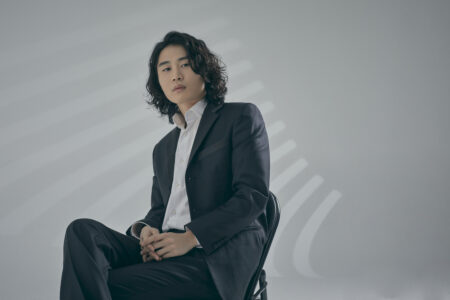
American composer Sean Shepherd has earned wide acclaim for his “fantastic gift for orchestral color” (The New York Times), and commissions from major ensembles and performers across the US and Europe.
Origins: Sean Shepherd
Share: 


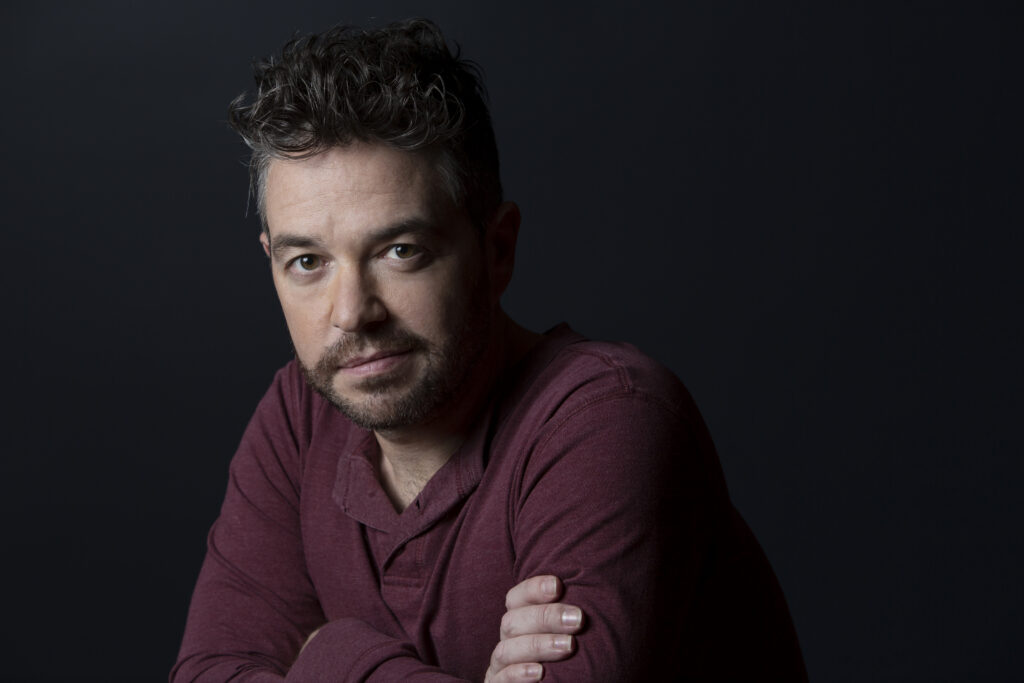
My family is all from Nevada. If you look at a map, it’s the big open space between Reno and Salt Lake. On my mother’s side, they were Basque sheep herders that homesteaded in Nevada in the very late 1900s. On my dad’s side, they were longtime Nevada ranchers and farmers. My grandfather was the Undersheriff for the county.
No one ever really left. And the music we all heard was country music. My family would sing along to the radio, that kind of thing, but we were not a trained musical family at all. I was the first college graduate in my family.
I always remember enjoying singing, but I started taking a true interest in music in fifth grade, when we got to play real instruments. I took it on really hardcore right away, starting with the flute. The next year, I got upgraded to the bassoon. It’s a hard instrument to play well. I studied a lot, degrees and everything, and into my twenties, I was still not even sure if I really wanted to be a bassoonist or a composer. That was actually, for me, a good thing.
Thirty years ago, when I was in school, there was this idea that you needed to be focusing on what you were really passionate about. When I was studying, the bassoonists were like, “Well, you’re a composer.” And the composers were like, “No, you’re a bassoonist. You’re not one of us.”
I was in Bloomington [Indiana University] for undergrad, and then I did a fifth year performer diploma in bassoon. So I gave four recitals and that helped me. With six hours of practice a day, my body hurt all the time and my fingers were cut from making reeds. And I thought, “Maybe this isn’t the way I want to spend my whole life.”
It wasn’t like the pressure that I was facing as an emerging orchestral musician was going to be felt any less than the pressure I was feeling as an emerging composer. It was good though for getting my ducks in a row with performances and experience to apply for master’s programs. That’s how I ended up in New York.
My early musical training was very self-directed. I had a bassoon teacher off and on; maybe once every several months I would have a lesson. In school, I was the drum major. I was the student representative on the Youth Orchestra board. I did everything you could do.
I was very excited about music, passionate about it, and I spent a lot of time trying to get other people as enthusiastic and excited as I was. I very much realized that’s not easy. Looking back, I wish somebody in my earlier years would have just said, “You’ve got this thing, keep working on it. Don’t worry about other people.” Especially with composition, it’s such a solitary pursuit (or it’s absurdly public).
This was all pre-internet, pre-email, so there were a lot of CD purchases at the time. There was a Tower Records, and as much as my finances allowed, I was spending money on music. In terms of composition, I had a lot to learn. I mean, I was really lucky to have gotten into Indiana University. Not that I wasn’t enthusiastic, but I was undertrained.
Those five years were so incredibly valuable to me, because I did the double major, and kept my head down. I was very much the teacher’s pet, wanting to please absolutely everyone all the time. I worked very hard.
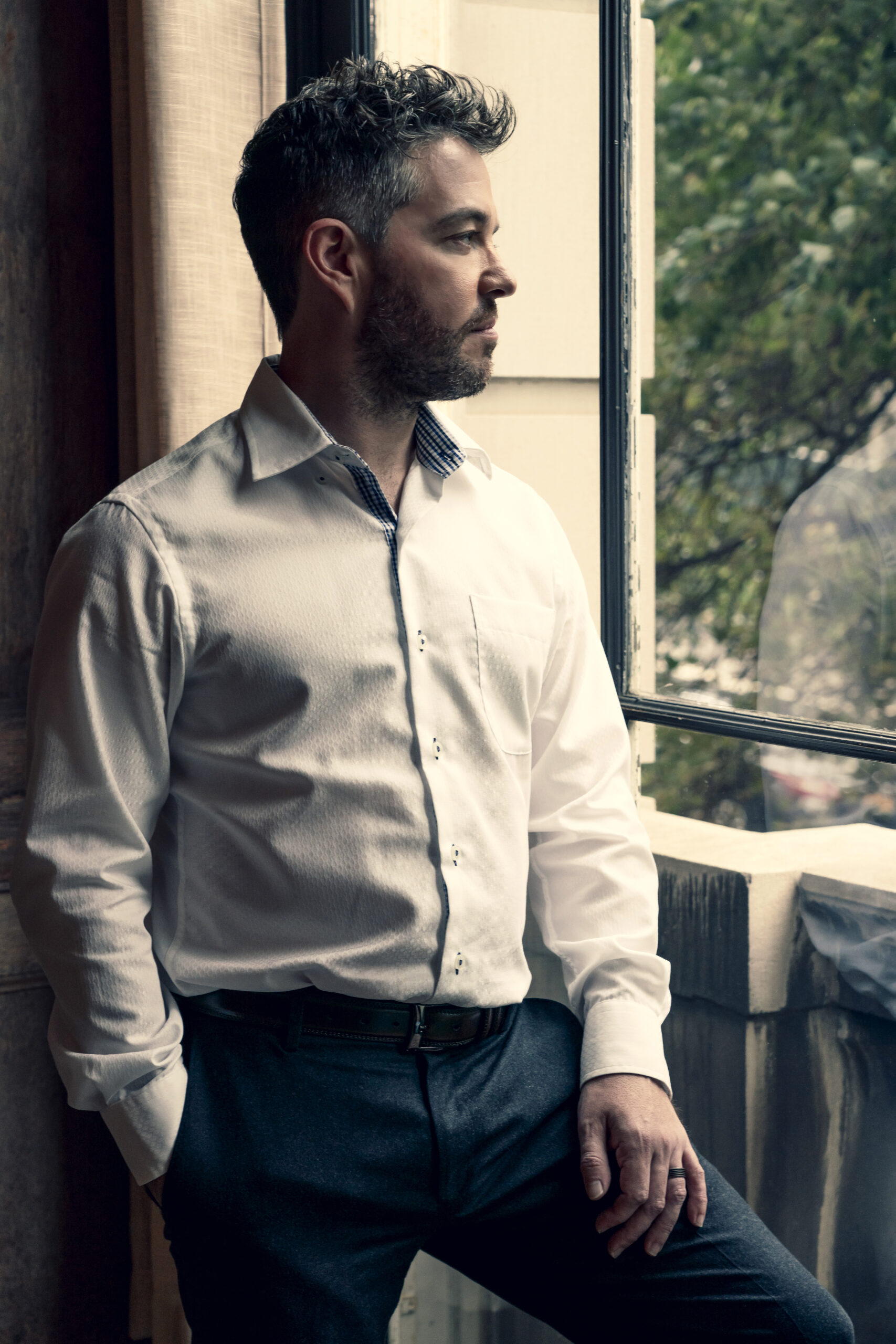
Recently, I was thinking about this significant musical memory that I have never shared publicly. I was about 16 and in the local music camp. The director was the Grand Poobah of music and music-making. This person had known I was writing and composing, and there had been this entreaty, either from my own band director or someone else, who said, “Maybe Sean could prepare a piece that could be read at one of the camp’s reading sessions.”
At this point I had been writing for a few years, but again, all self-directed. I had never had a composition lesson. But I was absolutely passionate about it and so excited about the opportunity. So I spent hours and hours formatting the parts, making the whole thing. It was very ambitious.
I really don’t remember anything about the piece, except that it was considered to be hard. The night before, I delivered all the materials wherever they were supposed to go. And I see this person, the director of the camp, who was himself, I guess, going to conduct. He had the whole pile, and he just flung it back at me.
Here I am, this kid, and he’s like, “There’s no way we’re gonna do this. You need to get back to practicing.” It was such a shameful thing, like I was wasting everyone’s time. He did it in front of all my friends. A truly traumatic moment, and I didn’t compose for a few months.
It was the definition of what was considered mentorship by a lot of people in that world. You need to sort of step on kids to get them to understand what their place is. They didn’t understand what I was doing, and they didn’t particularly care and didn’t support it. Those things have a way of staying with you.
But it was formative in the way that I definitely went through a process of learning that it didn’t matter what that guy thought. It didn’t stop me from doing it. I wasn’t able to articulate any of that at the time. But I somehow kept going.
Twenty years after that, I returned to Reno as the Reno Philharmonic composer-in-residence. I was prepared for this kind of hostile environment. I was prepared for whatever I had left. Everyone was so nice, though. I had come back as a completely different entity. No one remembered that story. And of course, any career in classical music is bound to hit some rough weeks, some bad concerts, or whatever.
You can’t take it super personally, which I think is the response of many creative musicians or creative people. It was an early wound and early training. It certainly steeled the spine. I think it would have been a really good education for me to hear that piece I wrote, because it probably would have gone badly. Maybe they thought they were protecting me, but I think it would have been better for me to hear it.
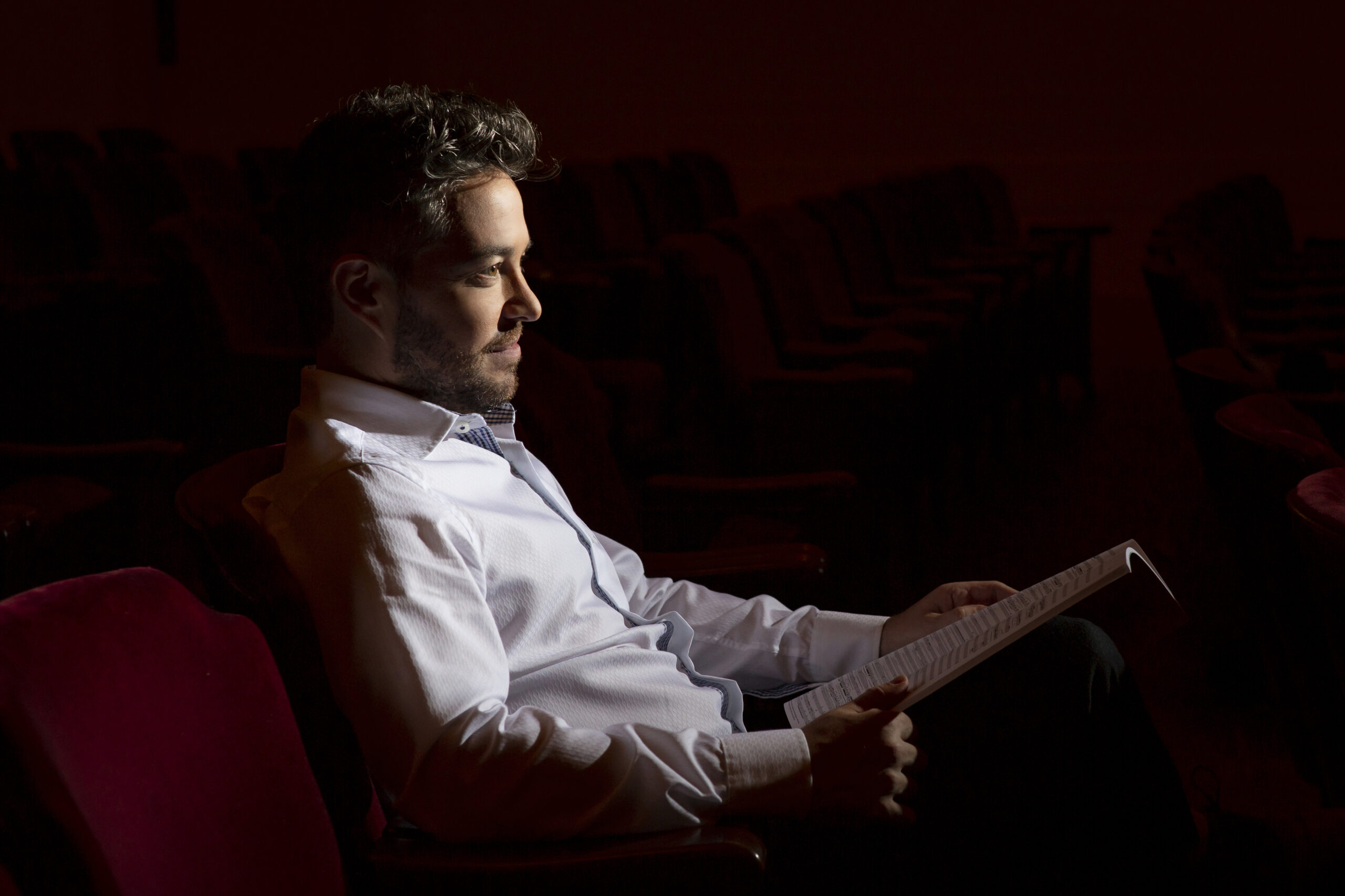
As far as early musical inspiration, I was obsessed with The Rite of Spring. At the time, I had no grasp on it musically. But in the end, that’s kind of still who I am. I mean there are plenty of moments in my work in which no one’s bones are being broken. But there’s a side of me that finds it exciting to hear an orchestra doing something kind of furious.
I say this a lot, especially in terms of young composers, or composers in general, and orchestra music, but it’s really about getting your flight hours in. You need to have those experiences of being in a student orchestra or even an amateur orchestra saying, “Whoa, this is not even close to what we can do.”
A composer can either choose to fight that really hard or choose to change it in some way or actually go through the difficult experience of saying, “What was it about saving all this stuff?” Because no matter how connected we think we are to the notes, there is nothing like that rush of 80 people on stage playing a sound that you had heard through a keyboard or with your own fingers on the piano. It’s a very different experience. Much bigger. It’s much more overwhelming. It’s much more exciting.
I still think my most valuable moment with any musical institution was right around 2005 when I had a reading session with the Minnesota Orchestra. I was 24 or 5 and I had written a piece that I had heard several times. I thought, “This piece is what it is.” But actually hearing it with the orchestra who played exactly what I wrote, I could see, “Oh, I really need to go back and reconsider what this piece can do, and how I work with it.”
I didn’t write another piece for five years, and the next piece I wrote is now what I would consider Opus One, in terms of my adult work for orchestra. The piece is called Surface Tension and it’s famous among a lot of musicians in my generation because it just kept getting read and performed. It happened at Juilliard two or three times. It happened at Aspen twice. So all these people are, like, “Surface Tension!,” and I’m just like, “That piece has been deleted.”
My next professional piece was for Cleveland Orchestra, and I was so much more ready for that. To speak a dialect that they were going to be able to make so eloquent and fluent. Also, really understanding not only what musicians want to do, but what they can do easily and well.
Very often, the first rehearsal of a piece is the day before the first performance. And this is the biggest difference between me and my playwright friends. I’m going in with every single line in parentheses in my mind, because we just don’t know what we’re going to have to change in terms of pacing. That’s just how the system typically works.
I’ve been in situations where I’ve worked much more collaboratively. Two years ago, I did a workshop with the Grossman Ensemble in Chicago. We did four two-hour reading sessions, with three weeks in between each, which really kept parts flying. I found it much harder. You become like a journalist; deadline is at 6:00, and it’s going in at 5:59.
The pandemic really put me in a mindset of: how many artists have already had to go through similar things? Whether they’re composers or not, it wasn’t like art stopped when the Black Death arrived or that art stopped during the 1940s.
I think of Stravinsky, living in Los Angeles, which was his third exile, writing Symphony in C and Symphony in Three Movements. These exquisitely happy pieces, made during probably the darkest, loneliest time of his whole life. He’s seen nothing but the world he knew, which was pre-WWI Russia, just continuously collapsing and collapsing and collapsing. How bad are things gonna get?

These pieces that are born out of an intensity of experience, or a lack of stability and all that entails. I think it’s not necessarily bad for art, right? It’s bad for us. But that’s it.
In terms of my own inspiration, I’ve been toying with this idea of an opera. There have been any number of characters from history where I think there is a story there. You have to tell operas kind of big and dumb and slow. It would be hard to have Alexander the Great, The Opera. But I’m always trying to imagine how these stories could be musically told. Sometimes, a great story doesn’t make a great opera. And a great opera comes out of a story that doesn’t make a lot of sense.
I also draw a lot of inspiration from my kids. I think having kids is the most human thing you can do. You learn so much about yourself, sometimes in unpleasant ways, but certainly fun ways. In terms of daily energy, it’s incredibly draining.
I find that the music writing focus that I would like to have all the time is constantly at war with “Let’s go to the playground.” On paper, I could easily hang out at the playground. But that’s actually an intense bunch of interactions you’re having with your child and your child’s friends and anybody else there.
It’s very hard to know what story is going to be told when I’m 195 years old and still have another 200 years of life left. What this experience means as an artist, though… I definitely think I am changed. I don’t know how. I’ve heard a lot of composers say they think their music gets better once they have kids, and then I hear their music, and I’m like, “I’m not sure you’re right.” So I don’t know if I could say that about myself, but it is humbling, which is so useful.
Now that my kids are getting old enough to start experiencing art it is so interesting, because what they gravitate to or what they like is so themselves and so much about them. They always surprise you.
My son is really visually capable and good at making images. He does it a ton, but we sort of forget that because he’s also very sporty and athletic. He’s always running around, loves soccer. I just think if kids are the opposite of their parents, which they often are, then this kid’s gonna be some kind of football player, because it’s the opposite of what I was. But here he has this total other side, which is, in a way, unbidden. We’re never like, “Why don’t you sit down with your crayons and make something interesting?” He just does it.
My daughter is very talented and has really good pitch already. I’m sort of back and forth on whether this is an indication of musical intelligence. But she very quickly learns all the songs and all the words to the songs and sings along right away. She just turned three, and she seems to have it in a way. My musician friends come over, and they’re like, pointing and staring at her. But it’s also really fun to see; she enjoys it. It’s easy to support that.
One of the great blessings when I think back, is that I wasn’t going into the family business; it has nothing to do with what I’m doing. We can all count musicians that we’re friends with who are really in the family business and they have a lot of really strong feelings about that, or their kids do. Of course, there’s certainly nothing wrong with introducing them, but you don’t want to make it too much about yourself. You don’t want to stop them if there’s an interest.