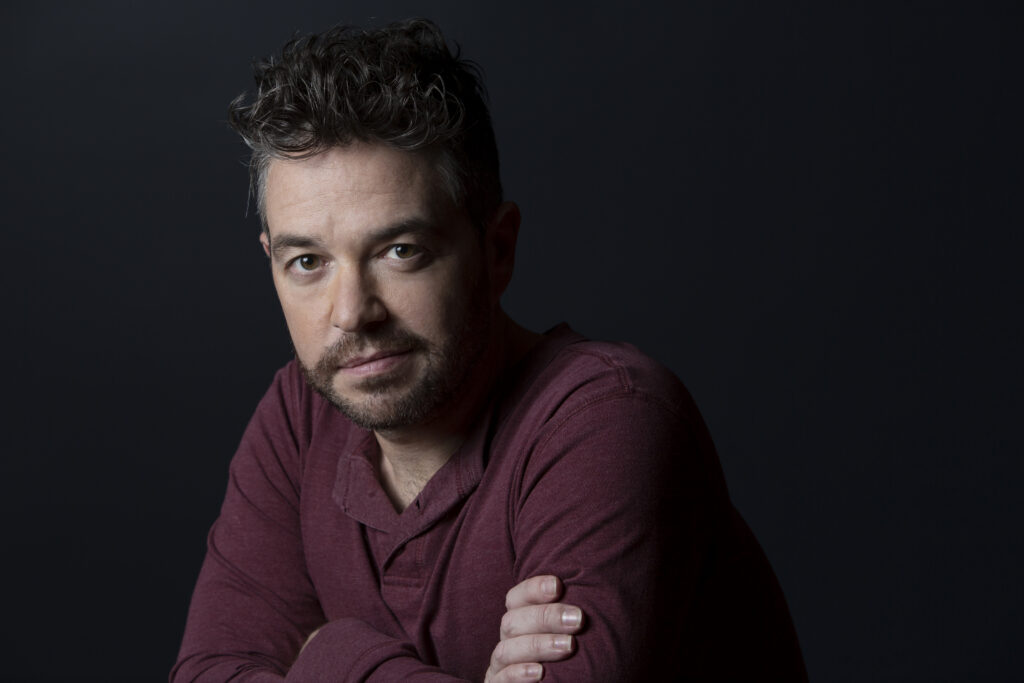
Edward Gardner is principal conductor of the London Philharmonic Orchestra and music director of the Norwegian Opera and Ballet.
Origins: Edward Gardner
Share: 


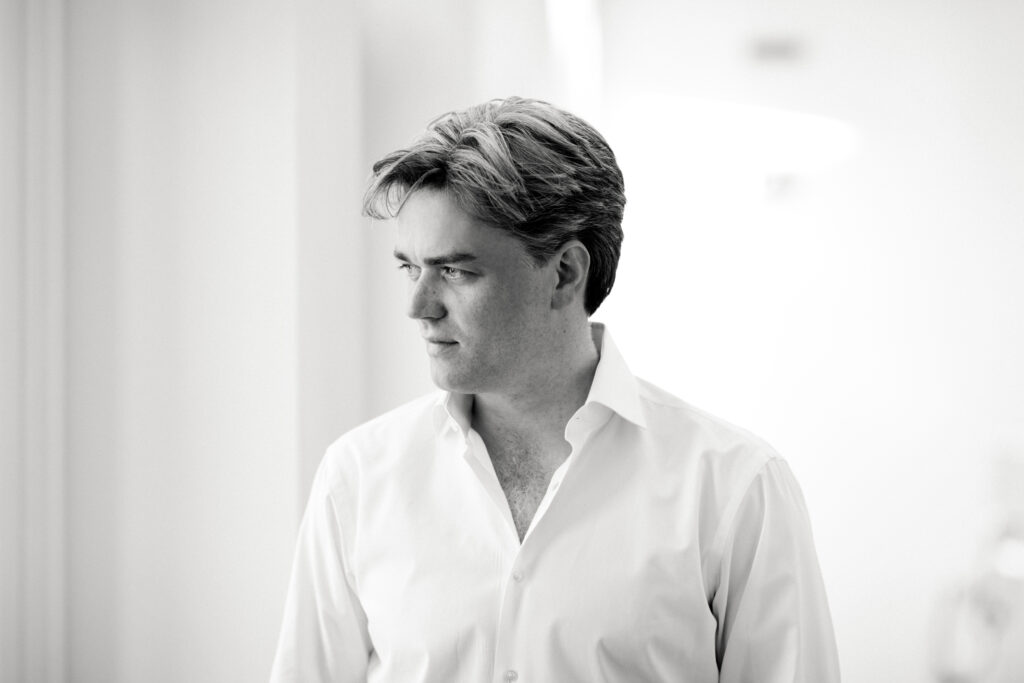
As a child, I wasn’t in a musical household. My mum was a nurse, and my dad was a psychologist; they met through medicine. My dad sang in amateur choirs when he was younger, so he had some musical training, and he definitely had an appreciation of church music and amateur choral music. But they were an aspiring, middle-class family who wanted their kids to do well.
Luckily, in that era, in the ’70s and ’80s, that meant learning some instruments. I started pretty young on piano and then clarinet. It was more a habit than a passion at that stage. I had some aptitude for it, and it was intriguing.
The thing that really set me on a musical path is the system in the UK where kids get a place to sing in their local cathedral choir, and in return get a free private education; my older brother was a chorister, too.
This suited my parents, who had the passion to educate us well, but not the money for a private education. They realized the importance of music in the development of a child. I started my scholarship at Gloucester Cathedral at the age of seven. Gloucester is in the heart of the Midlands in England, an area which is a bedrock for our composers. Elgar’s home was local, and he felt like “our” composer.
Singing for two hours a day from then was central to everything I did. For me, it was a chance to express and engage with my friends, rather like others would be in sports teams. That’s the thing that I will always be thankful for – how it made me adore music and want to explore and develop further.
Luckily, the system welcomes girls and boys now. In my day, it was only boys, which now seems ridiculous. If you talk to any male musician above the age of 40 in the UK, I reckon 60 to 70 percent have come through that system, and they’re also not from wealthy backgrounds. It’s all people who needed the support. I feel incredibly fortunate.

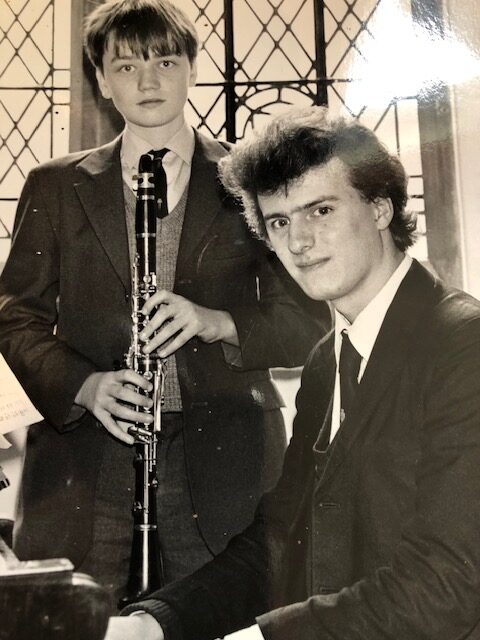
I knew I wanted to build my life around music early on. It would have been from a moment singing English choral music with unbelievable enjoyment within a great choir. Six o’clock on a Friday afternoon, when there are 20 people in the congregation, and there’s this feeling that we were doing this simply for the pleasure of putting great music together.
Of course, we should have been doing it for God; I’m not sure I was, but I can remember the feeling in my body of the excitement of putting something musical together and getting the best you possibly can out of it.
From as early as nine, the first job I wanted to do was to be a cathedral organist. I loved Bach and was obsessed with Messiaen. To me, that was the most glamorous job you could have in music.
At the time, there was a young assistant organist who came in from Oxford. He was a specialist in modern French improvisation – even at the time I remember thinking, what on earth am I listening to! I was in a small farming city and being exposed to so many incredible musical styles and thoughts.
“As a young conductor, it’s gold dust to watch what the chemistry between a conductor and orchestra is; when it’s working and when it’s not and when the relationship starts to turn, for better or worse!”
I went to boarding school when I was 13, and there was a director of music there called Ralph Allwood who was a great mentor to all of us. He had a brilliant gift of empowering us to think for ourselves.
That was an ethos of my school – giving you confidence to think that if you want to do something, you can do it. Or, if you’re complaining about a teacher not being able to do something very well, you were invited to show how to do it better. It was amazing to be in that world where they encouraged your confidence and development.
When I was 21 and going to London, I was basically given the key to watch any rehearsals I wanted, and this was a huge privilege. There were several special people in the city who knew I was determined to become a conductor, and they would let me come to Ring Cycle rehearsals at Covent Garden or an orchestral program at the Philharmonia, rehearsals with great conductors where I got to meet people.
I think it’s about having the confidence to know that you’re allowed to go and watch things. That’s what I tell any young conductor, just tell me you’re going to come to rehearsal, and come in. No one should ever block that. As a young conductor, it’s gold dust to watch what the chemistry between a conductor and orchestra is; when it’s working and when it’s not and when the relationship starts to turn, for better or worse!
All those things that can’t really be talked about. You need to either experience them from the back of a hall or, eventually, from doing it yourself. To be in London, which is packed full of music-making every day, and doing that for a few years, was amazing.
The role of a conductor has changed from the authoritarians of yesteryear. I love the idea of persuading a room of people, and the power of rhetoric, which is in speech and music. The idea that you can, without force, guide a room of people towards a certain direction. This is now what I spend a career trying to learn.