Angélica Negrón is a composer and multi-instrumentalist. She writes music for voices, orchestras, ensembles, and film as well as robots, toys, and plants.
Origins: Angélica Negrón
Share: 


I was born and raised in Puerto Rico. I had a very musical family, in the sense that a lot of Puerto Rican families are very musical. Music is a very important part of family gatherings. Everyone has an instrument in their hands or is singing. That’s how we celebrate.
I grew up with divorced parents. And my mom was, or still is, a great percussion player. She plays the pandereta, which is like a handheld drum, and she’s always playing congas. My dad is also very musical, but mostly just a really big fan of salsa music, like old-school salsa. He would blast it and play it very loudly.
I have a professional musician in my family – my aunt, Sandra Rodríguez. She used to conduct the San Juan Children’s Choir. The San Juan Children’s Choir was, at that time, a really big deal, and they traveled a lot. I’ve always loved the sound of children’s voices, choruses, it’s something that was a very important part of my childhood.
I really looked up to her and saw her doing her thing, and I was like, ‘Oh, you know, you can have a career in this.’ I didn’t know what that meant, and it took a while for me to understand, ‘OK, I could be a composer.’ She was not necessarily a mentor, but just someone that was around and by seeing her, I knew that it was possible. She was very much a force in terms of excellence, and just great at what she did. We say fajona. It’s essentially someone that takes their craft seriously, very committed, so, in that sense, a model to follow.
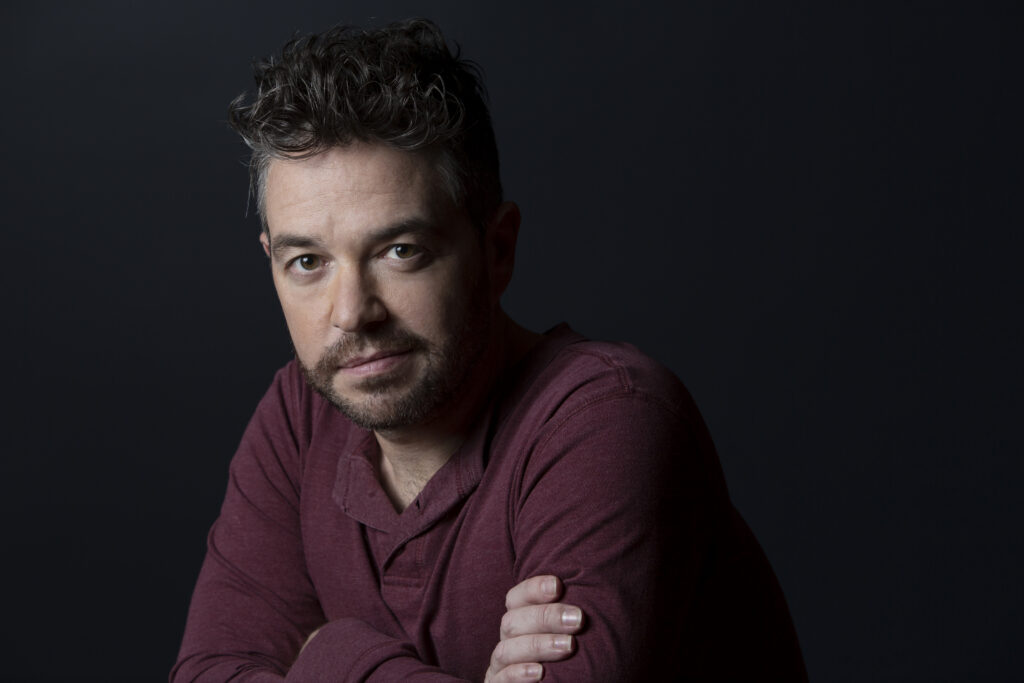
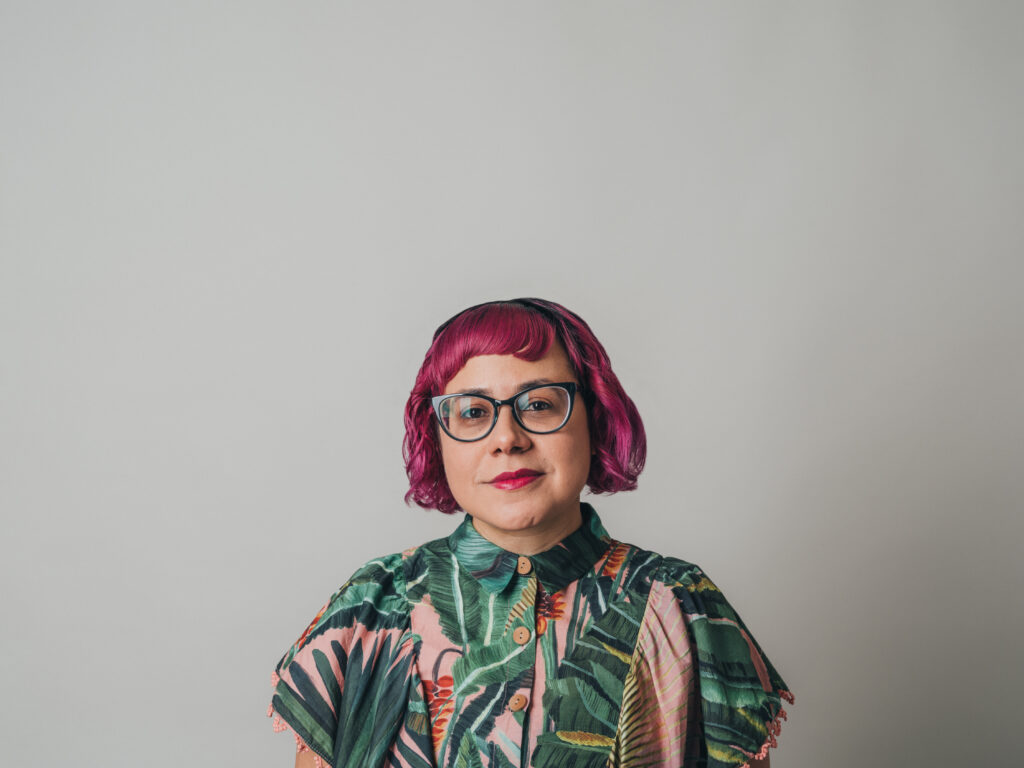
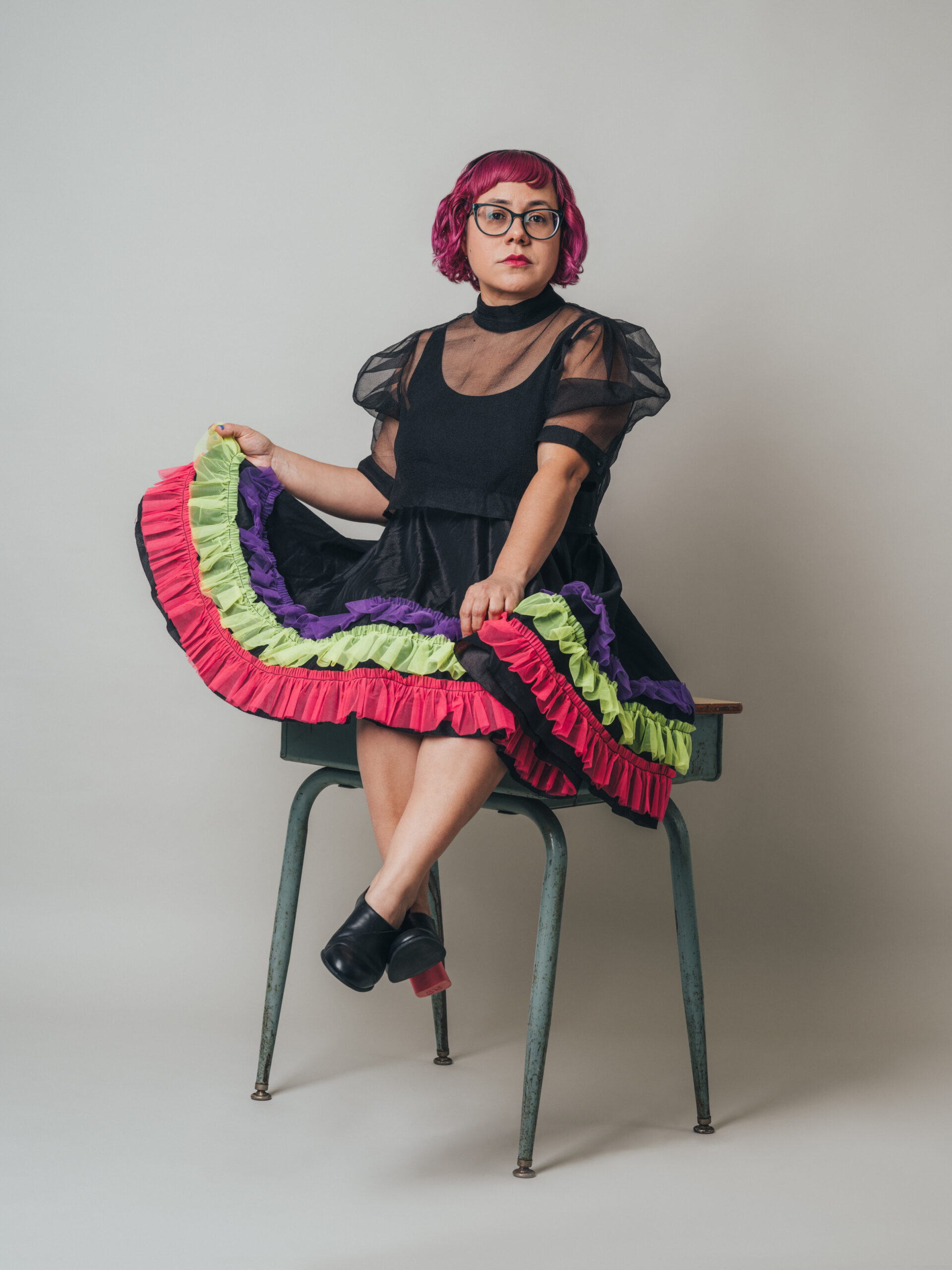 Photographer: Catalina Kulczar
 I knew that I loved performance. I curated the talent shows for the family. I was very extroverted as a kid. That changed in middle school and high school, but at the time, I loved dancing and putting on shows with my cousins.
I’m an only child, but my mom has eight brothers and sisters, so I was surrounded by cousins, and I would be the one putting on the production. I had a younger cousin that was the only blonde one in the family, and I was like, ‘You’re gonna be Madonna.’ And she was like, ‘I don’t want to do this.’
‘You have to be a professional,’ I told her. I wanted to be Gloria Trevi. She was a very famous Mexican singer who was a rebel. She had this crazy hair, and a song that was a kind of feminist anthem. Very pop also.
I was studying violin. I was a little shyer in that area and was hiding a bit in the back of the violins, but I was super curious about the instruments and the orchestra when I was playing. I knew that I liked music, but I had never played something by someone who was alive, so I didn’t know what that meant.
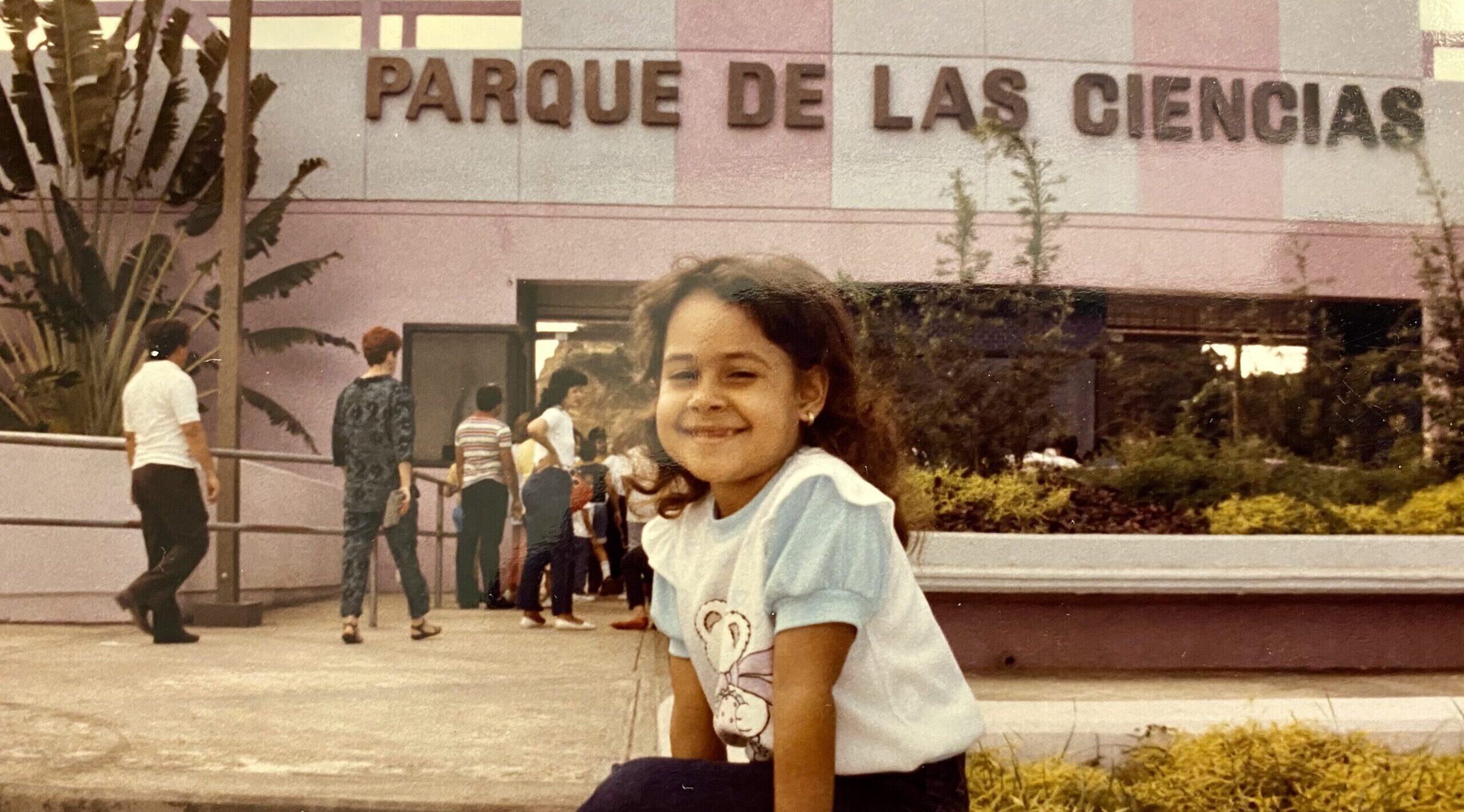
When I started college [at Puerto Rico Conservatory of Music], that was when I discovered music by living composers, and that’s when everything made sense. I was taking harp lessons, teaching myself the accordion, taking cello lessons, and I was like: ‘I haven’t found my instrument.’ And it was just that I wanted to write for all of them. There’s a unique sensibility in putting yourself out there and sharing something personal with others – something I first discovered through dancing and performing with my family.
In terms of role models, that started later when I began studying composition. I think before that, I was really lost. Role models were people that I was obsessing over and listening to, like Björk, Tori Amos, Fiona Apple. It was this era of CD players and laying down in your bed with the booklet. For me, that was like, ‘Oh, there’s this music out there, and that’s completely separate from what I’m playing in the conservatory.’ And that resonated with me.
I wanted to find out how they made it. That was what I was looking up to before I found my path as a composer. And I still look up to those artists. Then, my composition teacher, Alfonso Fuentes, became a mentor when I started studying at the conservatory. Tania León has been a great mentor. But I think a big part of my childhood, and early on in my career, was not seeing living composers out there.
I do remember sounds from the environment were always capturing my attention. I think I was curious about the sounds around me. I had a tape recorder, and I was recording sounds and then messing around with them on my computer. I had no idea what I was doing. But I knew that I wanted to play with sounds, and that’s the only way I could with the technology I had.
As someone that’s been outside of the place I was born for a while now, Puerto Rico for me is the place where the people that I love are. I think a lot about how there are sounds that I find there that I took for granted. Like at nighttime, we have the coquís – these tiny frogs that are very loud. When you live there, you don’t even hear them, but it’s a nightly soundscape. And I remember when I moved here, I thought, ‘Oh, it’s so quiet and sterile’.
I definitely have moments of nostalgia. I also feel I’m hyper-aware of those sounds as they infiltrate my music, because I think being a part of the diaspora, for me, is also romanticizing things that are distant from me and idealizing them in a way. And then when I’m there [in Puerto Rico], it’s maybe not like that.
I’m really interested in exploring that through my music and my practice. How a sound could be very layered. Sure, it could put you into a place and time that you miss, but bringing those sounds into my music is also a response to being displaced from home and a response to this ongoing narrative of identity that’s very much part of Puerto Rican identity. How those places [of home] shift, and our connection to them shifts. It’s hard for me to explain that with words, but sometimes for me, or oftentimes with music, it’s a way to unpack those things that I can’t fully put into words.
“In a more abstract way, I do feel like every instrument is its own sonic world. I have very vivid associations with colors. I’m not synesthetic, but I do color code my sessions when I’m composing.”
I used to do a lot of teaching with NY Philharmonic’s Very Young Composers program. One of the things that the founder of the program that I worked for, Jon Deak, talked about was how when we’re children, for example in preschool, we’re encouraged to play a lot with visual art materials. Everyone paints and mixes colors.
But with music, it’s very much like you learn to play an instrument, and there’s a right or wrong way of doing it, but we don’t get that exploration of just playing around with sounds. I think that’s a big gap. And I mean, now it’s better. There are programs that fill that gap, but I think that’s something that I missed a lot in my childhood. When I started composing, it took me a little while to be like, ‘Oh no, this is my playtime. There’s not a right or wrong way of doing this’.
In a more abstract way, I do feel like every instrument is its own sonic world. I have very vivid associations with colors. I’m not synesthetic, but I do color code my sessions when I’m composing. If I’m writing a moment in an orchestra piece, let’s say that it feels like it wants to be round or more yellow, I gravitate towards clarinets or sordino strings. Things like that, I have very vivid associations. I think very visually, but it’s mostly colors, textures, and sometimes feelings too, but there’s always something else besides the purely musical that’s driving it.
There used to be a Borders in Puerto Rico that had a listening booth. During my break in the conservatory, I would go and listen. I discovered a lot of Bang on a Can music there. Julia Wolfe from them, has always been for me, and still is to this day, one of my favorite composers, and just someone that has such a genuine spirit. Her music is always so fresh and edgy and rich and meaningful. It’s gorgeous but also has some grit. It’s just everything I want music to be.
Tania León is also someone I really admire. Not only her music, but also just the space she’s carved as a Latina in this field, without compromising, and without performing her cultural identity for others – just being unapologetically her. That’s something that I really look up to.
Another big one for me is Meredith Monk. It’s the same thing of carving out a space, of ‘this is my thing, and I’m gonna do my thing’. And then composers closer to my generation: Sarah Kirkland Snider was a big influence, especially when I moved to New York. Caroline Shaw as well. People who are playing with genre-bound, expansive things that do not necessarily fit to or are limited to ‘classical’. I’m always drawn to people that are doing their own thing, but that also feel very authentic and not performative.
In terms of future collaborations, I’m a big fan of films. I love the work of [Alejandro González] Iñárritu and [Pedro] Almodóvar. Almodóvar always works with the same composer, kind of like Hitchcock with [Bernard] Herrmann that had this very close relationship, and I love that.
Miranda July is a writer that I really admire, and her early films, too. I love Michel Gondry. I’ve done stuff for film, mostly scoring documentaries, but if I were to do something that’s not a documentary, I would want to work with those directors and people that are playing with magical realism.
If I were to give advice to my younger self it would be if you don’t see something, but you are curious about it, or believe in it, just make it and carve out that space, and then you’ll find your people. Don’t think that because you don’t see something that it’s not something you can do. Follow your curiosity and just make it yourself.