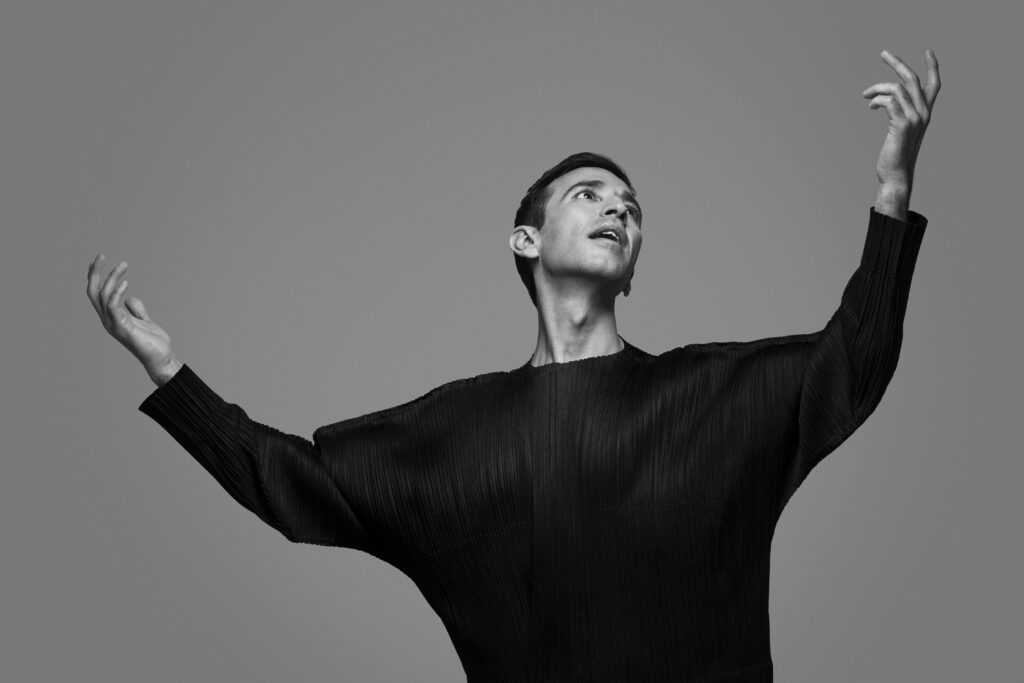
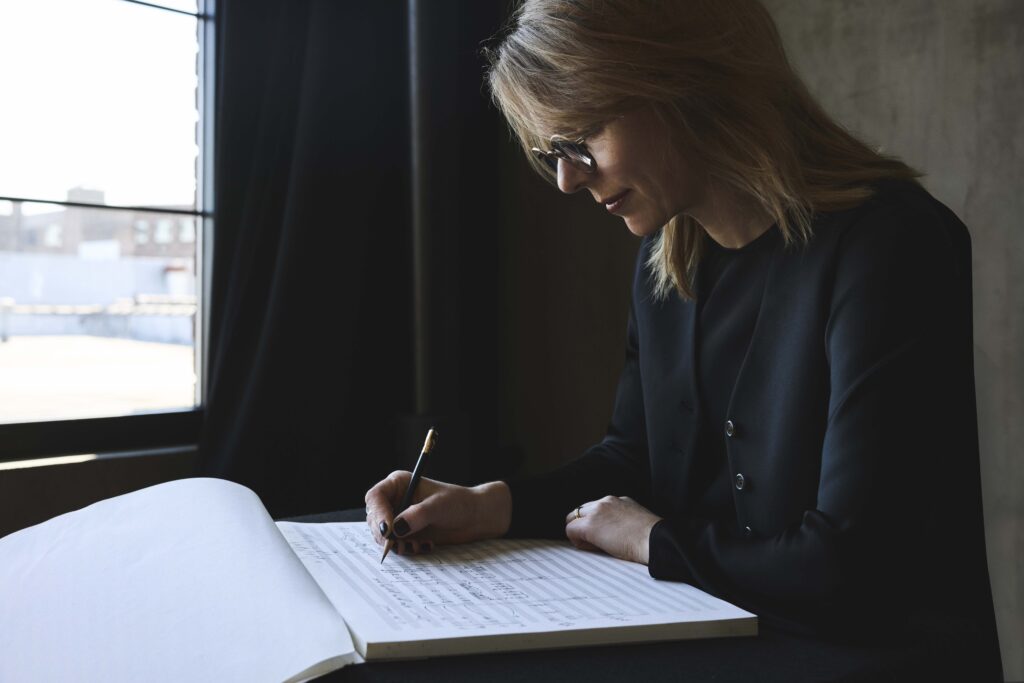
Nico Muhly composes music for stage, film, and television.
Listening Room: Nico Muhly
Share: 


Steve Reich, The Cave, Act III, The Cave of Machpelah
The Cave is a three-act opera written by Steve Reich that tells the story of Abraham through interviews conducted in Israel, the West Bank, and America. The piece uses the speech rhythms and intonations of the interviewees as the basis for the musical material – the audio clips of the respondents are doubled, and responded to, by the orchestra.
The third act, particularly the final scene, is some of the most beautiful contemporary music in the world. It focuses on the scene of Abraham and Sarah receiving strangers to their tent, who turn out to be angels. There is this terrible misconception that music from the minimalist tradition is cold and sterile. This, to me, is the exact opposite of that.
John McGuire, 48 Variations for Two Pianos
This piece of process music moves along the circles of fifths through a series of interlocking patterns that simultaneously sound inevitable and magical. Although you can’t help but be aware that you are being presented with something mathematically determined, it is quite soulful.
That’s really the magic of these variations – expressiveness through something very orderly. It’s nearly an hour long, and you can just put it on and go about your day. There’s something enormously satisfying about the experience.
Lauryn Hill, The Miseducation of Lauryn Hill, Ex-Factor
There are only a handful of perfect albums in the world, and The Miseducation of Lauryn Hill is one of them. I listen to it all the time, and Ex-Factor is one of my favorite songs. Such a raw and vulnerable vocal performance. The song is harmonically quite simple, which forces you to focus on the real grain of Hill’s voice and the sly sophistication of her delivery. It’s the kind of performance you wish you could have experienced live, and the album remains in constant rotation – it’s just fabulous, nothing better than that.
“It’s a masterclass in starting small and getting big, not just in volume or number of players, but in terms of how full a vessel of music can be.’’
John Adams, El Niño, Act I, The Christmas Star
This piece appears at the end of the first act of Adams’s oratorio about the birth of Jesus, beginning with tiny woodwind murmurs that gradually expand into the full orchestra. Adams weaves together a poem by Gabriela Mistral with a piece of music (O quam preciosa) by the 12th-century composer Hildegard von Bingen. The effect is both architectural and organic, otherworldly in the best sense – like a spaceship has landed without you even noticing it’s happened. It’s a masterclass in starting small and getting big, not just in volume or number of players, but in terms of how full a vessel of music can be.
William Byrd, Mass for Four Voices
This piece is wonderful and makes me feel humble as a contemporary composer – Byrd achieves such magic with just four voices, while so many of us require elaborate instrumentation to achieve what we want to say. The final section, the Agnus Dei, is something I think about constantly: so simple in its ingredients yet so profound in its effect. The way everything concludes feels like those old Looney Tunes cartoons where the iris slowly closes into black, that sense of gentle, inevitable closure. It’s music written to serve a liturgical purpose, yet it transcends that function to become something timelessly beautiful, worthy of repeated listening just for the pure joy of it.
Discover Nico Muhly’s Listening Room playlist here