Jacquelyn Stucker is a young American soprano. She has performed a wide range of operatic repertoire all over the world. She recently made her New York Met debut playing the role of the Countess in Mozart’s The Marriage of Figaro.
Listening Room: Jacquelyn Stucker
Share: 


Johannes Brahms: The Piano Quartets
There’s a recording of Brahms’s piano quartets with Yo-Yo Ma and Emanuel Ax. I listen to this album when I’m feeling homesick. The States is a complicated place right now and I’m growing weary of people saying, ‘Your President…!’. It’s like yes, I understand. But I’m American, I grew up here. It’s also partially my responsibility to make this country a better place, being a citizen and all that. It’s not that Brahms is American, but it takes me back to a time when I was working in Santa Fe. I found that album at the library – I had five library cards – and I rented it back when I still had a disk drive attached to my laptop, and I would listen to it in my car. It was so nice.
Brahms: The Piano Quartets, Opus 25, 26 & 60, Emanuel Ax (piano), Isaac Stern (violin), Jaime Laredo (viola), Yo-Yo Ma (cello), Sony 1990
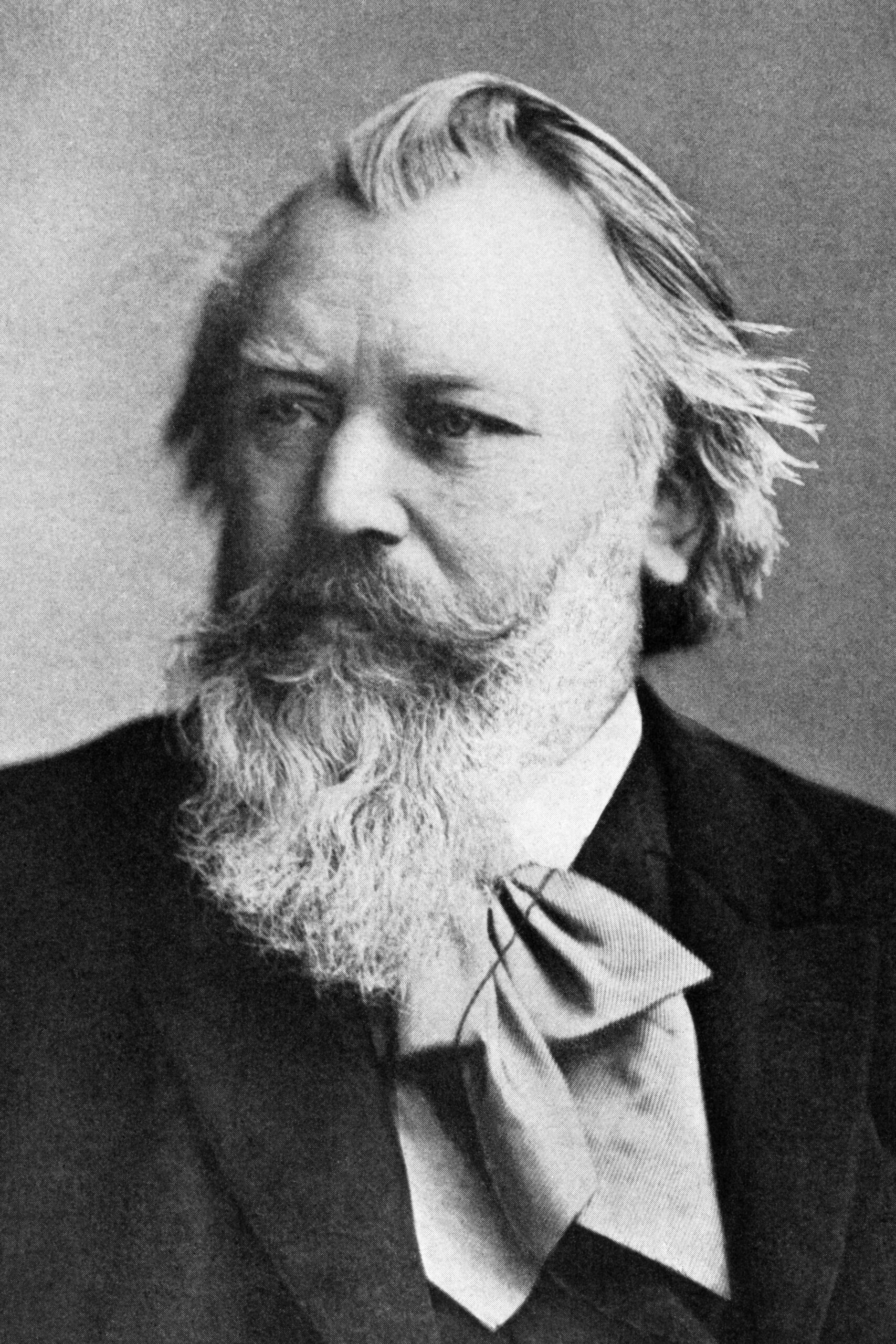 Johannes Brahms (1833-1897) on engraving from 1908. German composer and pianist, one of the leading musicians of the Romantic period.
 Charles Mingus: Mingus Ah Um
I don’t know anything about jazz, but there’s something very plaintiff and vocal about the way these musicians perform. Goodbye Pork Pie Hat, what are we talking about? I’m not sure what a pork pie hat has to do with that track, I’m sure it’s programmatic but it certainly makes me feel something when I listen to it. I believe Charles Mingus was the bassist of his band and I like a string instrument-led combo. It’s why I like another jazz group, The Bad Plus, which is keyboard, drums and upright bass.
Mingus Ah Um, Columbia, 1959
Lorraine Hunt Lieberson: Recital at Ravinia
There’s a great recording of the mezzo-soprano, Lorraine Hunt Lieberson giving a recital at the Ravinia Festival. She’s singing Brahms and all sorts. It’s incredible and it’s live, too. I like a live album; everything should always be live. I don’t like recordings of things that exist already in a million forms, and which are already great. Hugo Wolf, the Austrian Lieder composer, wouldn’t set a text if it had been done before unless he felt he could do it better. That’s how I feel about recordings. I wouldn’t record The Marriage of Figaro because I couldn’t top what’s already out there. But with something like The Exterminating Angel, the opera by Tom Adès, I’d record that because I think I have something to add to the conversation. There’s definitely fewer than five of us who know that role in the world.
Lorraine Hunt Lieberson: Recital at Ravinia, Harmonia Mundi, 2009
John Coltrane and Johnny Hartman
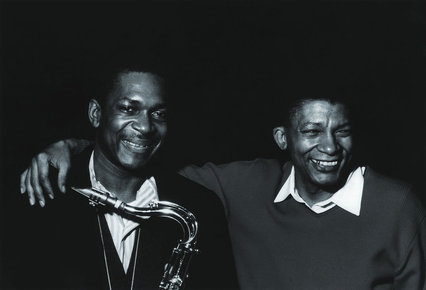
This duo of Coltrane on sax and Hartman on vocals is amazing. Johnny Hartman had one of those voices – you know, when someone doesn’t have the world’s best instrument, but they use it really well, to the Nth degree? That’s Johnny Hartman. The raw material of his voice is, in my opinion, not great but what he does with it, and the way he treats text is so soulful, it’s so connected to everyday speech. It’s the Americanness of it I love so much, and the way he sings makes so much sense with how John Coltrane plays. I love that album, I’ll never get tired of it.
John Coltrane and Johnny Hartman, Impulse! Records, Universal Music Publishing, 1963
The Music Man vs. Biber-Berio Music for Violins
My last recommendation is a two-way tie between the original Broadway cast recording of The Music Man, and Irvine Arditti and Rüdiger Lotter playing violin music by the baroque composer Biber, and the 20th-century composer, Berio. The last track on that album (Harmonia artificiosa-ariosa. Partia no.3 in A Major: IV Ciacona) is by Biber and it’s my favorite. Irvine Arditti is the founder of the Arditti String Quartet, which primarily plays contemporary music. But I tell you what, he could have had a career as a Baroque musician if he’d wanted to. It’s one of the most beautiful things I’ve ever heard.
The Music Man, Original Broadway Cast, 1958; Biber · Berio: Music for Violins, Oehms Classics, 2009