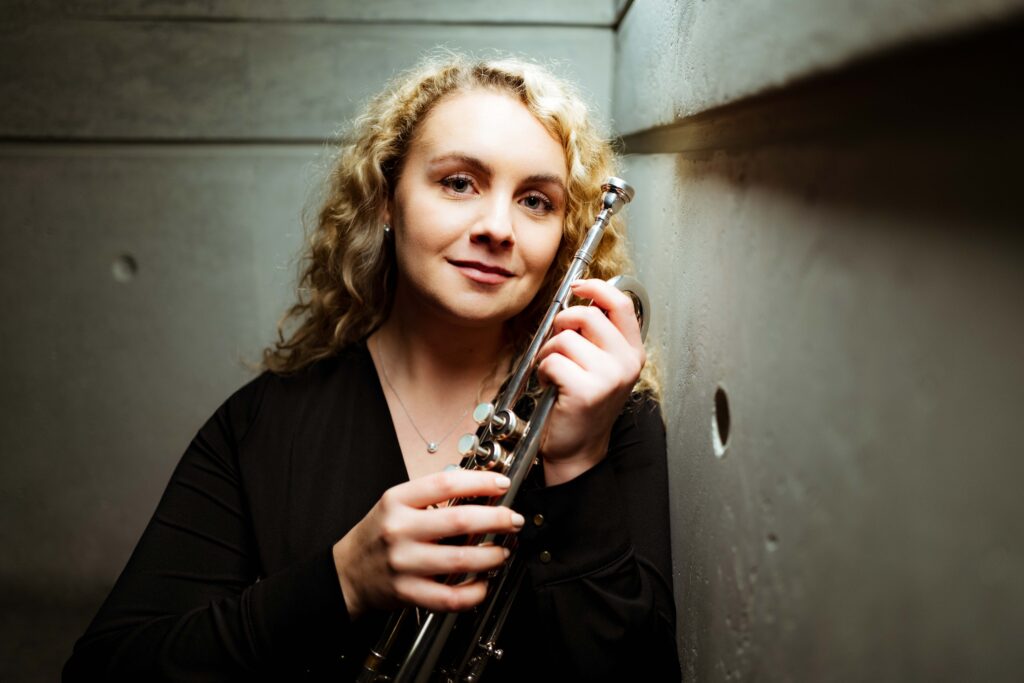
Matilda Lloyd is a British trumpet soloist and educator.
Listening Room: Matilda Lloyd
Share: 


Paul Hindemith (1895-1963)
I’ve chosen the German composer Paul Hindemith as I think he’s underrated. His large oeuvre includes sonatas for most instruments, and a lot of chamber music, too, making him an important composer, especially for wind and brass players.
He lived in turbulent times – he was forced to emigrate to Switzerland on the eve of World War II, and then to the United States, and much of his music captures this sense of foreboding and melancholy. I appreciate the depth of emotions Hindemith manages to encapsulate in his music, and how he blends lyrical passages with complex rhythms and harmonies.
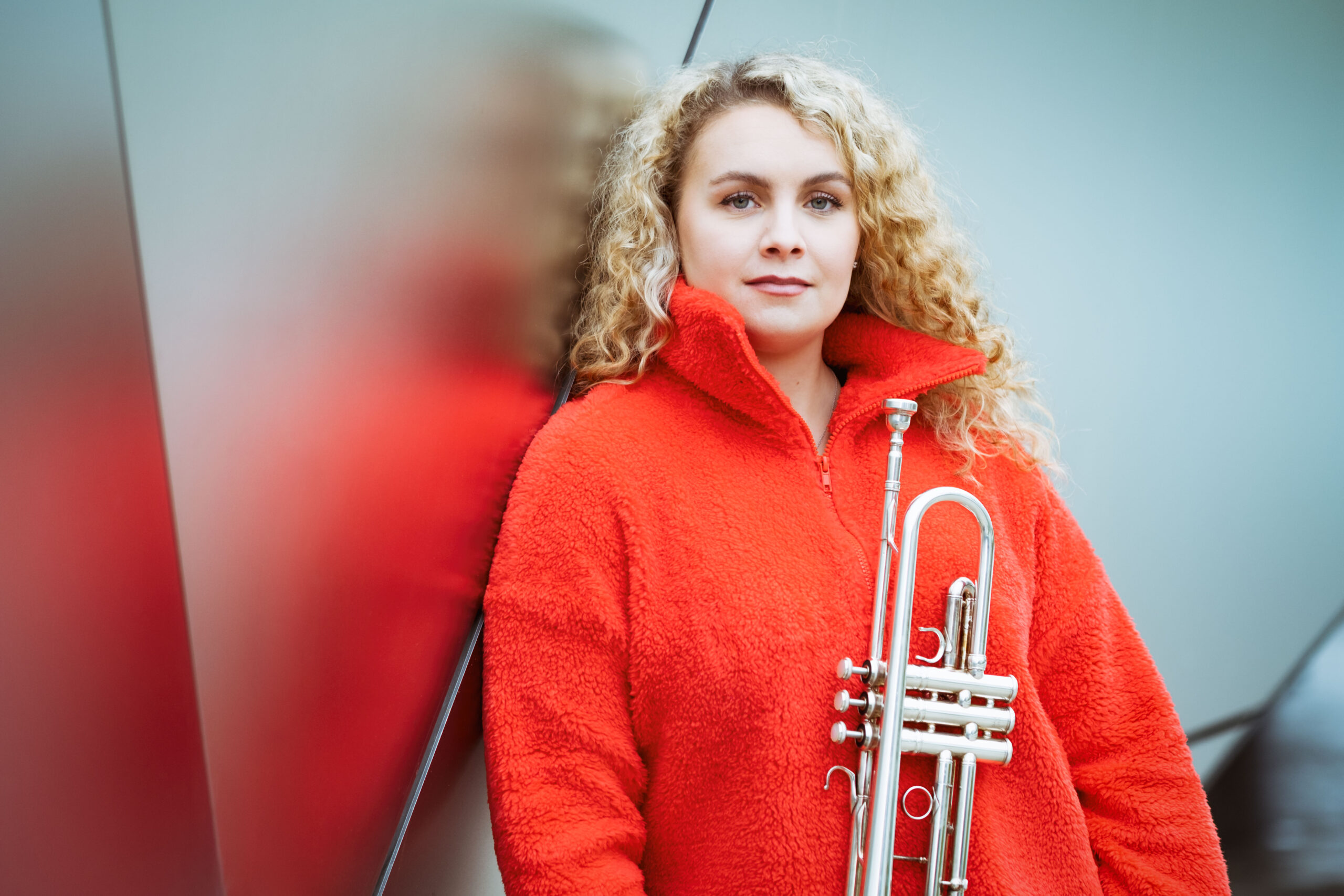 Matilda Lloyd. Photography: Geoffroy Schied
 Sonata for Trumpet and Piano (1939)
Every trumpet player knows this sonata, it’s our behemoth. I really love music when you can sense how a composer has been influenced by what’s happening around them. It was written at the start of World War II and the first movement feels like a musical depiction of tanks coming over the hills. It expresses fear and anger and all the worries Hindemith clearly felt. He finishes with a beautiful chorale Alle Menschen müssen sterben [All People Must Die] which is very poignant. It’s great to play because you really feel like you’re telling a story. I try not to listen to too many different versions of the piece because I want to make it my own, but Alison Balsom has recorded it and I’m sure it’s fabulous.
Légende: Works for Trumpet and Piano, Alison Balsom and Tom Poster, Warner Classics
Concerto for Trumpet and Bassoon (1949)
Hindemith wrote a fantastic concerto for trumpet and bassoon with a string orchestra accompaniment. I’ve still yet to perform it, but I’m trying my hardest. It’s bizarre, I mean, I don’t think anyone else has ever written a concerto for trumpet and bassoon, but it really works. A lot of the time, it’s a sort of call and response situation and then there are times when they come together. The trumpet writing isn’t as forced or sustained as it is in the sonata. This has a more delicate, chamber-music feel to it. A good reference recording would be Reinhold Friedrich and the Frankfurt Radio Symphony Orchestra.
Paul Hindemith: Complete Wind Concertos, Frankfurt Radio Symphony Orchestra, CPO
Ragtime (1921)
The third on the list is a piece I heard for the first time only the other day at a concert in Berlin. It’s a kind of orchestral overture that’s based on one of the themes from Bach’s Well-Tempered Clavier which Hindemith takes and really swings. The trombones are really going for it and it’s brilliant, like a circus showpiece.
New World Jazz, Michael Tilson Thomas and New World Symphony, RCA Red Seal
Viola Sonata in F Major, Op. 11 (1919)
This is one of Hindemith’s most famous pieces, which I’ve known for years. The depth of the viola’s sound suits Hindemith’s music so well. He gets so much warmth out of the instrument. It’s so interesting, Hindemith wrote sonatas for all these instruments that otherwise wouldn’t have one, not just the viola but also the tuba, trombone…
Hindemith: The Complete Viola Music Vol 1 – Viola Sonatas, Lawrence Power (viola) and Simon Crawford-Phillips (piano), Hyperion
Sonata for Alto Horn (1943)
In fact, the piece I’m going to suggest as my fifth choice, I didn’t know existed at all – Hindemith’s Sonata for Alto Horn. It’s beautiful, and I’m thinking about playing it on the trumpet or even the flugelhorn as it would be nice to reintroduce it to the repertoire.
Hindemith: The 5 Sonatas for Brass and Piano, Kleos Classics