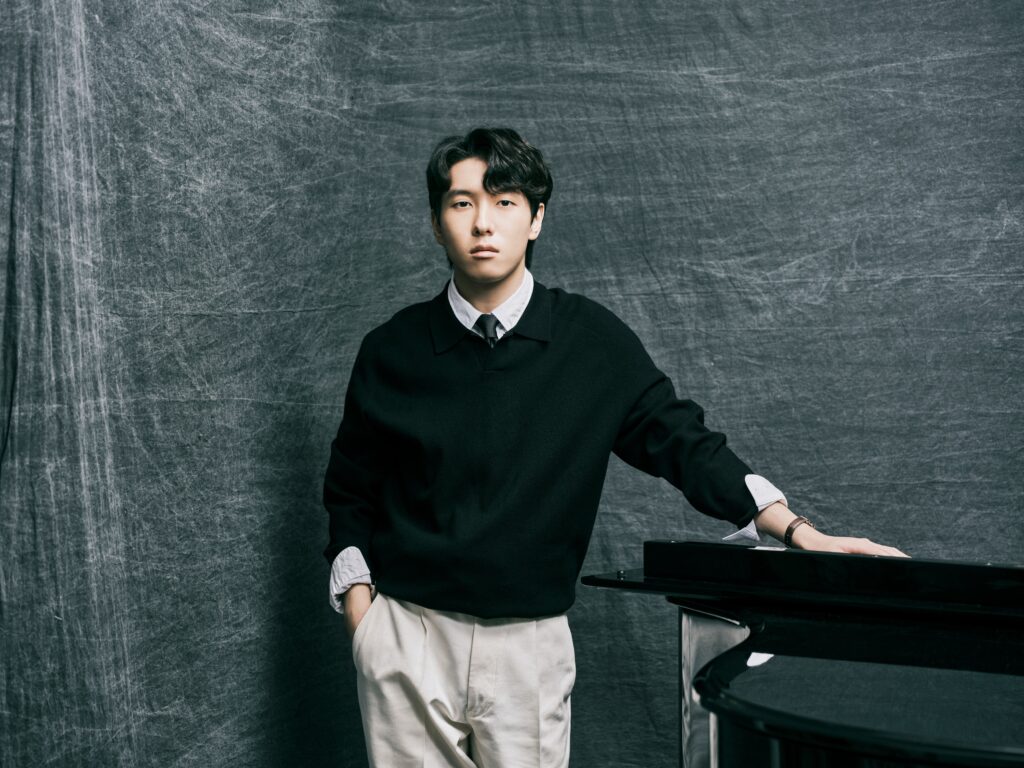
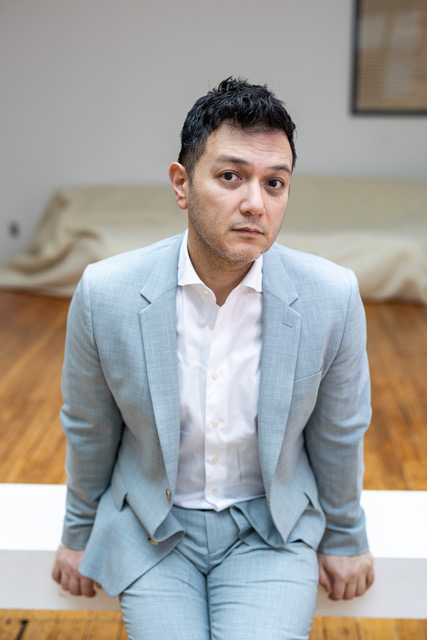
Nicholas Phan is a Grammy Award-winning lyric tenor, curator, and educator.
Stories: Nicholas Phan
Share: 


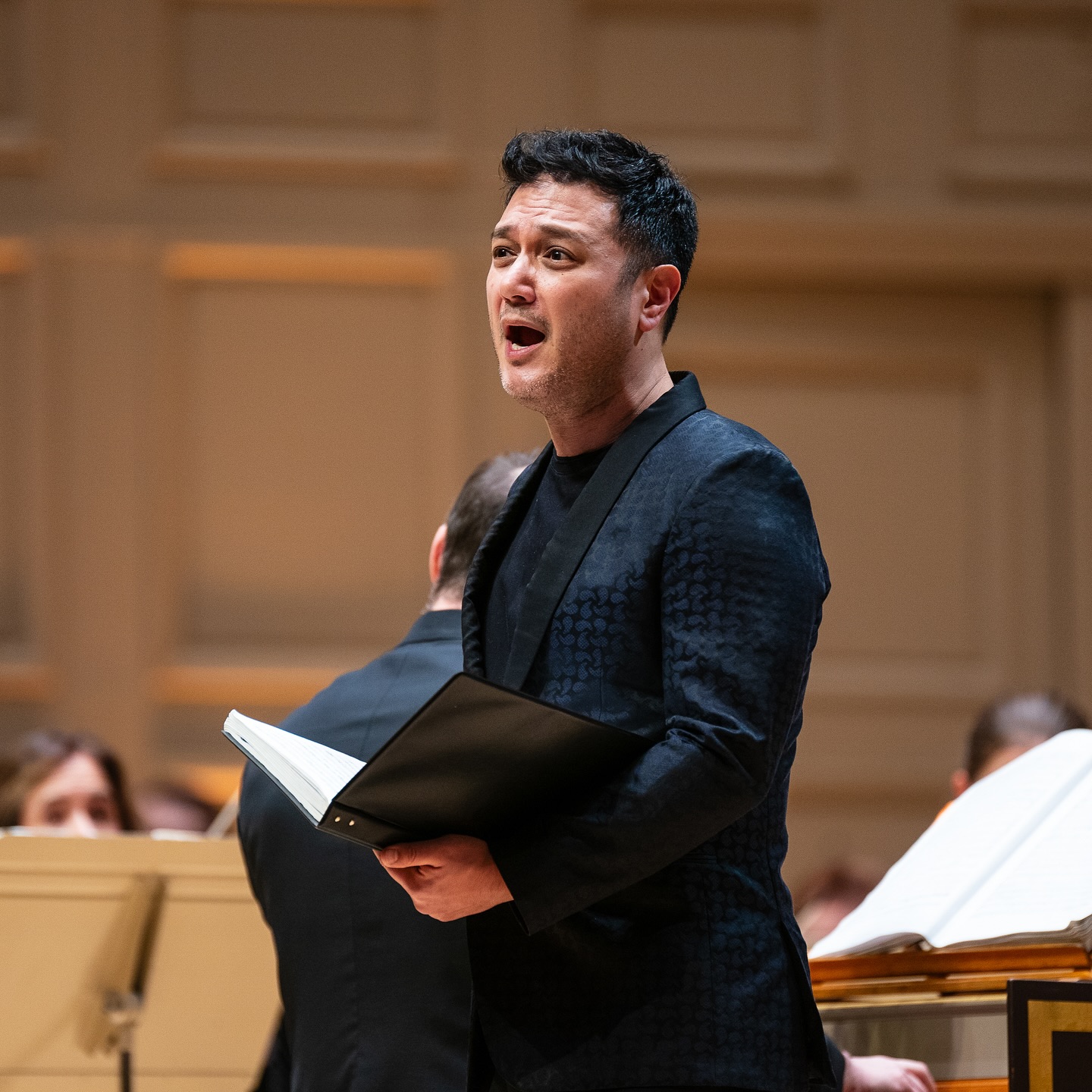 Performing Handel's Messiah last year with Handel & Haydn Society at Boston Symphony Hall, photo: Robert Torres
 2024 was the tragic culmination of several extraordinarily difficult years for my family. After nearly three years of debilitating health crises, both of my parents passed away. My mother died in July after more than two years of being unable to eat, speak, or move the right side of her body following a catastrophic stroke in early 2022. My father, diagnosed with advanced and aggressive prostate cancer just two weeks after that stroke, succumbed to his illness a few days before Thanksgiving. We buried him the Tuesday before the holiday. I drove straight from the funeral luncheon to the airport and boarded a flight to Boston, arriving one day late to Messiah rehearsals already underway with the Handel and Haydn Society.
Generous friends invited me to join their Thanksgiving dinners, but I was too exhausted and too stunned by the rapid succession of losses to imagine stepping into a celebratory gathering. Even though I’m fortunate to have a loving community of close friends in Boston, I needed solitude. My partner and I ended up having our holiday meal at the bar of our hotel. The next evening, I walked onto the stage of Boston Symphony Hall and implored a sold-out audience to “take comfort”, to trust that “the crooked shall be made straight, the rough places made plain”, and that all will be right with the world. From there, I barreled on to Messiah performances in Washington, DC and Hong Kong, and (one of the more surreal episodes of that December) jumped into a run of holiday performances in the Bay Area for a colleague whose own father had just died.
As extreme as this sounds, it was, in some sense, the new normal. Since my mother’s stroke, my life had been a constant balancing act between the escalating crises at home and the demands of my professional world. While my mother struggled to adjust to a body that no longer obeyed and made it next to impossible for her to communicate, my father fought to slow the march of his cancer even as he cared for her. I found myself riding the rollercoaster of their rapidly declining health while doing my best to stay on top of my artistic responsibilities.
In June 2023, I was performing Kaija Saariaho’s opera Adriana Mater, portraying a son who angrily confronts the truth that his mother has lied to him about the narrative of his life, and hidden from him the horrific story of his conception and his father’s monstrous behavior. Either side of that rehearsal period was spent in Ann Arbor, helping care for my own ailing parents, sometimes prying myself away from my mother’s attempts to pinch or scratch me with the one hand she could still move, her frustration and grief at the loss of her autonomy erupting through the small physical gestures she could control.
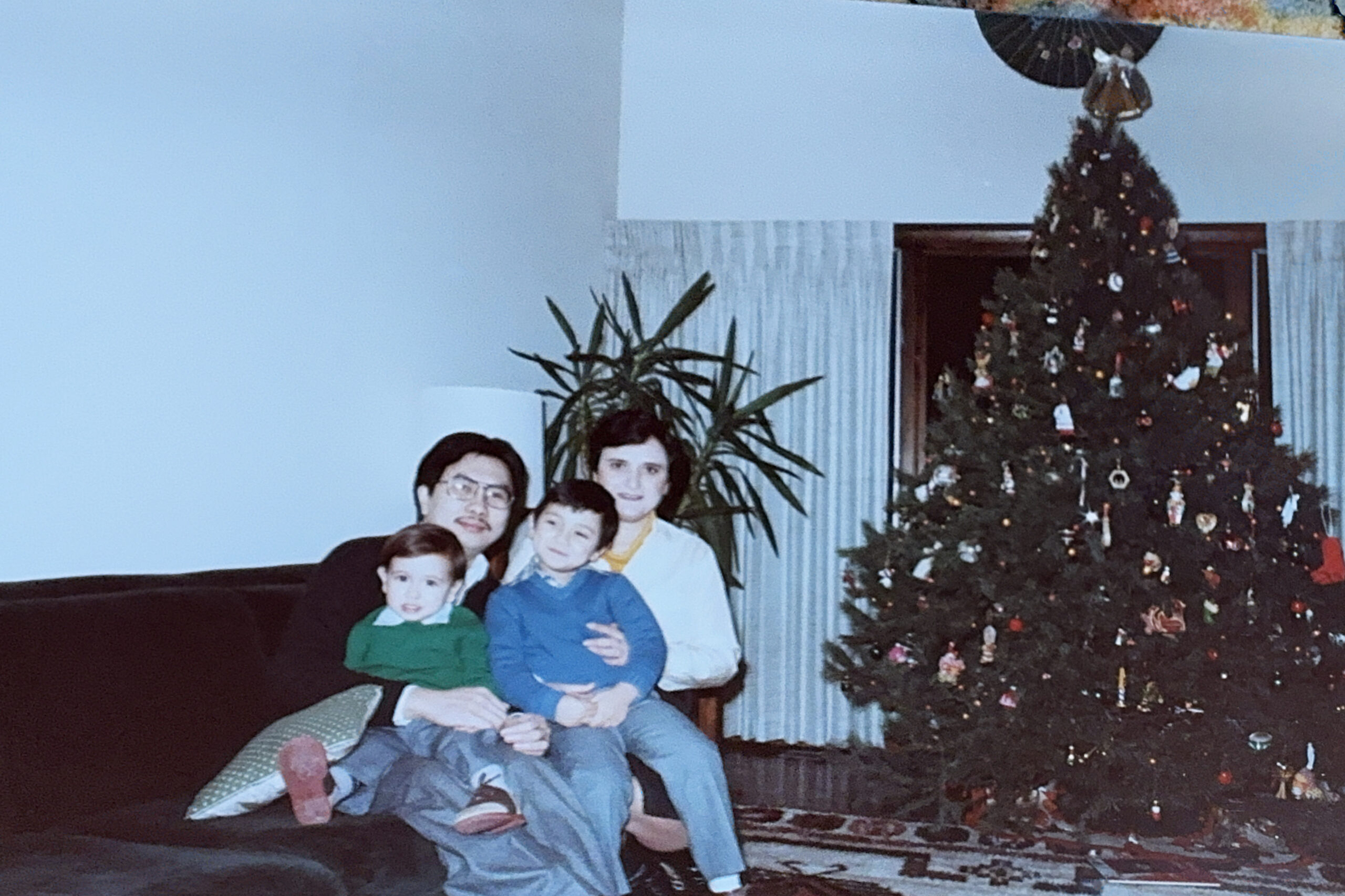 Me, my brother, and my parents
 That April, I premiered a beautiful new orchestral song cycle, There Was a Child Went Forth by composer Joel Puckett, in Washington, DC, a musical setting of Walt Whitman’s poetry about the profound ways parents shape their children, all while simultaneously helping my father navigate the labyrinth of the American healthcare system during one of my mother’s hospitalizations.
This painful juggling act has become a hallmark of modern life for anyone who is “lucky” enough to accompany their parents along this final path. I am far from alone; almost everyone I know has traveled or is traveling some version of this terrain. Yet, as a performing artist, the experience takes on a particular strangeness. In most professions, one strives to leave personal turmoil at the door. In mine, we do the opposite: we mine the material of our full emotional lives as a crucial part of the work so that the composers’ and poets’ truths can shine through us. But what do you do when your emotions are already raw, volatile, dangerously close to the surface? What do you do when the landscape of your inner life feels too close to the artistic landscape you must inhabit?
Over the past year, I have repeatedly encountered music that touches directly on this exposed nerve of grief. I’ve been incredibly fortunate to be surrounded by colleagues, many of them dear friends, who know what the past few years have held. They understood when I needed to step out of rehearsal for a moment to cry. In recitals at the beginning of the year, when singing the folk song Poor Wayfaring Stranger, a tune about looking forward to reuniting with one’s parents in heaven, I have sometimes felt the need to build a small wall around my heart simply to make it through. I believe performing is an act of service: our job is not to weep ourselves, but to open the emotional floodgates for the audience. But it is a bizarre and tense paradox to build a dam to brace against those torrents in order to white-knuckle through a moment that is meant to conjure feeling and empathy.
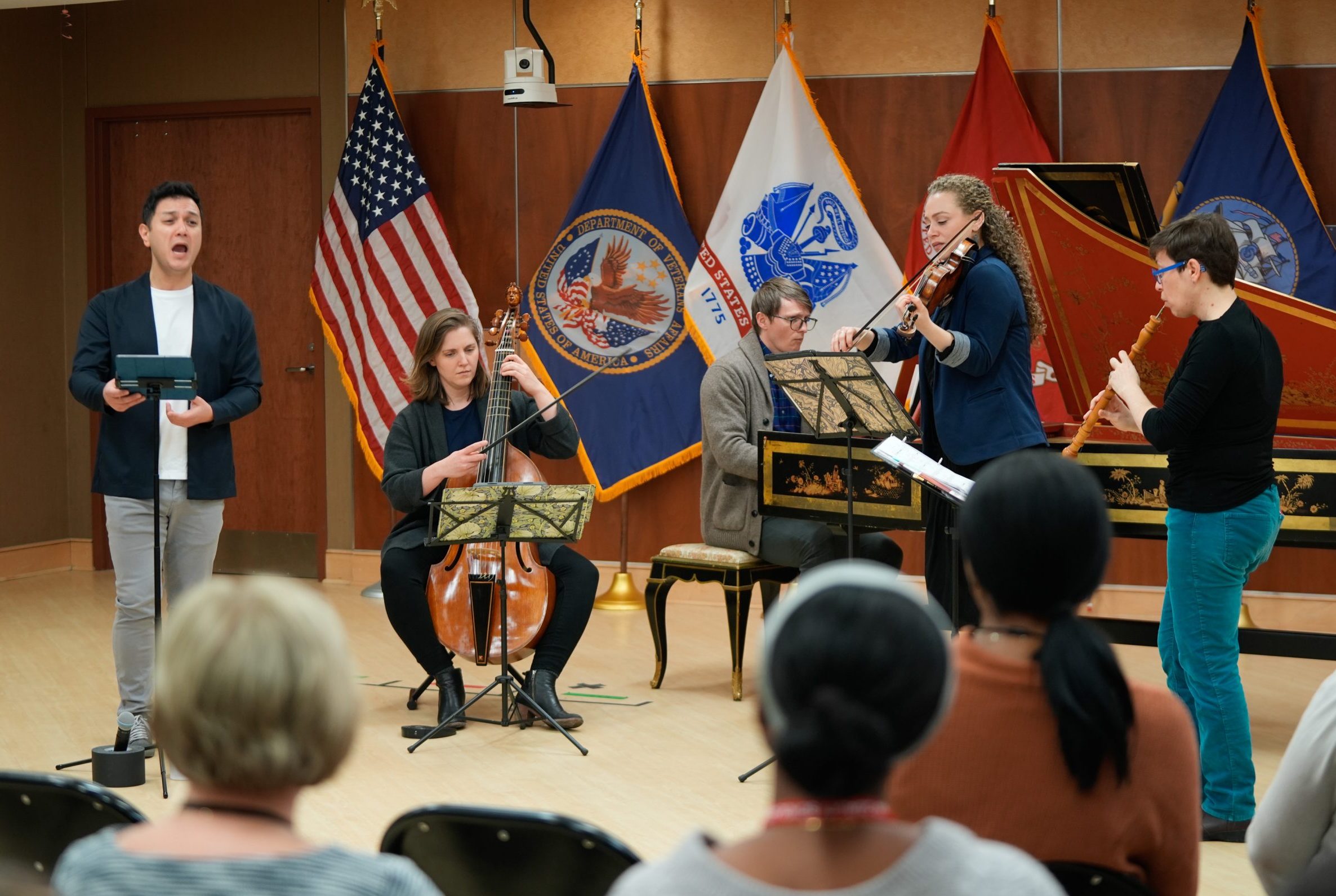 Performing Viet Cuong’s A Moment’s Oblivion at the Cleveland Veterans Hospital with Les Délices, photo: Timothy Harrison
 In February, I premiered composer Viet Cuong’s cantata A Moment’s Oblivion, a musical retelling of a Confucian myth about a family confronting a patriarch’s memory loss. Poet Dave Lucas’s libretto includes the haunting lines: “Now son must father his own father / The wife becomes her husband’s mother.” Singing those words over and over made it impossible not to summon the very recent memories of tending to my mother – her brilliant mind trapped inside a body that could no longer speak or eat – and of my father’s unfailing devotion as he washed her, fed her, guided her through physical therapy, and supervised her care until she died.
We performed a preview of the piece at the Veterans Hospital in Cleveland for an audience of memory-care doctors, nurses, patients, and caregivers. In a setting I had come to know far too well, the antiseptic, fluorescent light of a hospital conference room, I could feel my heart instinctively trying to build that familiar protective wall. But the practical challenges of singing at 10am in a dry, clinical acoustic required just enough focus on technical distractions that the emotion could flow without overtaking me.
After the performance, we listened to the audience share their reactions. Their reflections were deeply moving. Hearing so directly how the piece resonated with people living its themes was extraordinary. It reminded me that sharing grief through music can operate like a form of group therapy. At its best, it’s a communal act of processing and healing. When the week of performances concluded, I felt physically lighter, as though some of the weight of grief that I had been carrying had been put down and lovingly let go.
As I enter another holiday season of Messiahs, immersed once again in the year’s reflective energies, I am struck by what a gift it is to live a musical life, and by the power of live performance. To stand before an audience at the opening of Handel’s masterwork and invite us all to “take comfort” is something extraordinary. There is always a light at the end of every dark tunnel. We can hope. And bringing our whole selves – grief included – to our work is not only permissible, it is necessary. When we allow ourselves that fullness, we make space for the communities around us to heal as well.