As a performer and composer, saxophonist Steven Banks is striving to bring his instrument to the heart of the classical music world. Here he discusses his newly released contemporary classical music composition, Come As You Are.
Stories: Steven Banks
Share: 



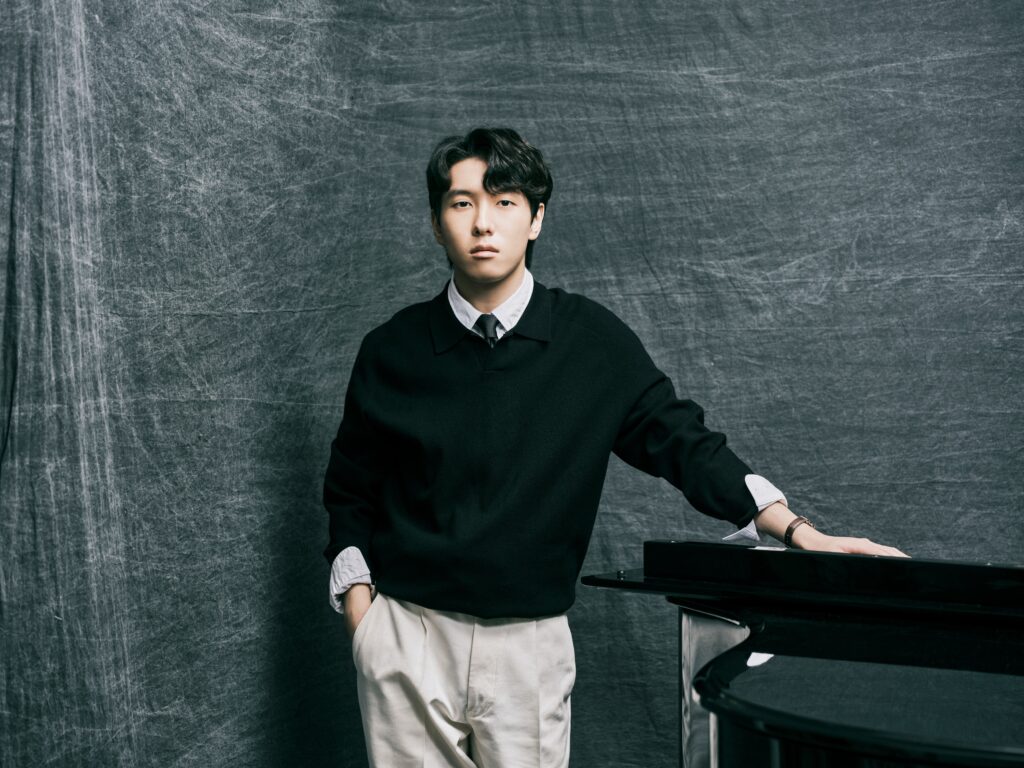
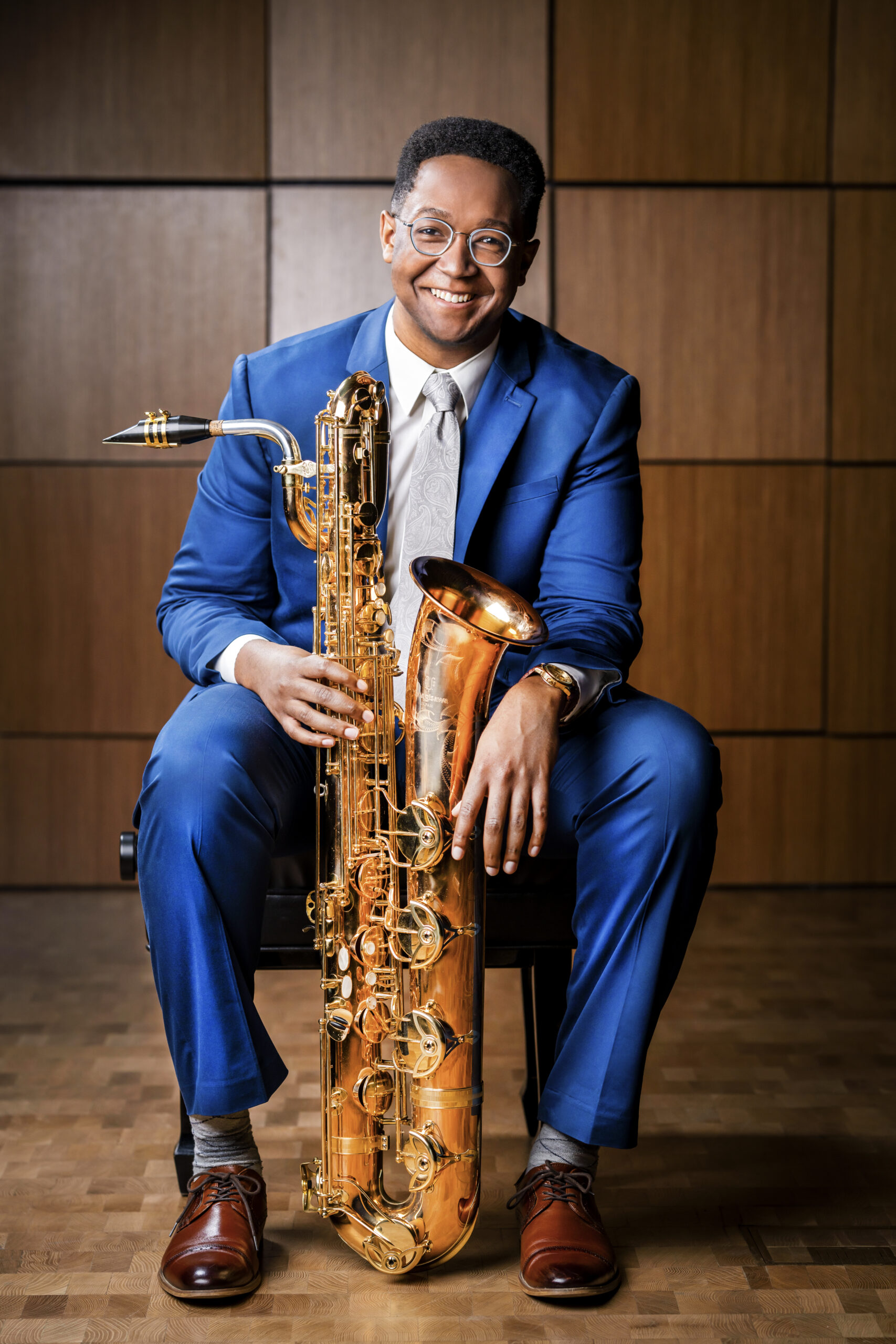 Photo by Chris Lee
 For several years, I have wanted to write a piece that was dedicated to my immediate family – my mother and three sisters – and the influence that my upbringing has lent to my understanding of music and life in general. When preparing the program for my Young Concert Artists debut recital, it dawned on me that there would be no better time than this to share a work that bears such personal significance.
It seemed obvious to me that this piece needed to take influence from African-American church music in some way. When I think back to my childhood, and especially the beginnings of my journey in music, the church is at the center of so much. We were regular churchgoers, my grandfather was a pastor in the African Methodist Episcopal (A.M.E.) church, and the church provided us with an incredible community that was very important to my family in the good times and the bad. The church also taught me about the transformative and awesome power of music.
In an effort to honor both my family and the church, I decided to write a four-movement work in which each movement would be dedicated to a different family member and take inspiration from their favorite Negro spiritual or sacred song. My mother chose I Still Have Joy. My three sisters – Kharma, Jennifer, and Ashley – chose His Eye is On the Sparrow; My Lord, What a Morning; and Wade in the Water, respectively. Additionally, I chose to write this piece for tenor saxophone, as it was the instrument that I specialized on during my first few years of playing. My church family will largely remember me as playing hymns on the tenor saxophone during our services.
At its core, Come As You Are is an expanded arrangement or setting of these four songs. As a more direct reference to the music played in the church that I grew up attending, the song Total Praise – which is typically sung by a choir – serves as a sort of connective tissue throughout the entire piece. The movement titles are each derived from the lyrics contained within Total Praise. The text of each song is vital in understanding the expressive nature of each movement. However, the form and melodic content of each song has been expanded, rearranged, or manipulated in a way that is meant to make the message clear when performed on instruments that, obviously, cannot convey the actual words. Below, I’ve listed the movement titles alongside the respective songs that they each draw inspiration from:
I. Lift My Eyes– My Lord, What a Morning
II. Times of the Storm– Wade in the Water
III. Strength of My Life – His Eye is on the Sparrow
IV. Lift My Hands– I Still Have Joy
When interpreted through the lens of classical music, these movements are configured in a way that is intended to align roughly with a slightly deviant four-movement sonata form that composers, such as Schumann, Rachmaninoff, Shostakovich, and many others used in several of their works. In this form, the first movement is an allegro, the second movement is a scherzo or dance, the third movement is an adagio, and the last movement is once again fast in tempo, perhaps with a dance feel or including a theme and variations.
Through the lens of African-American sacred music, the first two movements – Lift My Eyes and Times of the Storm – are inspired by traditional Negro spirituals. It is important to note that spirituals often contained text that was biblical on the surface, yet deeply personal or communicative in intention. My Lord, What a Morning and Wade in the Water are no exceptions to this tradition. In this spirit, I aimed to create several dichotomies in musical character that would reflect not only the surface-level meanings of these spirituals, but also what they might have meant personally for the people who sang them. The second two movements – Strength of My Life and Lift My Hands – are inspired by songs that are more common in religious practices today. With these, I have attempted to musically depict the lyrics in a way that conveys the message of each song from my own unique perspective.
As I wrote this piece, I realized that one of its purposes was to bring together different facets of my own life experience. As a classical musician, the vast majority of my colleagues have little knowledge or understanding of Black culture, nor of how it influences my music-making. As a Black man from North Carolina, many of my family and friends don’t have a true sense of what I do and love as a classical performer and composer. I have also spent an incredible amount of time and energy on keeping these worlds separate and trying to show up in each as if the other didn’t exist. This “two-ness” is akin to a concept called “double consciousness,” introduced by the historian W.E.B. Dubois at the turn of the 20th century in his book The Souls of Black Folk. He outlines this concept as roughly having two simultaneous identities, one of which might be described as uniquely American, while the other is uniquely Black.

My circumstance has been further complicated by the reputation of saxophone, an instrument that was originally invented to be a constituent of the symphony orchestra but has now become almost singularly associated with jazz and popular music. Even within the classical saxophone community, there is a bit of a divide about whether the instrument should be dedicated to experimental new music or merged with the mainstream world of concert music. I often find myself at the intersection of being “too ____ for ____ and too ____ for the opposite.”
In many ways, I have experienced all of these aspects of myself finally beginning to coalesce. As a composer, I strive to let my internal musical voice be “OK” and to follow it where it wanders, trusting that this amalgamation of experiences is leading me in a direction that is uniquely mine, authentically informed by my various interests and identities. “Come As You Are” is a significant landmark on this journey to musical individuation.
The album Crises, Sighs and Dreams by Steven Banks, Xak Bjerken, and the Dover Quartet is out now; steven-banks.com