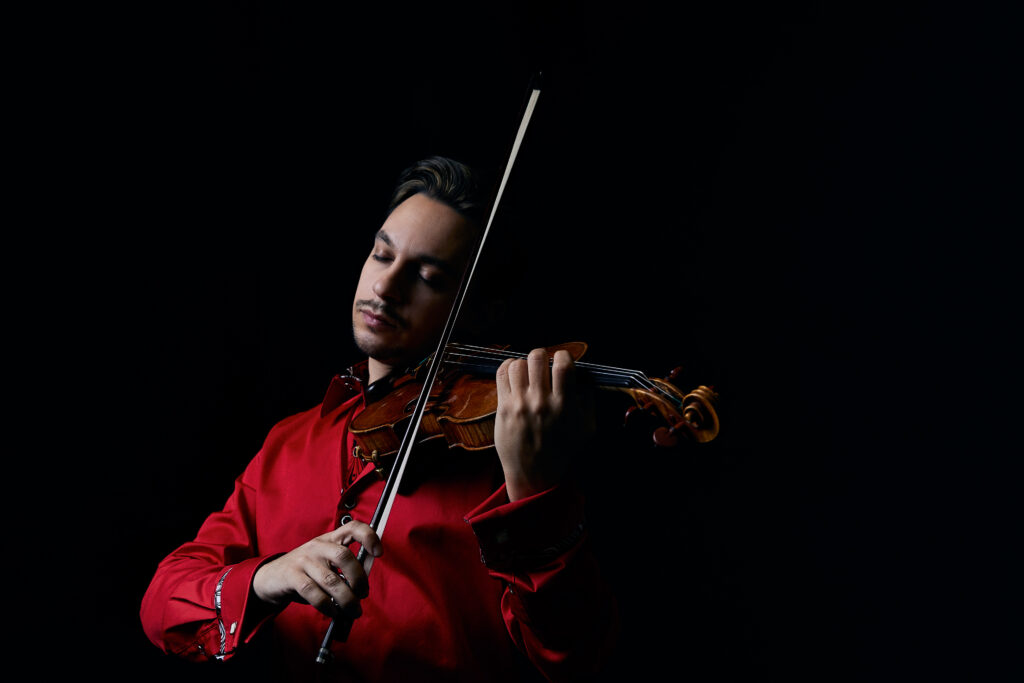
The Estonian-American conductor Paavo Järvi discusses his approach to Mahler’s symphonies and why recording is an art form in its own right.
Stories: Paavo Järvi
Share: 


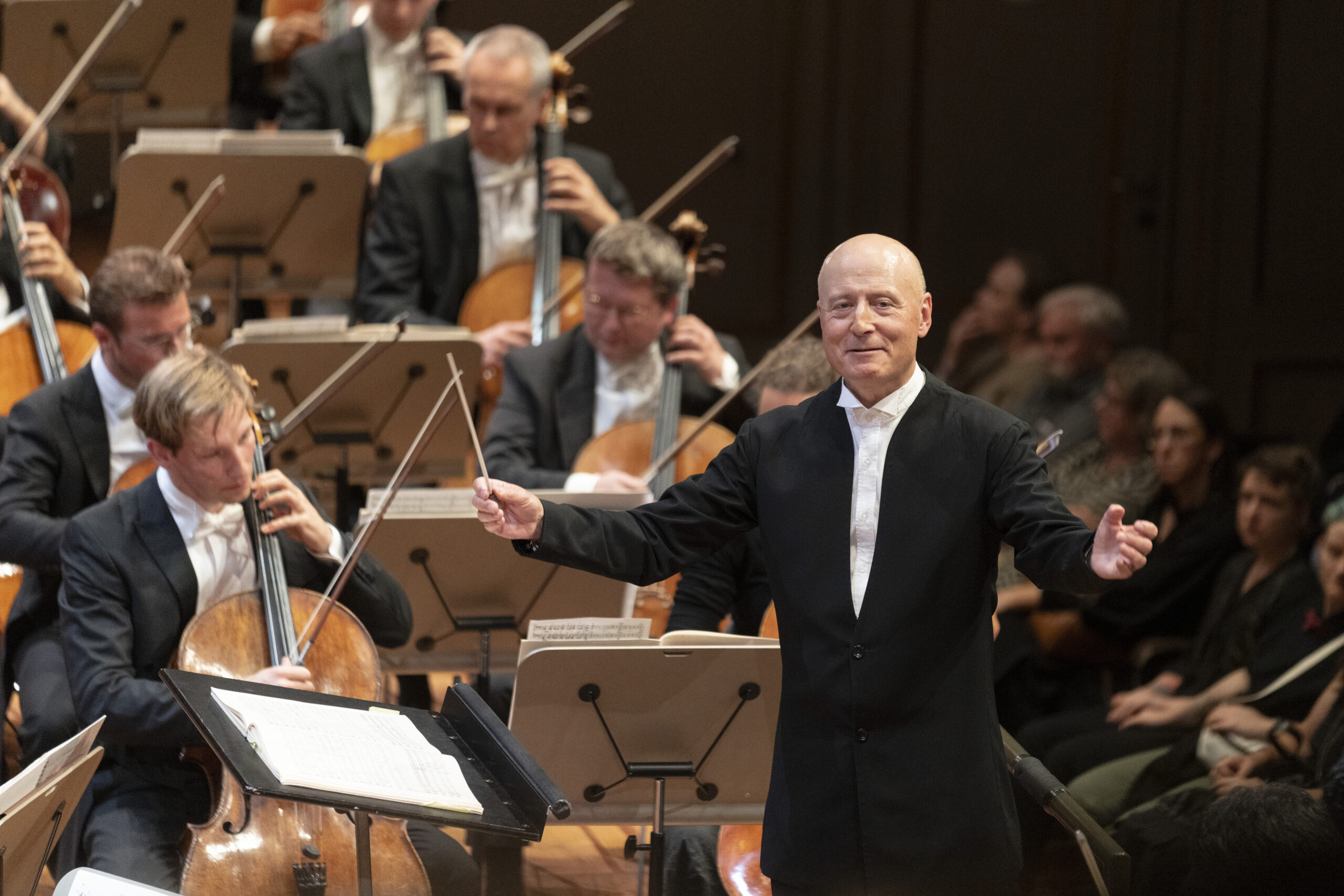 Paavo Järvi with the Tonhalle-Orchester Zürich
 Before Mahler, we should talk about Hans Rott.
Mahler knew Rott’s Symphony No. 1 – which I recorded with the Frankfurt Radio Symphony and conducted this season with the Berlin Philharmonic – and it had a profound influence on his own First Symphony.
The story is remarkable. Hans Rott, Mahler, and Hugo Wolf once lived in the same apartment in Vienna. Mahler and Rott were studying with Bruckner, and Rott was actually Bruckner’s favorite student. When Rott finished his First Symphony he showed it to Brahms, who reportedly told him he had no talent and should give up composing.
Rott was extremely sensitive, and the criticism devastated him. On a train shortly afterward, he became convinced that Brahms had filled the train with dynamite to kill him. When another passenger lit a cigarette, Rott pulled a gun. He was arrested and confined to a mental institution and died at 25. Tragically, he never heard his symphony performed.
But the truth is that Rott was a genius. Listening to his symphony today, you hear ideas that later became associated with Mahler: the gestures, the orchestral language, the sense of a new symphonic world. Rott wrote this nearly a decade before Mahler’s First Symphony. Mahler developed these ideas further – he lived longer and had access to orchestras – but the seeds are already there in Rott.
People sometimes ask whether we really need another recording of Mahler’s symphonies – such as the cycle I’m now recording with the Tonhalle-Orchester Zürich. There are already many wonderful recordings. But music itself is not static. We tend to think that once something is written down it is fixed forever, when in reality, a score only comes alive through an interpreter.
Each interpreter brings a perspective shaped by personality, education, and historical context. Some musicians are analytical, others instinctive, and every shade exists in between.
Listen to Leonard Bernstein’s Mahler recordings in New York and then those in Vienna decades later. The notes are the same, yet the interpretations are very different. Later in life he heard the music differently and had the courage to express things he might not have dared earlier.
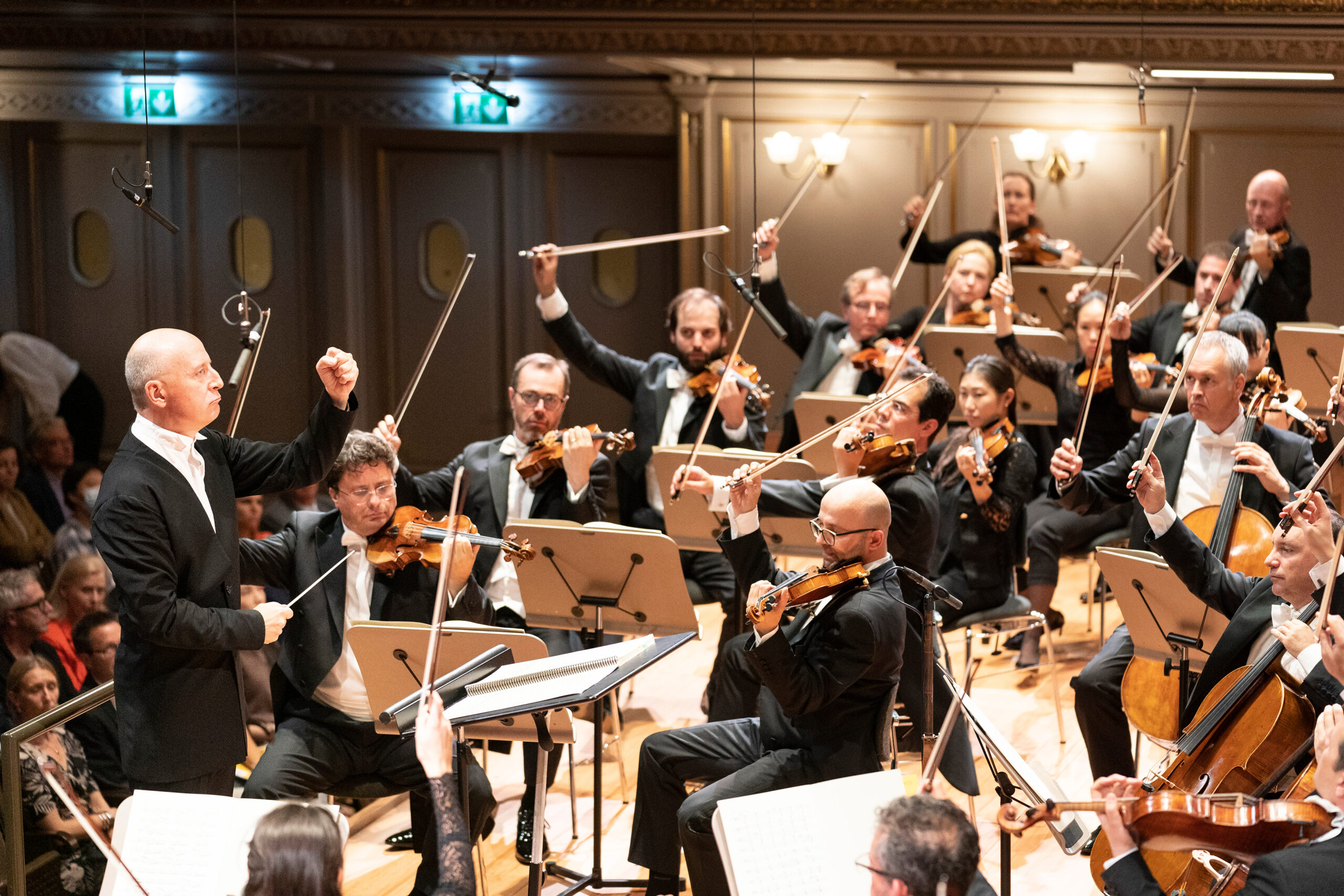 Photographer: Gaetan Bally
 When you are younger, you are very aware of performance traditions and of musicians who lived closer to the composer. You assume they must know something you don’t. Only with experience do you gain the confidence to trust your own instincts.
That confidence comes from performing the works repeatedly: trying ideas, listening afterward, and realizing what works and what doesn’t. A transition may need more tension, a contrast may need to be stronger, something might feel too restrained or too sentimental. The process never ends.
There is no definitive performance and no definitive recording. Musicians change over time. You are not the same at 60 as you were at 30. Music lives through human beings, and human beings constantly evolve. When people ask why we need new recordings, they miss something fundamental. It is always interesting to hear the perspective of a compelling musician.
I remember performing Beethoven concertos with Radu Lupu. In his last concert in London – which he played with me – he missed many notes. Yet I have never heard the piece played more profoundly. It wasn’t about technical perfection. Somehow, he created an atmosphere in which time stood still. The audience forgot the mechanics of performance and simply experienced the music. Moments like that are difficult to explain analytically, but you recognize them immediately.
My father was an obsessive record collector. In Estonia we had one of the largest private collections because he brought recordings back whenever he traveled to the West. His favorite Mahler symphony was the Fourth, and we owned perhaps 20 recordings of it. When I was five years old, we would listen repeatedly to the opening passage up to the rallentando after the sleigh bells, comparing how different conductors shaped that single moment.
Listening was never academic in our house. It was a game. My father would point out details: the way a conductor sustains a long phrase, whether the flute breath is audible, or how two flutes might overlap to create a seamless line. These tiny details reveal the individuality of interpretation. That early listening shaped how I hear orchestral music even today.
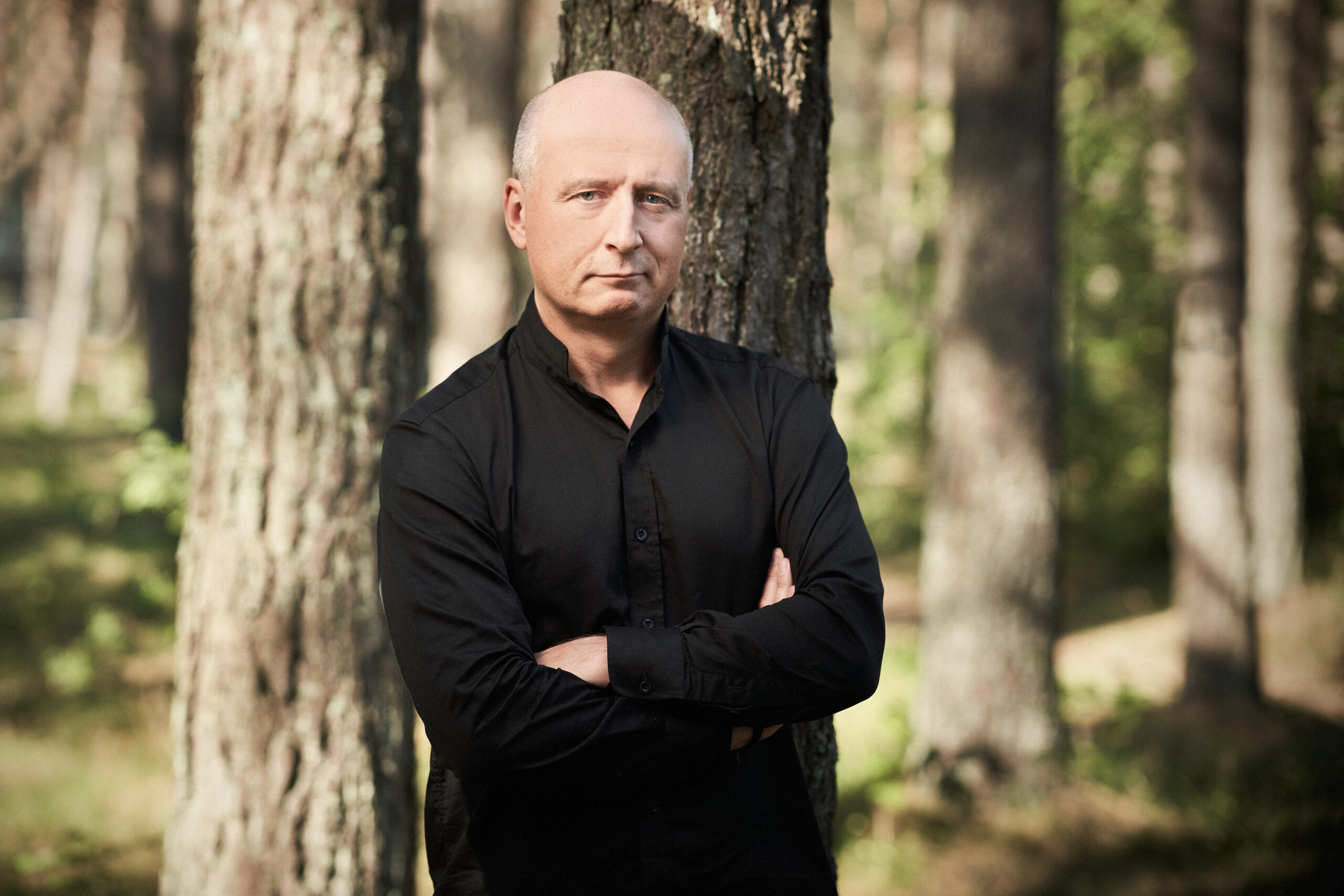 Photographer: Kaupo Kikkas
 What is a recording, anyway? Is it simply a documentation of a concert performance, or is it an independent artistic creation? If you record a concert on your phone, you capture what happened in the hall. But a professional recording can aim for something different. Technology allows us to illuminate details that might never emerge clearly in a live performance.
During patch sessions we sometimes adjust balances or isolate textures so that inner voices Mahler actually wrote – notes often buried beneath louder instruments – become audible. Some people might consider this artificial. I see it as the art of recording, much like film-making. A film uses multiple takes and close-ups to present a carefully shaped final vision. It may not replicate a single real-time event, but it reveals aspects of the story that might otherwise be missed.
Live concerts and recordings each have their own strengths. With the Tonhalle Orchestra we usually perform several concerts and then add patch sessions to refine specific passages. In my first years with the orchestra, we recorded extensively – Mahler, Bruckner, Mendelssohn, Tchaikovsky. That process helped us build a close musical relationship. When discussions about extending my contract began, I suggested that Mahler should become the artistic center of the next period. The orchestra embraced the idea, and the Mahler cycle now runs as a continuous thread over several seasons.
Mahler actually becomes more challenging the deeper we go into the cycle. I constantly ask the orchestra to exaggerate character. If they think something is too much, I ask them to go further. Musicians are trained to be refined and controlled, which often leads to self-censorship. We start worrying that something might sound excessive or even vulgar – too sharp, too theatrical, perhaps “too Yiddish”. But Mahler requires precisely that boldness. Klezmer passages must sound unmistakably like Klezmer. The shocking sforzati, the off-beat accents, the disruptive gestures – these are carefully written and should disturb the listener.
Sometimes the orchestra is so startled by these accents that they momentarily lose their place. In a way, that’s exactly the reaction Mahler intended. The music should unsettle both musicians and audience. If we smooth away those rough edges, Mahler loses its power. Glissandi should feel physical. Pianissimos should nearly disappear. Fortissimos should overwhelm. Orchestras rarely reach those extremes automatically. Achieving them requires trust built over years of working together.
For the Eighth Symphony we have to leave our Zürich hall – it’s simply too large for the space. We will record it in the Festspielhaus in Baden-Baden, where the Tonhalle Orchestra now has a residency.
If I could take only one Mahler symphony to a desert island, it would be the Seventh. It remains the most enigmatic and structurally puzzling. Unlike the Fifth, whose emotional landscape is immediately recognizable – from funeral march to Adagietto – the Seventh reveals its logic slowly. You sense an internal coherence long before you can explain it intellectually, and that mystery keeps it endlessly fascinating.
In my programs I perform only the Adagio from Mahler’s Tenth Symphony. I admire the completions by Deryck Cooke and Rudolf Barshai, and I’m not a purist. But for this cycle I prefer to leave the work where Mahler left it. The Adagio feels like a threshold. Beyond it one senses a kind of exhaustion of the language.
I had a similar thought while hearing Schoenberg’s Gurre-Lieder in Berlin. It is an extraordinary work – perhaps the most magnificent dead-end imaginable. That late-Romantic chromatic language had reached its limits. Even with Schoenberg’s genius, a new path had to be found.
Something comparable happens in Mahler’s Tenth. It is a remarkable piece, but it also feels like a boundary. The unfinished state has a certain symbolic truth – just as with Schubert’s “Unfinished” Symphony or Bruckner’s Ninth. Sometimes a composer simply reaches the farthest point possible within a language. Beyond that, searching for more may not lead to anything greater than what has already been achieved.
Recently named the next principal conductor of the London Philharmonic Orchestra, Paavo Järvi currently serves as chief conductor and music director of the Tonhalle-Orchester Zürich, artistic director of The Deutsche Kammerphilharmonie Bremen and as founder and artistic director of the Estonian Festival Orchestra. A prolific recording artist, he is currently recording a Mahler Symphony cycle with The Tonhalle-Orchester Zürich for Alpha Classics.