American soprano Jacquelyn Stucker recently made a highly acclaimed debut at the Metropolitan Opera in New York.
Stories: Jacquelyn Stucker
Share: 


I grew up with music in my ears because my dad’s barbershop quartet would practice at home. I took piano lessons as my mom was like, that’s what kids do, right? It wasn’t that I showed a particular interest in it. When I was in high school, I needed some credits, and the choice was between chorus or interior design, so I went for chorus. Later I auditioned for an undergrad music scholarship. I already had a full academic scholarship, but I was like, if I can get more money, I could live off that and not have to work, and that’s what happened, which was great.
My decision to try my hand at performing came when I was in the middle of a doctorate in musical arts at the New England Conservatory. Out of that came the Jette Parker Young Artist Programme at the Royal Opera House in London. That was a big moment, and in the two years I was there from 2017 to 2019, I learned a lot about how to be on stage, how to be confident in circumstances where it really matters you hit a home run every time. So, I found out about myself musically and what kind of direction my voice was going in. It was really pivotal.
During the pandemic I wasn’t sure what was going to happen in classical music, so I began consulting for arts organizations but as things came back, I started performing more and more. In 2022 I was in a production of The Coronation of Poppea in Aix-en-Provence which was a big moment for me professionally. Two years later I made my Paris Opera debut in The Exterminating Angel by Tom Adès, another turning point. Now this, in 2025, playing the Countess in The Marriage of Figaro – my Metropolitan Opera debut!
 Jacquelyn Stucker in The Exterminating Angel
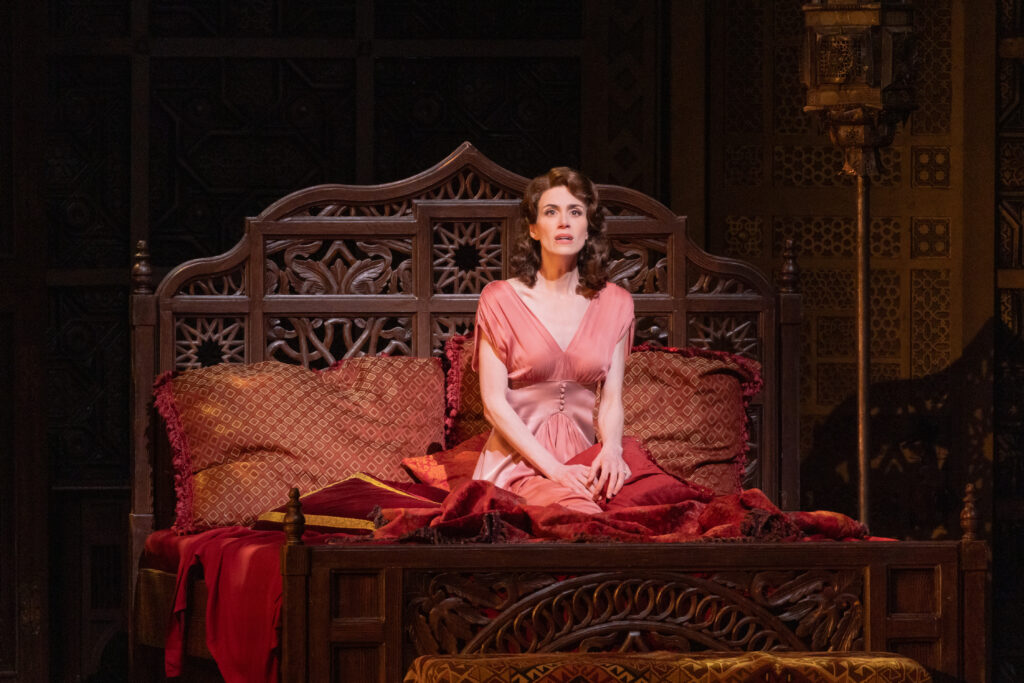
 The Countess is a crazy role debut – it’s a big sing, especially in an almost 4,000-seat house which is close to double the size of Covent Garden. Initially I felt I had no connection with the character, but everyone told me, ‘Oh, you’re a countess, you’re a countess, you’re a countess…’. So, I thought, okay, maybe I am. She’s married to the unfaithful Count Almaviva who had rescued her from her controlling guardian, Dr. Bartolo, which is the story of the opera The Barber of Seville.
It’s astonishing to see how that initial relationship between her and the count was so optimistic and fresh. It’s almost like a Disney film where they didn’t really know each other but they’re in love and you know, sometimes you meet someone and you just have this connection you can’t really describe. But once we get to The Marriage of Figaro, she finds herself repressed in the same way she’d been by Bartolo, so she didn’t escape anything! She had everything going for her, she’s so smart but trapped by men. In my mind, the relationship she has with her husband is very Tony Soprano/Carmela Soprano. It’s a situation where she could have had a different life, but she went with this guy, and it all ended up being like the biggest cosmic trick of all time and there’s no way out.
I have to really sit with characters for a while. You know, I can’t do what they do in Vienna with three days of rehearsal and then you’re on stage and for me, I’m not going to be able to do justice to that character. So much of acting is about the relationships you have with other people you’re on stage with, so unless you’ve sung this with them a bunch of times, I don’t know how I would do it.
You know, you hear these things about big houses like the Metropolitan Opera, that it’s cut-throat and pressurized but it’s easily the most supportive house I’ve ever worked in (and with the best acoustic). It treats singers like human beings and with an American freshness. When I was at Covent Garden, I was consistently surprised at how often I misunderstood things or was misunderstood.
I remember one time the person coaching me kept saying things like, ‘Let’s try it with this vowel, or this vowel…’, and it went for five minutes and then I asked, what are you hearing you don’t like? ‘Well, you’re flat…’ And I was, oh okay, I can fix that. There seemed to be so much effort going into being polite and not hurting me, but I was like, it doesn’t! But at the Met someone can tell me, ‘Hey, you’re sharp there, can you take care of that?’, and no one’s going to give me notes on my break because I’m in a union and they’re in a union, so we’re all going to have a break, right? There’s just an ethos of, I’m giving you notes because I want this to be as good as possible, not because your job is in danger, which is the way, I’m not alone in saying, how things are going in other places, when every day feels like an audition.
Singing around the world, that’s really hard to make work on a personal level. You hear people say, we don’t go more than three weeks without seeing one another or, we have to FaceTime every day. I don’t know, you’ve just got to find what works for you and your relationships. I was working a lot when my dad died, and I will always regret that. A lot of my relationships have, in every sense, felt the effects of a really busy schedule. So, they are as hard to manage as you think. But I’ve been thinking about the future and because I’ve been able to make some really good strategic debuts and had good receptions, do I need to be on the road all the time? As a singer who does a lot of contemporary music, if I’m really honest with myself, a little more time off the road would be beneficial for me because I have a lot of hard music to learn!